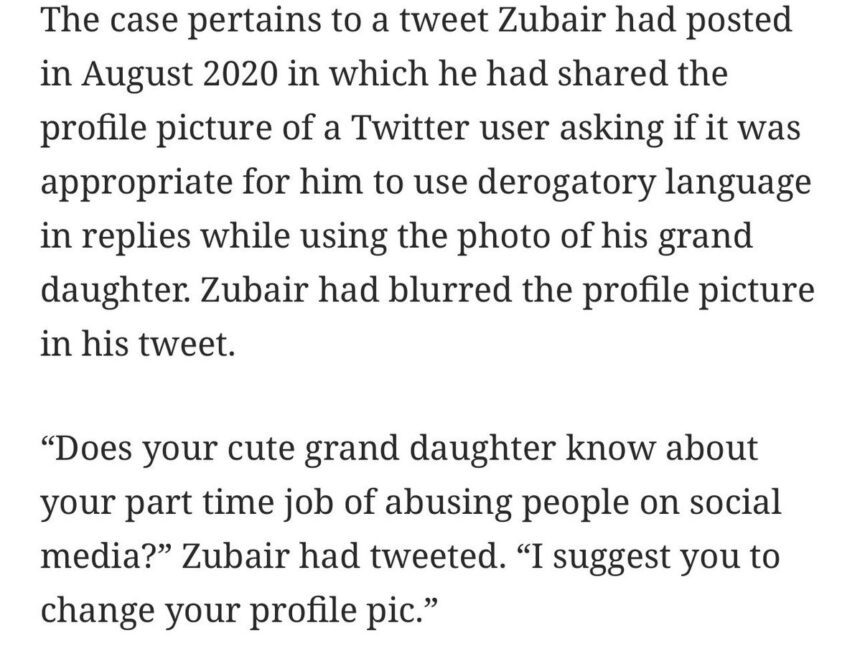

Recent social media controversies have highlighted the disparity in how online behavior is policed under India’s Protection of Children from Sexual Offences (POCSO) Act. Notably, prominent political commentator @zoo_bear faced a POCSO case due to sharing a profile picture related to an abuse case, even though he blurred the child’s face. This has raised questions about whether similar standards are applied to right-wing handles that have exposed the identities of minors, leading to severe online harassment.
Background on the POCSO Controversy
Mohammed Zubair, known for his incisive political commentary, shared a disturbing profile picture to raise awareness about child abuse. Despite taking steps to protect the child’s identity by blurring his face, he became embroiled in legal troubles under POCSO. This highlighted the rigorous application of laws meant to protect minors in India and sparked a broader debate regarding the consequences faced by individuals sharing sensitive information in different contexts.
Double Standards in Social Media Regulation
In stark contrast, right-wing handles like @JaipurDialogues have been criticized for posting identifiable details, including photos and locations, of a 15-year-old minor named Ruchika. This exposure led to a barrage of online harassment against her, resulting in serious concerns about her safety. Critics argue that such actions by RW handles should similarly invoke POCSO charges, presenting a troubling inconsistency in how social media content is regulated.
The Role of Online Discourse in Political Narratives
The incident involving Zubair and the right-wing handles forms part of a larger narrative concerning the nature of online discourse in India’s political landscape. Social media has become a battleground for ideological conflicts, where accusations of bias and selective enforcement of laws are commonplace. Many observers believe that the handling of such cases reflects broader societal attitudes toward different political affiliations, highlighting fears of a chilling effect on free speech, particularly for dissenters.
Why This Matters
The differing treatment of cases under POCSO has significant implications for Indian society. It raises critical questions about the integrity of social media regulations and the protection of minors in the digital age. Moreover, it underscores the urgent need for consistent enforcement of laws designed to protect vulnerable individuals, regardless of political allegiance. As the discourse continues, public scrutiny may lead to changes in how online harassment and child protection laws are approached, affecting countless users in India.
Frequently Asked Questions
What is the POCSO Act and why is it significant?
The Protection of Children from Sexual Offences (POCSO) Act is a comprehensive law designed to protect children from sexual abuse and exploitation in India. It establishes stringent measures for reporting and prosecuting offenses against minors, highlighting the importance of safeguarding children’s rights and wellbeing.
What happened with @zoo_bear’s case?
@zoo_bear faced legal troubles for sharing an image related to a child abuse case, even though he took precautions by blurring the child’s face. This contributed to discussions about the strict application of POCSO and its implications for freedom of expression.
Why are RW handles not facing similar scrutiny?
Right-wing handles like @JaipurDialogues have exposed the identities of minors, but have not faced the same legal repercussions as @zoo_bear. This discrepancy has led to accusations of selective enforcement and raised concerns about online safety for vulnerable individuals.
What is the impact of online exposure on minors?
Revealing the identities of minors can lead to serious consequences, including harassment and threats. The exposure can endanger the minors’ safety, leading to calls for stricter regulations and accountability for those who share such information online.