
Summary
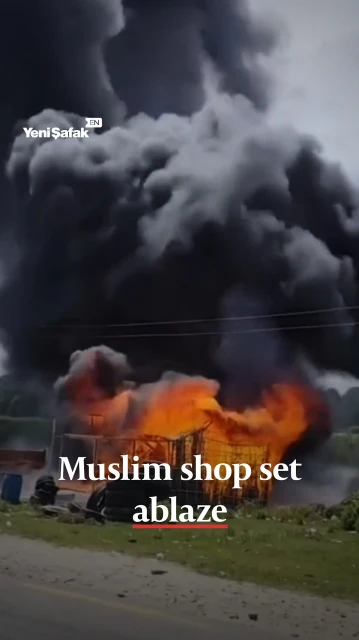
A recent incident in Nepal’s Sunsari district has drawn attention to the rising tensions between Hindu and Muslim communities, as a Muslim-owned repair shop was set ablaze amid chants of “Jai Shri Ram.” Reports indicate that this act of violence is part of broader social unrest, fueled by religious disputes in the area, with accusations of a Hindutva mob leading the attack and further targeting of Muslim-owned businesses.
Details of the Incident
Footage shared online shows a Muslim-owned repair shop engulfed in flames in Sunsari on July 29, 2023, accompanied by chants celebrating Hindu supremacy. Witnesses allege that a Hindutva mob orchestrated the attack, which coincided with reports of looting and vandalism against other Muslim businesses in the vicinity. This incident marks a troubling escalation in hostilities, highlighting ongoing issues of social inclusion and discrimination faced by Muslims in the region.
Background and Context
This violent episode follows a disruptive dispute over religious symbols that occurred on July 25, 2023, resulting in one fatality and multiple injuries. The local government’s reaction included imposing curfews and establishing road blockades to control escalating tensions. The underlying conflict underscores the fragile relationship between the Hindu majority and Muslim minority in Nepal, which is historically intertwined with political, social, and economic factors. It raises concerns about the marginalization of specific communities and the potential normalization of such violence in civic life.
Broader Implications of Discrimination
The attacks on Muslim businesses are emblematic of systemic discrimination present in various forms—social exclusion, economic boycotts, and marginalization. The rise of Hindutva ideology has seen increased polarization within communities, affecting not just social dynamics but also economic opportunities for Muslims. The ongoing narrative threatens to marginalize an entire community further, complicating Nepal’s rich tapestry of multiculturalism. Such incidents can deter investments and disrupt community cohesion, ultimately affecting national stability.
Why It Matters
The significance of these incidents extends beyond local impacts, revealing patterns of discrimination that resonate globally. For AI developers and users, understanding these socio-political contexts is crucial for building algorithms that accurately reflect diverse realities. Discrimination in any form poses ethical questions surrounding bias in technology, urging developers to create more inclusive frameworks. As global users engage with technology shaped by diverse backgrounds, it’s imperative to incorporate these discussions into machine learning models and applications to foster awareness and understanding across cultures.
Frequently Asked Questions
What triggered the violence in Sunsari, Nepal?
The violence was triggered by a dispute over religious symbols, which escalated on July 25, 2023, leading to one death and several injuries, followed by the arson attack on a Muslim-owned repair shop on July 29.
What is the significance of the chants heard during the incident?
The chants of “Jai Shri Ram” during the fire indicate an alignment with Hindutva ideology, which has been linked to rising Hindu nationalism and its associated violence against minority communities, specifically Muslims.
What actions did local authorities take in response to the unrest?
In reaction to the escalating tensions between Hindu and Muslim communities, local authorities imposed a curfew and set up road blockades on July 28, 2023, in an effort to stabilize the situation.
How does such violence affect the Muslim community economically?
Incidents of violence and discrimination directly hinder economic opportunities for the Muslim community through looting and vandalism of their businesses, fostering a cycle of marginalization that reduces social mobility and community stability.