
Public Pressure Forces Resignation of Union Education Minister
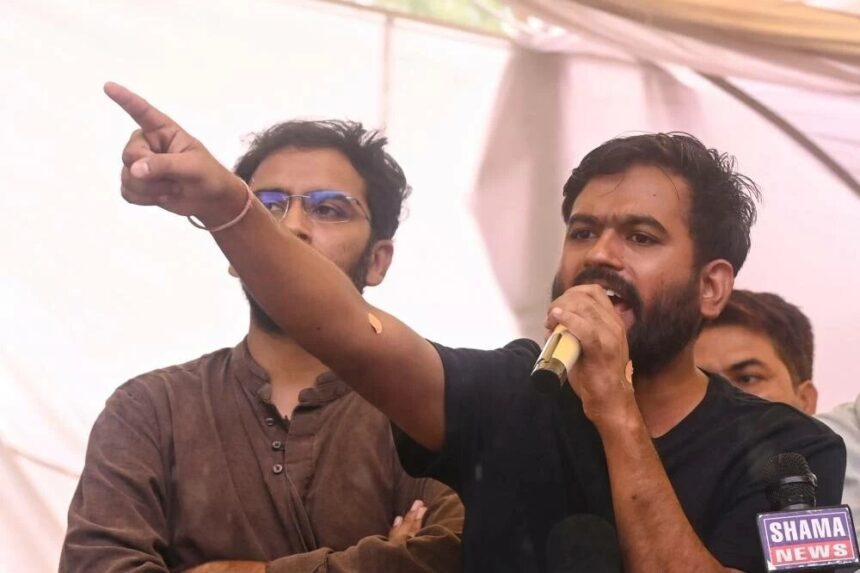
In a significant political development, Union Education Minister Dharmendra Pradhan announced his resignation following the NEET-UG 2026 paper leak controversy. Abhijeet Dipke, founder of the Cockroach Janta Party (CJP), attributed this move to the power of public pressure and issue-based advocacy. Speaking at a rally in Jantar Mantar, Dipke emphasized that this outcome exemplifies the capacity of citizens to demand accountability from governance when collective unity surpasses divisive religious politics.
A Shift Towards Issue-Based Politics
During his address, Dipke made a passionate call for a shift away from religious allegiances that often dictate political discourse in India. He declared, “If there is no Hindu-Muslim politics, if there is only issue-based politics, then even the biggest thrones will be shaken.” This statement resonates amid the growing sentiment among various segments of society that prioritize governance focused on pressing human concerns rather than communal issues. He urged students and supporters to embrace this ideology, coining the slogan, “Hindu-Muslim ki rajneeti nahi chalegi” (“Hindu-Muslim politics will not be tolerated”).
By positioning the CJP as a platform prioritizing collective issues, Dipke aims to foster a political climate where citizens mobilize around shared challenges. This approach seeks to counter long-standing divisions, challenging the narrative often leveraged by major political players, including the ruling Bharatiya Janata Party (BJP).
Ongoing Demands Amidst Celebration
While the resignation marks a small victory for activists, Dipke stressed that the CJP’s work is not done. The party has made specific demands, including ₹1 crore compensation for families of students who allegedly took their lives due to the NEET controversy and accountability for police actions during protests. “We have done it. Dharmendra Pradhan has resigned,” Dipke asserted, framing the resignation as a pivotal moment for democratic processes in India. Yet, he cautioned that “One demand has been met, but two more remain.”
The CJP’s insistence on further governmental action reflects growing frustrations among citizens, especially in light of perceived systemic injustices that many believe disproportionately affect marginalized communities, including Indian Muslims. The NEET controversy has heightened scrutiny of educational policies and their impact on students, igniting ongoing activism demanding reform and accountability.
Why It Matters
This political development highlights the intersection of governance, accountability, and communal identity in India. The scenario underscores the critical need for a political discourse that prioritizes substantial issues over divisive communal narratives. By focusing on people-centric issues, there may be an opportunity for broader collaboration among citizens from diverse backgrounds, pushing against the trend of marginalization faced by specific groups, including Muslims. Furthermore, as public pressure mounts, it poses a challenge to ruling parties to remain responsive to constituents’ needs, which could reshape the political landscape ahead of upcoming elections.
Frequently Asked Questions
What is the NEET controversy?
The NEET controversy centers around allegations regarding the leak of examination papers for the NEET-UG 2026, which sparked protests and concerns over accountability in the education system.
Who is Abhijeet Dipke?
Abhijeet Dipke is the founder of the Cockroach Janta Party (CJP), a political organization advocating for issue-based politics over communal divisions in Indian society.
What are the demands of the Cockroach Janta Party?
The CJP has called for ₹1 crore compensation for families of students connected to the NEET controversy and for action against police personnel implicated in the alleged use of force during protests.
How does this resignation impact Muslim communities in India?
While directly related to the educational sector, the resignation symbolizes a broader struggle against political narratives that marginalize minority communities, including Muslims, advocating for a more inclusive political discourse.