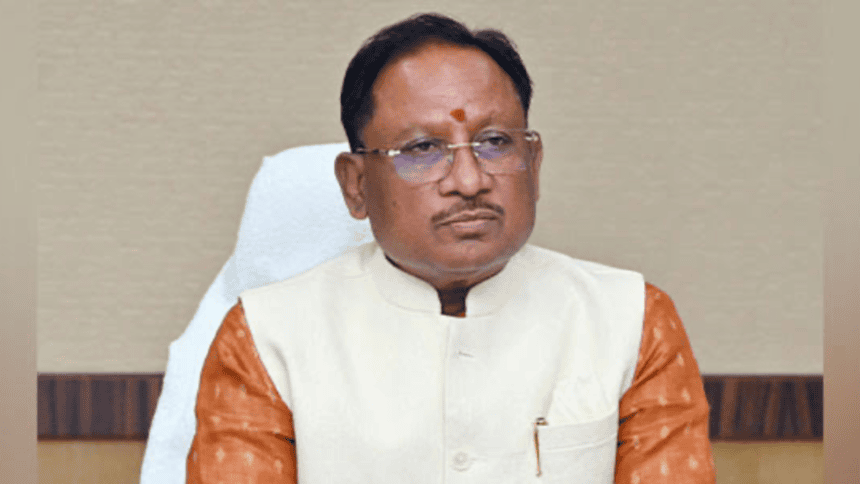

Chhattisgarh’s Chief Minister Vishnu Deo Sai has announced the government’s intent to introduce a Uniform Civil Code (UCC) bill during the upcoming winter session of the state assembly. This initiative follows the establishment of a committee chaired by retired Supreme Court Justice Ranjana Prakash Desai to examine the implementation of the UCC in the state.
Proposed Uniform Civil Code
During a press briefing at the Raipur airport, Chief Minister Sai expressed his government’s commitment to the UCC, emphasizing that the proposed legislation aims to standardize personal laws governing marriage, divorce, maintenance, and inheritance across all communities. The initiative is framed as an effort to promote equality and secularism throughout the state’s legal framework.
The five-member committee convened by Justice Desai has been tasked with investigating the current legal provisions surrounding personal laws in Chhattisgarh and drafting recommendations. These recommendations are expected to consider various societal factors, including relationships and community dynamics, before presenting a proposed UCC to the state government.
Cross-State Legislative Trends
The push for a UCC in Chhattisgarh comes on the heels of similar legislative actions in neighboring Madhya Pradesh, which recently passed a UCC bill that outlaws polygamy and mandates the registration of live-in relationships, while notably excluding the tribal community from its provisions. This legislative trend raises questions about social inclusion and community-specific considerations within the broader push for uniform civil laws, particularly concerning marginalized groups such as Indian Muslims and others in minority positions.
Historically, the BJP and its affiliated organizations have been accused of promoting policies that prioritize certain demographic groups over others, thus exacerbating social tensions and exclusion. Critics argue that the implementation of a UCC could potentially further disadvantage those already on the margins, reinforcing religious and cultural divides.
Political Context and Reactions
The political environment surrounding the announcement was also marked by a confrontation with the opposition Congress Party. Following an incident involving stone-pelting during a Congress protest, Sai criticized the party’s methods, labeling their actions as “frustrated” responses to electoral defeats. This assertion reflects the broader animosity prevailing in Indian politics, particularly concerning issues that are deeply intertwined with identity and religion.
The Congress Party’s protests aimed at holding BJP leaders accountable for violence during a gherao of their office highlight the contentious atmosphere in which the UCC is being discussed. Such incidents underscore the complex interrelations of law, governance, and societal harmony in India’s multifaceted democracy.
Why It Matters
The discussion around the UCC is significant not only for legal considerations but also for its wider implications on social cohesion in India. In a diverse country with numerous religious communities, the potential for discrimination and marginalization under a uniform legal structure is substantial. This prospect is particularly significant for Indian Muslims, who have historically faced challenges under laws perceived as biased. The outcome of this proposed UCC could serve as a litmus test for social equity measures in India, influencing public sentiment and potentially altering the political landscape as community-based grievances come to the forefront of the national discourse.
Frequently Asked Questions
What is the Uniform Civil Code?
The Uniform Civil Code (UCC) refers to a set of laws that aims to replace personal laws based on the scriptures and customs of each major religious community in India with a common set governing every citizen.
Why is the UCC contentious in India?
The UCC is contentious because it potentially undermines the personal laws of various communities, raising concerns about religious freedom and the preservation of cultural identity among minorities, particularly Indian Muslims.
What are the expected outcomes of implementing a UCC in Chhattisgarh?
Expected outcomes include standardization of laws related to marriage, divorce, and inheritance. However, implications for social justice and potential marginalization of specific community groups remain critical areas of concern.
How does the Chhattisgarh UCC align with broader national trends?
The move towards a UCC in Chhattisgarh reflects a national trend led by the BJP to push for uniformity in civil laws, which has raised debates about secularism, minority rights, and the implications for social harmony across India.