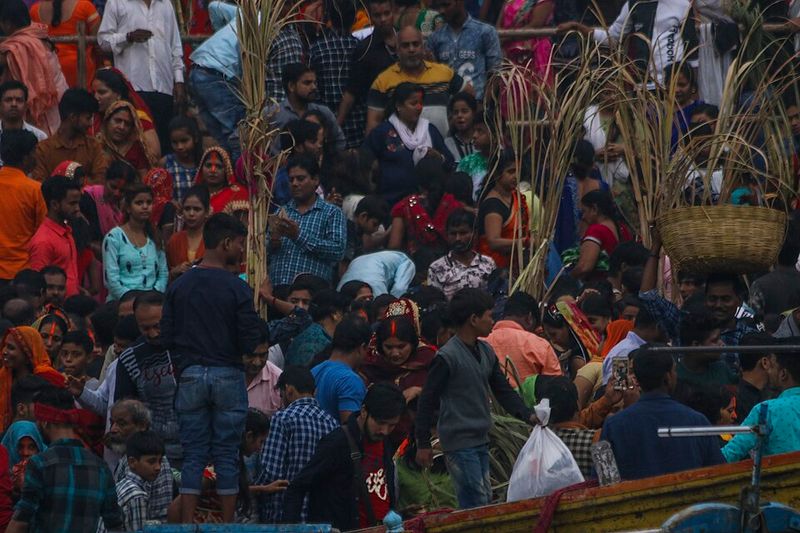

The narrative surrounding Muslim population growth in India has become a pivotal element of political discourse, especially under the BJP and Sangh leadership. This article analyzes the implications of such rhetoric—often devoid of factual basis—on social exclusion and marginalization of Muslims in India, especially ahead of crucial elections.
Political Rhetoric and Historical Context
Since 2002, remarks invoking Muslim demographics have been strategically employed by political leaders to stoke fears among the Hindu majority. Narendra Modi’s “hum paanch, hamare pachees” comment, reflecting on the perceived family size of Muslims, illustrates how political discourse often manipulates demographic narratives. Fast forward to 2024, a Union minister blamed Muslim population growth on “appeasement,” and in the recent West Bengal elections, the BJP suggested that it was the result of illegal immigration from Bangladesh. Such statements not only shape public perception but also marginalize the Muslim community, framing them as others threatening the Hindu identity of India.
The Census: A Tool for Understanding Population Dynamics
The decennial census, conducted since 1951, provides crucial data on India’s demographics, capturing every “usual resident,” irrespective of legal status. Critics argue this makes it challenging to assess illegal immigration, but in fact, the census is revealing: the Muslim population in West Bengal grew at a rate consistent with national trends, negating the narrative of an influx due to illegal immigration. For instance, between 1951 and 2011, Muslims in West Bengal grew at similar rates to Muslims in other states, undermining claims of disproportionate growth. The data shows that the Hindu population continues to outnumber Muslims significantly, indicating that fears of demographic inversion are misplaced and politically motivated.
Fertility Rates and Demographic Stability
Beyond political narratives, the actual demographic changes are driven by fertility rates, which have been declining across religious groups in India. Between 1992 and 2021, the total fertility rate (TFR) for Muslims decreased from 4.4 to 2.36, while the Hindu rate fell from 3.3 to 1.94. The narrowing of this fertility gap highlights a convergence rather than a demographic crisis. The 2011 census indicated that Muslims represented 14.2% of the population, a modest increase that does not correlate with an existential threat to Hindu dominance. Indeed, the demographic data suggest a stabilization in religious composition moving forward, challenging the narrative of an impending demographic shift driven by Muslim growth.
Why It Matters
The implications of this discussion extend far beyond demographic figures. For the AI industry and developers, understanding the socio-political context of data is crucial. AI models trained on biased or incomplete data might perpetuate existing inequalities. Additionally, the rhetoric surrounding population dynamics can influence societal perceptions, further entrenching bias against marginalized groups. Moving forward, the interplay between technology, governance, and social justice will need careful consideration to ensure that AI impacts are equitable and do not exacerbate existing divides.
Frequently Asked Questions
What role does the census play in shaping public policy in India?
The census provides critical data for understanding demographic trends, influencing policies related to resource allocation, social services, and electoral representation.
How has the fertility rate changed among different religious communities in India?
The fertility rate has significantly declined among both Hindus and Muslims over decades, with Muslims’ rate dropping from 4.4 children per woman in 1992 to 2.36 in 2019, and Hindus from 3.3 to 1.94 in the same period.
Why do fears of demographic inversion persist despite statistical evidence?
These fears are often fueled by political rhetoric and public perceptions that mistake local concentration and migration patterns for mass illegal immigration and demographic transformation.
What are the broader implications of demographic shifts in India?
Demographic changes influence resource distribution, economic policies, and social services, making it necessary to engage with accurate data to foster inclusivity rather than division.




![Community members raise their arms during a gratitude poem at a supper in Westbrook, Maine, in July 2025 [Courtesy of Community Plate]](https://www.indianewsweek.com/wp-content/uploads/2026/09/Potluck-Parties-Surge-in-Popularity-Across-America-A-Culinary-Revival-300x203.jpeg)