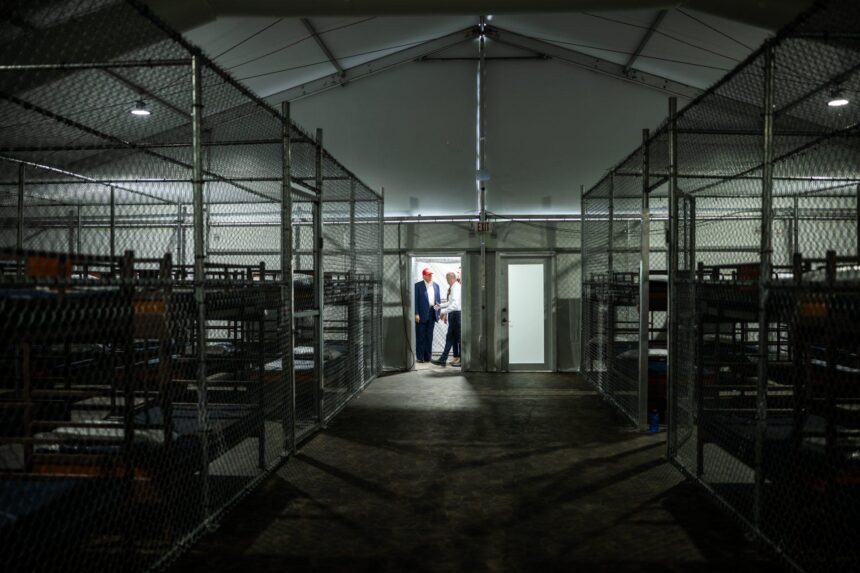

Federal Judge Rejects Closure Claims of Immigration Detention Site
A federal judge has upheld a legal challenge against the controversial immigration detention site in the Florida Everglades, known as “Alligator Alcatraz.” The ruling emphasizes the need for official documentation to confirm the facility’s permanent closure, reflecting broader concerns about the treatment of detainees and environmental impacts.
ACLU’s Legal Challenge and Conditions at the Facility
The American Civil Liberties Union (ACLU) initiated a lawsuit focusing on the conditions faced by detainees at the facility, which has been criticized for limiting access to legal representation and communication. US District Judge Sheri Polster Chappell noted that, despite public assurances from state and federal officials regarding the site’s closure, formal documentation has yet to be provided. The ACLU asserts that reliance on public statements, lacking binding guarantees, would not be sufficient for the protection of current and potential future detainees.
Environmental Concerns and Financial Scrutiny
Opened in July 2025 through expedited, no-bid contracting, the detention center has faced severe criticism due to its location in a sensitive ecosystem known for its biodiversity. Early legal challenges highlighted both environmental risks and serious concerns regarding detainee rights. Although an appeals court allowed the facility to remain operational, the scrutiny has not waned. Financially, the site has incurred hundreds of millions in emergency spending with only partial reimbursement from federal sources, raising questions about the efficiency and ethics of its operations.
Judicial Oversight and Future Implications
Judge Chappell has previously ordered improvements, such as expanded phone access and visitation rights for detainees, demonstrating a commitment to judicial oversight amid ongoing legal discussions. Governor Ron DeSantis announced the site’s closure in June 2026, claiming that it had served its intended purpose after processing thousands of detainees, but the lack of formal guarantees presents an ongoing risk of future operational resumption. The ACLU insists that without comprehensive legal assurances, the protective measures established by the court must remain in place for the well-being of detainees.
Why It Matters
This ruling underscores the critical role judicial oversight plays in safeguarding human rights and environmental protections. The implications reach beyond the immediate context, pointing to the necessity of transparent governance and accountability in immigration policies. For detainees, particularly those impacted by systemic discrimination, the case serves as a critical reminder of the ongoing struggle for legal protections in an often opaque system. As various stakeholders, including government agencies and NGOs, navigate these legal terrains, the case highlights the need for documented commitments to closure and the lasting impact such cases can have on public policy and civil rights.
Frequently Asked Questions
What is “Alligator Alcatraz”?
“Alligator Alcatraz” refers to an immigration detention facility located in the Florida Everglades, which has faced scrutiny for its conditions and operational practices since its opening in July 2025.
Why is the ACLU challenging the closure of the facility?
The ACLU is challenging the closure due to a lack of formal documentation confirming that the site will not reopen. They argue that detainees require ongoing legal protections amid uncertainty regarding the facility’s status.
What does the ruling by Judge Chappell entail?
Judge Sheri Polster Chappell has mandated that state and federal officials must provide formal evidence of the facility’s permanent closure within four days, emphasizing the need for official documentation over public statements.
What are the broader implications of this case?
The case has wider implications for human rights law and environmental protection, highlighting the critical importance of judicial oversight in immigration policies, particularly as they relate to marginalized communities and sensitive ecosystems.