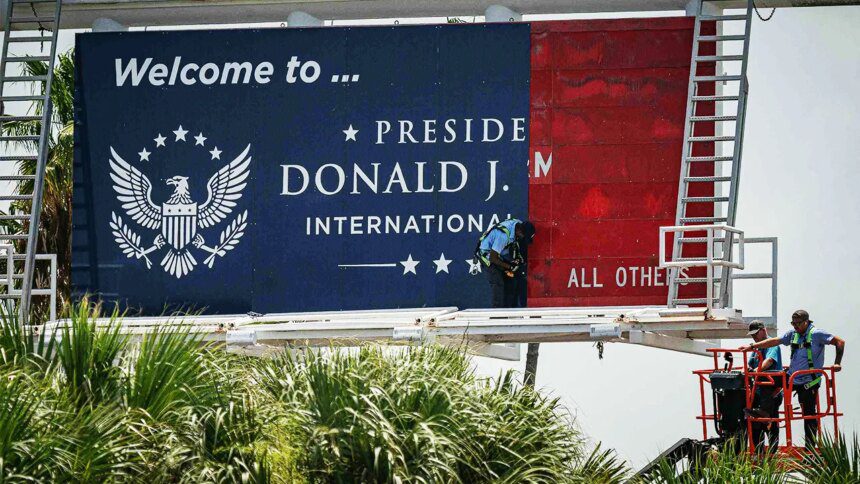

The renaming of Palm Beach International Airport to “President Donald J. Trump International Airport” has sparked significant controversy, not just in the United States but also among global travelers. Amidst mixed reactions, United Airlines has responded by offering passengers the option to change their flight to avoid the newly named airport at no additional cost.
The Name Change Controversy
Last week, Palm Beach International Airport officially transformed its name to “President Donald J. Trump International Airport.” The change has received a mixed reception: while some supporters applaud the recognition of the sitting president, many others express outrage. Eric Trump was reportedly proud to land the first aircraft at the newly named airport, a symbolic moment that has further polarized public sentiment.
Numerous travelers have taken to social media to express their displeasure with the name change, leading to an influx of complaints directed at the airport’s management. The airport has noted that the renaming is mandated by state law, but this has not quelled the backlash. Customers have previously expressed their intentions to boycott the airport, indicating strong feelings against the name change.
United Airlines’ Response
In light of the backlash, United Airlines announced that passengers who object to landing at President Donald J. Trump International Airport can make flight changes without incurring fees. An internal memo directed staff to suggest alternative airports, such as Fort Lauderdale or Miami, to disgruntled customers.
Although the memo indicated that customer complaints would be met with accommodations, United Airlines has since stated that the messaging was poorly articulated and did not align with standard company policy. According to a spokesperson, changes related to the airport’s name or IATA designations do not qualify as acceptable grounds for complimentary ticket modifications.
Legal and Operational Impacts
While many are frustrated by the new name, operational aspects of the airport will remain unchanged. The airport will continue to manage and govern under the same regulations, albeit with a new identity that may affect its reputation. The airport’s commercial code will transition from PBI to DJT on August 18. Travelers can expect updates to flight routing and communications as the changes unfold.
Despite the airport’s reassurances, travelers remain apprehensive about the implications of this name change on their travel experiences. Some argue that it could tarnish the airport’s branding, pushing away potential customers who prefer not to engage with the political connotations tied to Donald Trump.
Why This Is Trending
Indians are currently searching for news about the renaming of Palm Beach International Airport due to the global influence of U.S. politics, particularly with the figure of Donald Trump. Given Trump’s contentious persona, this topic resonates even in India as it embodies a larger dialogue about political representation and its expressions worldwide. Additionally, the ongoing debates about traveler rights and airline policies in the U.S. have global implications as they highlight consumer reactions that may be mirrored in other countries.
Frequently Asked Questions
What prompted the renaming of the airport?
The airport was renamed to “President Donald J. Trump International Airport” as per state law, which mandated the recognition of the sitting president.
What options do passengers have regarding flight changes?
United Airlines is offering passengers the option to change their flight to avoid landing at the renamed airport at no extra cost, suggesting nearby airports such as Fort Lauderdale or Miami.
How has the general public reacted to this name change?
The public reaction has been mixed, with significant backlash from customers who expressed their displeasure through complaints and social media, leading some to vow a boycott of the airport.
Will the airport’s operations change with the new name?
No, the operational aspects of the airport will remain the same despite the name change. The transition is primarily cosmetic, affecting branding but not governance or operations.