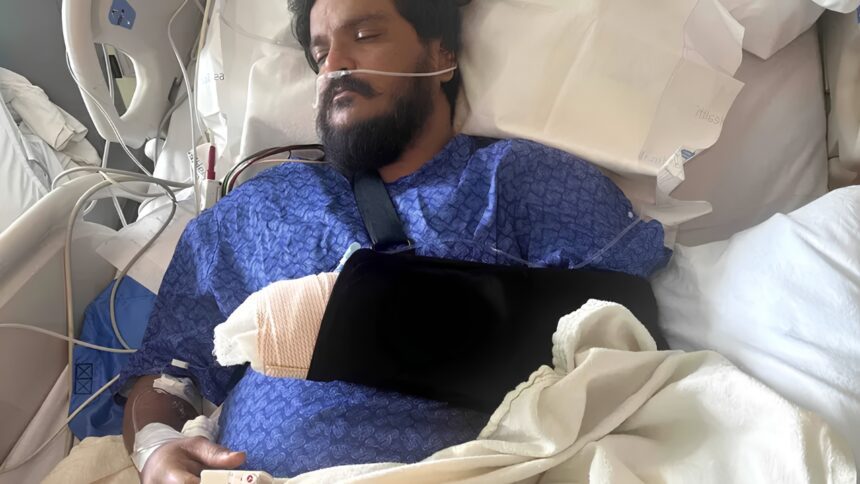

In a disturbing incident of violence, a 48-year-old man, Peter Michael Larsen, was arrested for stabbing a 37-year-old Indian Muslim kiosk worker, Syed Sohailuddin, multiple times at Valley Fair Mall in West Valley City, Utah. The attack, described as a hate crime by authorities, raises alarms about rising anti-Muslim sentiment and violence in the United States.
Details of the Attack
The incident occurred on a busy Monday afternoon at the mall. Larsen approached Sohailuddin, inquiring about his name and religion before asking for a bottle of water. As Sohailuddin turned away to fetch the water, Larsen launched a violent attack, stabbing him more than 15 times. Bystanders quickly intervened, restraining Larsen until police arrived on the scene. Sohailuddin was left in critical condition and was hospitalized without health insurance, prompting a friend to create a GoFundMe page to assist with medical expenses.
Claims of Prejudice and Discrimination
Peter Michael Larsen allegedly expressed intentions to kill Muslims when apprehended by law enforcement. This chilling revelation connects to broader societal issues surrounding discrimination against minorities in the U.S. Since the September 11 attacks, there has been a noted increase in Islamophobia and anti-Muslim violence, often fueled by inflammatory rhetoric from various sectors, including political groups and online platforms. Rights advocates have sounded alarms over systematic marginalization and social exclusion faced by Indian Muslims, reflecting a dangerous trend that question the nation’s commitment to civil rights for all.
Broader Context of Anti-Muslim Violence
This incident is just one among many, marking a troubling trend in anti-Muslim violence. Previous cases, including the 2023 stabbing murder of a 6-year-old Muslim boy in Illinois and a 2026 shooting at a San Diego mosque that resulted in multiple fatalities, illustrate a growing acceptance of violence against Muslims within certain segments of society. The FBI has documented an increase in hate crimes against Muslims, suggesting systemic issues that go beyond individual acts of brutality and speak to societal prejudices deeply rooted in various motivations, including white supremacy and anti-immigration sentiments.
Why It Matters
This attack and similar incidents have significant implications for how communities, policymakers, and tech industries engage with issues of discrimination and violence. The AI industry, particularly, must grapple with biases that may be perpetuated through algorithmic decisions, reflecting societal biases in hate crimes against marginalized communities. Developers and users alike must be aware of these dynamics to foster a more inclusive digital space, emphasizing the need for vigilance against hate speech and discrimination online as well as offline. As incidents of violence continue to rise, understanding their context becomes critical for formulating effective preventative measures and policies.
Frequently Asked Questions
What motivated the attack on Syed Sohailuddin?
Authorities reported that the suspect, Peter Michael Larsen, expressed intentions to kill Muslims, indicating that the attack was motivated by hate.
What has been the reaction from community leaders?
Imam Shuaib Din of the Utah Islamic Center expressed concerns over rising anti-Muslim violence, emphasizing the need for community support and awareness surrounding such incidents.
How has anti-Muslim violence changed over the years?
Since the September 11 attacks, there has been a significant increase in Islamophobia and documented hate crimes against Muslim communities, highlighting ongoing societal prejudices.
What assistance has been provided to the victim’s family?
A GoFundMe page was created to help cover medical expenses for Syed Sohailuddin, who was hospitalized in critical condition after the attack.