
Summary
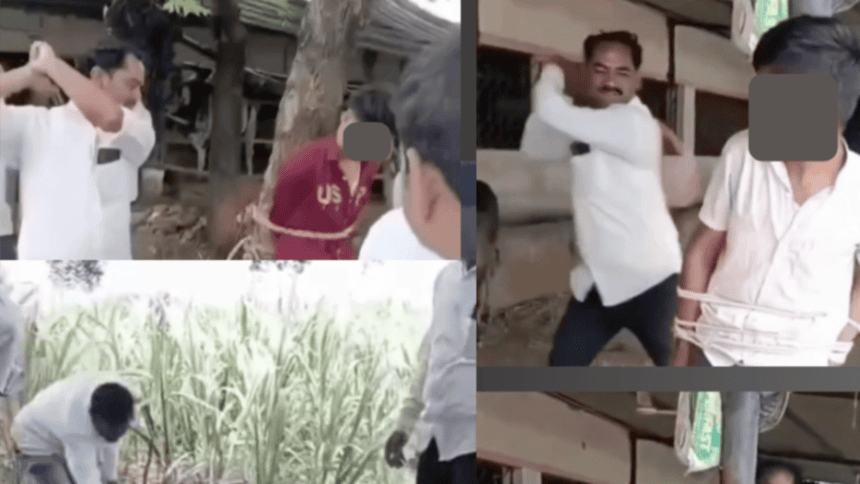
On July 10 in Kharola village, Maharashtra, three Muslim schoolboys were reportedly tied to a pole and assaulted by a group of Maratha men, accused of stealing electric wires. The violent incident, which included physical abuse with belts and pipes, has sparked outrage, revealing deep-rooted issues of discrimination and communal tensions against Muslims in India.
The Incident and Its Aftermath
Three boys aged between 13 to 15 were brutally beaten by a group in Latur district. Recording of the assault by one of the attackers circulated widely on social media, provoking widespread public anger. Parents of the victims attempted to intervene but were met with threats from the assailants. The boys were eventually rescued and taken to a hospital, where they were treated for multiple bruises.
Shockingly, when the victims’ families sought police help, officers were initially reluctant to file a First Information Report (FIR) against the attackers. Instead, the police registered a theft complaint from one of the attackers, Sachin Rautrao, before duly recording the victims’ account—over ten hours after the incident. This prioritization of the attackers’ complaint raises concerns about police bias and adherence to justice, especially as two key suspects went missing during this crucial period.
Broader Context of Discrimination
The incident highlights a troubling trend in how Indian Muslims are treated, particularly under the current BJP-led government, which has been criticized for fostering an atmosphere of fear and marginalization. The families of the assault victims alleged that their attackers used derogatory communal slurs during the beating, reflecting rising religious intolerance in the region.
Kharola village, comprised of over 1,500 households, showcases a demographic tension with more than 300 Muslim families coexisting with 500 Maratha families. Local Muslims, many from Other Backward Classes (OBC), often depend economically on Maratha landowners, fueling an additional layer of socio-economic complexity in the interactions between these communities.
Political Reactions and Implications
Political figures, such as Congress MP Dr. Syed Naseer Hussain, have condemned the incident, attributing it to a broader pattern of state-sponsored communal violence under the BJP’s governance. The police’s insistence on denying any communal angle to the assault stands in stark contrast to the experiences and allegations of the victims and their families. This situation poses alarming implications for how justice is administered in cases involving minority communities in India.
Why It Matters
The deteriorating safety and social acceptance of marginalized communities such as Muslims in India have significant ramifications beyond human rights issues—they pose vital questions related to social cohesion, justice, and the stability of India’s multi-religious framework. Understanding these dynamics is essential for developers and users involved in technology sectors and the AI industry, as they often mirror societal biases that could influence data collection, algorithmic decision-making, and public discourse online. Apathy towards such issues perpetuates a cycle of discrimination that may hinder collaborative societal progress.
Frequently Asked Questions
What happened to the three schoolboys in Kharola village?
The boys were allegedly tied to a pole and assaulted by a group of Maratha men who accused them of stealing electric wires.
How did the police respond to the assault?
Initially, the police did not register an FIR against the attackers, prioritizing a theft complaint from one of the assailants instead. It took more than ten hours to file a case for the victims.
What role does social discrimination play in such incidents?
Incidents like these are indicative of systemic discrimination and bias against marginalized communities, particularly Muslims, in India, often exacerbated by the prevailing political atmosphere.
How has the BJP government affected communal relations in India?
The BJP-led government has been criticized for promoting an atmosphere of strife and intolerance, which has contributed to increased communal tensions and incidents of violence against minority groups.