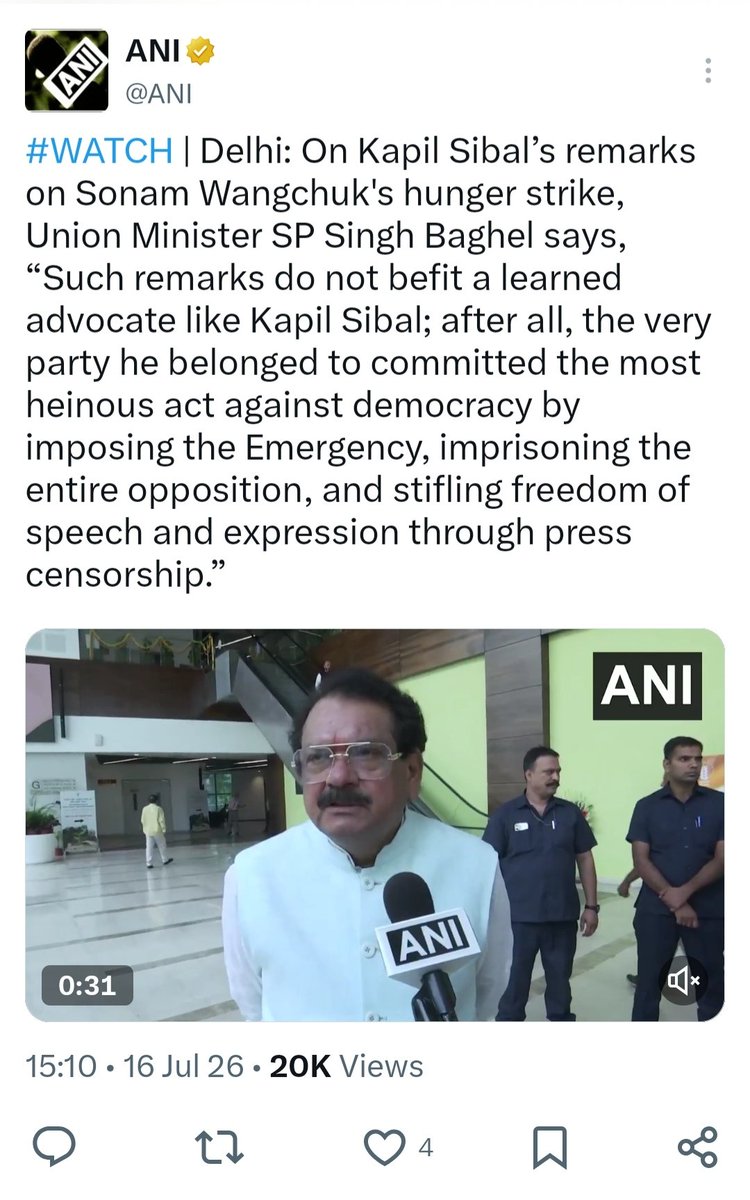

Indian political commentator Mohammed Zubair has criticized the news agency ANI for allegedly avoiding coverage of activist Sonam Wangchuk for 18 days. According to Zubair, the agency was ultimately compelled to report on Wangchuk, highlighting concerns over media bias and censorship in Indian journalism.
Context of the Claims
Sonam Wangchuk, an environmentalist and engineer, is known for his advocacy on sustainable development and education in the Ladakh region of India. His vocal stance on various socio-political issues has drawn both support and criticism. Recently, his activism has gained renewed attention, leading to discussions about the role of media in covering dissenting voices. Zubair’s remarks come in response to what he perceives as selective reporting by major news outlets, particularly ANI, which is considered one of the leading news agencies in India.
The Role of ANI in Indian Journalism
The Asian News International (ANI) has long been a prominent agency in the Indian media landscape, known for its wide array of news coverage. However, it has faced accusations of bias, particularly in reporting on issues concerning government criticism and activism. Zubair’s accusation that ANI attempted to sidestep reporting on Wangchuk raises questions about the editorial decisions made within such agencies, especially when balanced reporting is crucial in a democracy. This incident serves as a reminder of the ongoing debates about press freedom and responsibility in India.
Public Reaction and Media Accountability
The societal response to Zubair’s statements reflects a growing concern among citizens regarding media accountability. Many are increasingly wary of how narratives are shaped and the impact of selective reporting. Wangchuk has a dedicated following who are likely to support him, further complicating the media’s ability to maintain impartiality. This situation showcases the difficulties faced by journalists and news agencies in navigating political pressures while fulfilling their duty to inform the public honestly.
Why This Matters
The discourse surrounding media coverage of figures like Sonam Wangchuk is significant for multiple reasons. Firstly, it draws attention to the role of the press in fostering a lively democracy where various views can coexist. Media bias or avoidance not only hampers public discourse but also endangers the foundational principles of journalistic integrity. Zubair’s comments act as a critical inspection of the status quo, urging the public to demand transparency from media outlets. In a country laden with diverse opinions and perspectives, ensuring that all voices are adequately represented is vital for social and political harmony.
Frequently Asked Questions
Who is Sonam Wangchuk?
Sonam Wangchuk is a renowned environmentalist and engineer from Ladakh, known for his initiatives on sustainable development and educational reforms.
What is the significance of ANI in Indian media?
ANI is one of India’s leading multimedia news agencies, often setting the agenda for news coverage across various platforms. Its influence makes its reporting decisions particularly noteworthy.
What accusations have been made against ANI?
ANI has been accused of biased reporting and avoiding stories that may criticize the government or challenge dominant narratives, which raises concerns about media integrity.
Why is media accountability important?
Media accountability is crucial for maintaining a free and fair democracy. Journalists and news agencies must report responsibly to promote informed citizenry and uphold democratic values.