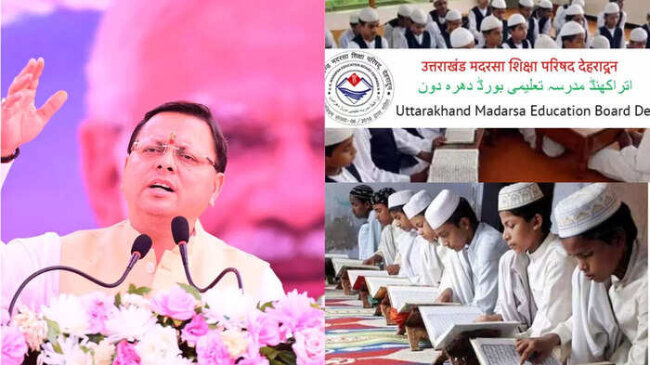

AhlulBayt News Agency (ABNA): The Uttarakhand government has decided to phase out budgetary grants to ‘Arabic madrasas’ starting from the 2027–28 financial year, signaling a significant shift in its educational policy. This decision affects nearly 500 registered madrasas and follows the dissolution of the state’s Madrasa Board, raising concerns about the implications for minority education in the region.
Context and Background
In a bid to reform the educational framework for minority communities, the BJP-led government in Uttarakhand, under Chief Minister Pushkar Singh Dhami, disbanded the Uttar Pradesh Madrasa Education Board and established the Uttarakhand State Minority Education Authority (USAME). This new body is intended to oversee educational institutions across multiple minority communities, including Muslims, Christians, and Sikhs.
The Madrasa Board was officially dissolved on July 1, with all recognized minority institutions now falling under USAME. Officials assert that this transition aims to integrate madrasas more fully into the mainstream education system while allowing them to continue offering religious instruction alongside state-mandated curriculums.
Impact on Islamic Education and Student Enrollment
According to Additional Secretary to the Chief Minister, Bansidhar Tiwari, there are currently 452 registered madrasas in Uttarakhand, catering to approximately 50,000 students. The new system requires around 400 primary madrasas, serving students from Classes 1 to 8, to gain recognition from local district authorities. Meanwhile, senior madrasas providing education up to Class 12 must seek recognition from the Uttarakhand Board of School Education.
This restructuring includes a shift to an online application process for recognition and affiliation, further imposing an obligation on madrasas to meet state educational standards. However, critics argue that this transition undermines the autonomy of minority institutions and may limit access to culturally relevant education.
Legal and Constitutional Considerations
The decision to abolish the Madrasa Board has drawn scrutiny, especially in light of a 2024 Supreme Court ruling that upheld the constitutional validity of the Uttar Pradesh Board of Madrasa Education Act, 2004. The court recognized that minority communities have the constitutional right to establish and manage educational institutions. It emphasized the need to balance these rights with the state’s interest in maintaining educational standards.
Despite this, the Uttarakhand government’s approach has sparked allegations of discrimination against Muslims. Religious leaders, such as Prof. Mohammad Salim Engineer, and politicians from opposition parties, including Samajwadi Party MP Ziaur Rahman Barq, have expressed concern that targeting madrasas could hinder educational opportunities available to minority communities.
Why It Matters
The implications of this policy shift are significant. The discontinuation of financial assistance for madrasas could exacerbate existing inequalities in education, particularly for Muslim communities that rely on these institutions as crucial educational resources. Given the changing political contexts in India, such decisions may further marginalize already vulnerable social groups and propagate feelings of exclusion. The emphasis on integrating minority educational frameworks into mainstream systems raises important questions about the preservation of cultural identity and religious education, and how these elements coexist within the broader socio-political landscape of India.
Frequently Asked Questions
What changes are being implemented in Uttarakhand’s madrasa policy?
The Uttarakhand government is discontinuing budgetary grants to madrasas starting from the 2027–28 financial year, and has replaced the Madrasa Board with the Uttarakhand State Minority Education Authority to regulate these institutions.
How many madrasas are affected by this decision?
Approximately 500 registered madrasas are impacted, where nearly 50,000 students are currently enrolled.
What is the rationale behind the new educational authority?
The government claims that integrating madrasas into the mainstream education system will improve educational outcomes and enhance opportunities for higher education and employment among minority students.
Have there been any legal challenges to this policy?
Yes, the Supreme Court has upheld the constitutional rights of minority communities to manage their educational institutions. Critics of Uttarakhand’s new policy argue that it conflicts with this legal framework.