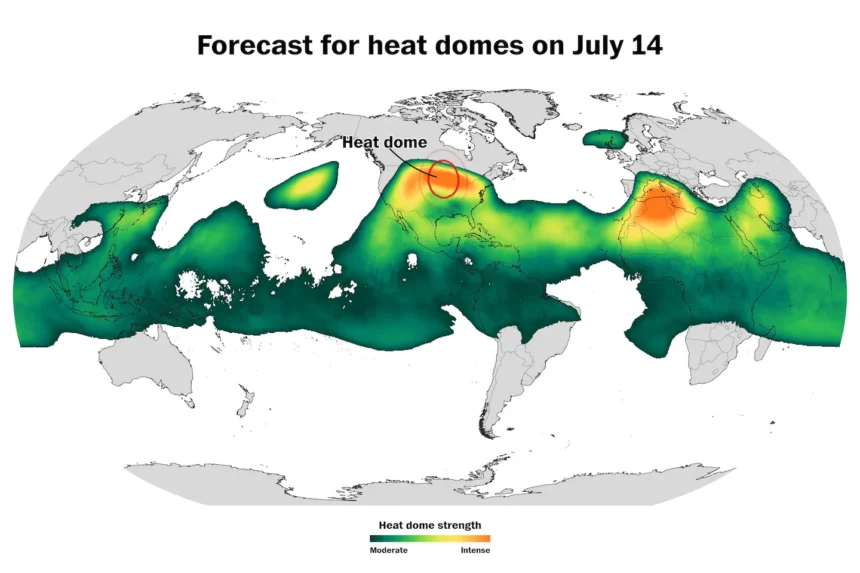

As extreme weather events become more frequent globally, a significant heat dome has developed over the north-central United States, contributing to record-breaking temperatures across several regions. This phenomenon, characterized by high-pressure areas trapping hot air, rivals another intense heat dome currently affecting northern Africa, highlighting the growing concerns over climate-related impacts worldwide.
Understanding Heat Domes
Heat domes occur when a large area of high pressure traps warm air, leading to sweltering temperatures in affected regions. This phenomenon has recently brought remarkable heat to various parts of the United States, with some areas experiencing temperatures soaring to a staggering 115 degrees Fahrenheit in Montana and 100 degrees Fahrenheit in the Upper Peninsula of Michigan. Such extreme conditions can significantly impact public health, agriculture, and even daily life, stressing the importance of understanding and predicting these weather patterns.
Global Weather Patterns and Their Effects
The current heat dome over the United States is not an isolated incident. In fact, meteorologists are observing a concurrent heat dome in northern Africa, making the two the strongest heat domes detected on Earth at this time. The overlapping high-pressure areas are leading to weather anomalies that could potentially have a ripple effect on global climate patterns. Furthermore, this raises questions about how such extreme weather can exacerbate drought conditions, affect crop yields, and lead to higher energy demands across continents.
Implications for Climate Awareness
As cities around the world grapple with the impacts of climate change, extreme weather events like heat domes are becoming increasingly relevant. These events serve as a reminder of the urgency for effective climate action and the need for communities, including those in India, to be aware of changing weather patterns. With rising temperatures and unpredictable rainfall patterns, the need for adaptive strategies in urban planning, agriculture, and health infrastructure has never been more critical.
Why This Is Trending
Indians are currently searching for information on heat domes and extreme weather phenomena due to a combination of recent climate events and the ongoing discourse about climate change. With rising temperatures in India and increased visibility of global weather patterns through news outlets and social media, the public’s interest in understanding how these developments may impact regional weather has intensified. Furthermore, the need to prepare for similar extreme weather events in India is driving this search for knowledge.
Frequently Asked Questions
What is a heat dome?
A heat dome is a weather phenomenon characterized by a large area of high pressure that traps warm air, causing temperatures in the surrounding areas to rise significantly.
How can heat domes affect public health?
Heat domes can lead to dangerous heat waves which can cause heat-related illnesses, exacerbate existing health conditions, and increase mortality rates, especially among vulnerable populations like the elderly and children.
Are heat domes becoming more common?
Yes, with climate change affecting weather patterns globally, the frequency and intensity of heat domes are expected to increase. This necessitates ongoing research and adaptation strategies to mitigate their impacts.
What can be done to prepare for extreme heat events?
Preparation involves creating awareness about heat safety practices, enhancing urban infrastructure to manage heat, developing emergency response plans, and promoting community resilience through public health initiatives and education.