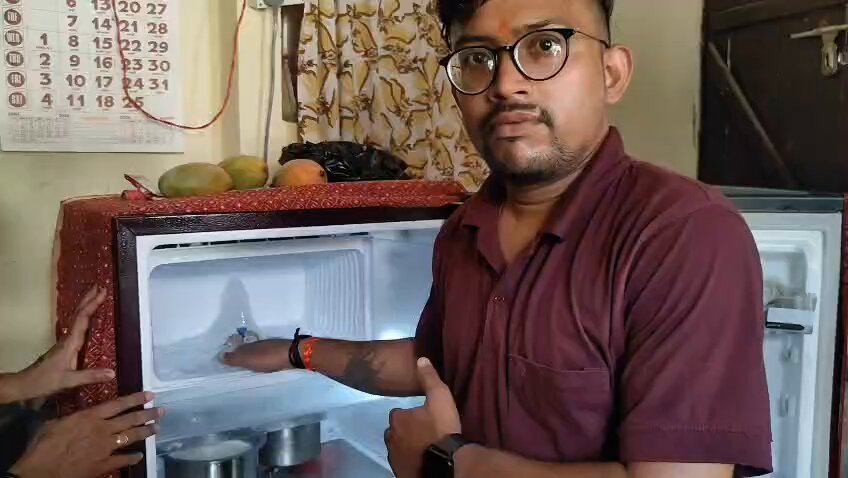

A recent social media post highlighted a curious incident in Uttar Pradesh’s Agra, where a fridge formed a shape resembling a “Shivling,” a significant symbol in Hinduism associated with Lord Shiva. Devotees are attracting attention to this phenomenon, comparing it to the sacred ice formation at the Amarnath cave and engaging in local worship practices.
Context of the Incident
The viral tweet by Sachin Gupta details how a household in Agra found an unusual ice formation in their refrigerator that some locals are interpreting as a “Shivling.” This shape has drawn the interest of Hindu devotees who often regard such occurrences as divine manifestations. The post has sparked a wave of spiritual fervor, inviting devotees to visit the home and worship the fridge as if it were a shrine.
Significance of the Shivling Symbol
The “Shivling” is a sacred symbol in Hinduism, representing Lord Shiva’s energy and cosmic power. Typically seen in temples, the Shivling is often worshipped during festivals, and new sightings, especially those aligning with spiritual lore like the Amarnath pilgrimage, can evoke strong emotional responses from believers. The connection made between the natural ice formations at the Amarnath cave and household phenomena illustrates how deeply ingrained spiritual beliefs influence the daily life of many Hindus.
The Impact on Local Culture and Community
This event is not just a simple anecdote but reflects broader cultural dynamics in India. Such phenomena tend to unite the community as people come together to express faith, create rituals, and connect over shared beliefs. In the case of this fridge incident, offerings have begun to flow in, reminiscent of practices at religious sites. This leads to a remarkable blend of spirituality within everyday life, showcasing how local beliefs can rapidly transform ordinary objects into sites of reverence and devotion.
Why This Matters
The situation in Agra underscores the influential role of religion in Indian politics and society. As religion often intersects with national identity, incidents like these can both reflect and amplify public sentiments. The fascination with divine sightings is more than a cultural curiosity; it can shape communal relationships, political discourse, and even electoral dynamics. It highlights a continued alignment of political narratives with religious beliefs, thus impacting how communities mobilize around shared identities.
Frequently Asked Questions
What is a Shivling?
A Shivling is a symbolic representation of Lord Shiva, often depicted as a cylindrical object set within a circular base. It is a sacred figure in Hindu worship and is commonly found in temples.
Why are people worshiping the fridge in Agra?
The fridge has formed a shape reminiscent of a Shivling, prompting local residents to see it as a divine occurrence. Many believe it is a sign from Lord Shiva, leading them to partake in prayers and offerings.
How does this incident connect to broader cultural practices in India?
This incident reflects the deep-rooted connection between spirituality and daily life in India, showcasing how ordinary events can mirror religious significance, mobilizing community support and gathering.
What role does the Amarnath pilgrimage play in this context?
The Amarnath pilgrimage is considered one of the most revered journeys among Hindus, and the ice lingam there is a significant symbol. By drawing parallels between the fridge phenomenon and Amarnath, it enhances the narrative of divine sightings in everyday settings, energizing local belief systems.