
Summary of the Viral Claim
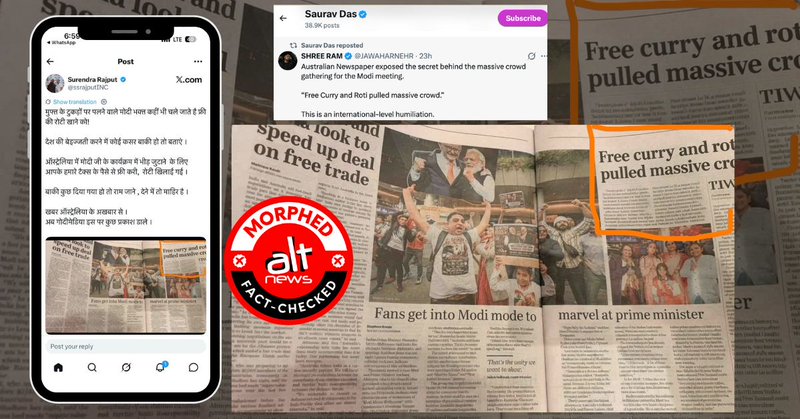
A recent image claiming that an Australian newspaper published a story with the headline “Free Curry and Roti pulled massive crowd” during Prime Minister Narendra Modi’s visit to Australia has been fact-checked and debunked. The image is revealed to be morphed and is generating discussions as an ‘international embarrassment’ for the Indian community abroad.
Context of the Viral Image
The image in question surfaced on social media amid PM Modi’s visit to Australia, which is often highlighted in the media due to the close ties between the two nations. The supposed article featured a collage of PM Modi and Australian Prime Minister Anthony Albanese, suggesting that free food was a significant draw for attendees at Modi’s events. This sparked conversations about the popularity and perception of Modi outside India, especially among expatriates and local Australians. However, upon investigation, it has been confirmed that no such article exists in any legitimate Australian publication.
Nature of the Misrepresentation
With the rise of digital media, misinformation has become increasingly prevalent. The viral image serves as an example of how easy it is to distort facts and create misleading narratives. Fact-checking organizations, including Alt News, have clarified that the image is digitally altered. Such fabrications can lead to confusion and misinform the public, causing unnecessary embarrassment and conflict among communities, particularly when related to sensitive political matters and national pride.
International Reactions and Political Implications
The circulation of this morphed image has prompted various reactions, both from supporters and critics of PM Modi. Supporters might see it as an attack on Modi’s image abroad, while critics could use it to question the effectiveness of his international diplomacy. This incident holds significance as it reflects the challenges faced by Indian leaders when engaging in global forums, particularly when the narrative is skewed by social media misinformation.
Why This Matters
The ramifications of such misleading narratives extend beyond just a story. It underscores the role of digital media in shaping perceptions about political figures and their activities. For Indian readers, particularly those who follow politics closely, it highlights the importance of critical engagement with news and the need to verify information before sharing. In today’s interconnected world, misinformation can have far-reaching effects, influencing public opinion and diplomatic relations. Therefore, understanding these dynamics is crucial for both informed citizenship and constructive dialogue about India’s place on the global stage.
Frequently Asked Questions
What was the claim regarding PM Modi’s event in Australia?
The claim suggested that an Australian newspaper reported that “Free Curry and Roti pulled massive crowd” to PM Modi’s event, which was later found to be false.
Is the image of the newspaper clipping real?
No, the image has been confirmed to be morphed and does not exist in any legitimate Australian publication.
What are the implications of spreading such misinformation?
Spreading misinformation can lead to confusion, misrepresentation of events, and diplomatic embarrassment for a country, particularly when it involves high-profile leaders.
How can readers verify the authenticity of such claims?
Readers are encouraged to check reputable fact-checking websites and credible news sources before accepting and sharing sensational claims on social media.