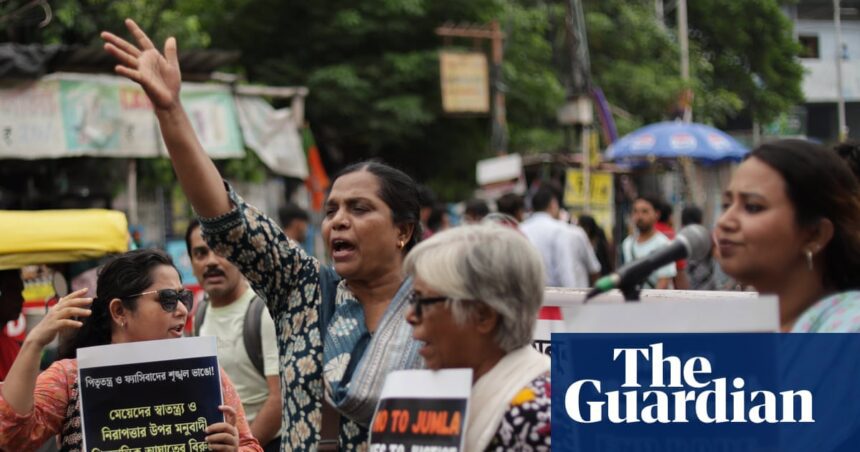

Protests have erupted in West Bengal following the horrific rape and murder of an 11-year-old girl, which has amplified tensions around women’s safety and communal identity in the region. This incident has sparked a political controversy, with accusations aimed at the ruling Bharatiya Janata Party (BJP) government regarding its handling of crime and communal relations.
The Tragic Incident and Community Outrage
The discovery of the girl’s body, reported found in a pond just outside Kolkata, has sent shockwaves through the local community. Autopsy results revealed she had been raped, suffered severe head trauma, and had visible bite and scratch marks. This gruesome act not only stirred outrage but also led to the lynching of a 26-year-old man, who was wrongly believed to be the perpetrator. Initial police inaction prompted the family to undertake their own search, raising significant concerns about law enforcement’s commitment to protecting vulnerable members of society.
Political Ramifications and Violence
The incident quickly escalated into a political blame game. Opposition parties accused the BJP, which governs both the state and central government, of failing to ensure the safety of women, highlighting a perceived deterioration in law and order. Tensions came to a head when police shot and killed Pravash Mondal, a primary suspect, claiming he attempted to escape. This so-called “encounter killing” has incited further controversy, given the historical context of extrajudicial killings in BJP-controlled states, casting doubt on the accountability of law enforcement.
Communal Dynamics and Government Response
The case also entwines communal identities, as the victim was Muslim while the alleged attackers identified as Hindu. West Bengal’s newly elected BJP Chief Minister, Suvendu Adhikari, faced accusations of politicizing the incident. His claims of a “communal connection” linked to the mob attack on the suspect have raised concerns about communal polarization, especially in a state where sectarian tensions have previously flared. Clashes between BJP members and the Trinamool Congress party reflect a broader struggle for political dominance fueled by rising sectarian sentiments.
Why It Matters
The unfolding events in West Bengal highlight significant issues related to social inclusion, governance, and community relations in India. The incident underscores the ongoing challenges faced by marginalized communities, particularly Muslims, who often find themselves at the intersection of political conflict and social exclusion. As BJP and its affiliates gain power, the implications of their policies foster an environment where communal identities become increasingly weaponized, leading to further marginalization of certain groups. Understanding these contexts is critical for developers and policymakers in the AI industry, informing how technologies may impact or reflect societal biases and potentially reinforce existing inequalities.
Frequently Asked Questions
What happened to the 11-year-old girl in West Bengal?
The girl was found dead in a pond after being raped and assaulted, leading to widespread outrage and protests in the community.
How did the political situation escalate following this incident?
The tragic event led to public demonstrations against the government’s handling of women’s safety, accusations aimed at the ruling BJP party, and increased tensions between political factions.
What are the criticisms against the police in this case?
Critics claim that the police initially did not take the incident seriously and failed to act promptly, forcing the victim’s family to conduct their own search.
What implications does this situation have for communal relations in India?
The communal dynamics of this incident have raised concerns about how political narratives can exacerbate sectarian tensions and further marginalize certain communities, notably Muslims.