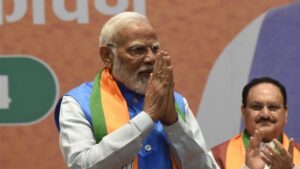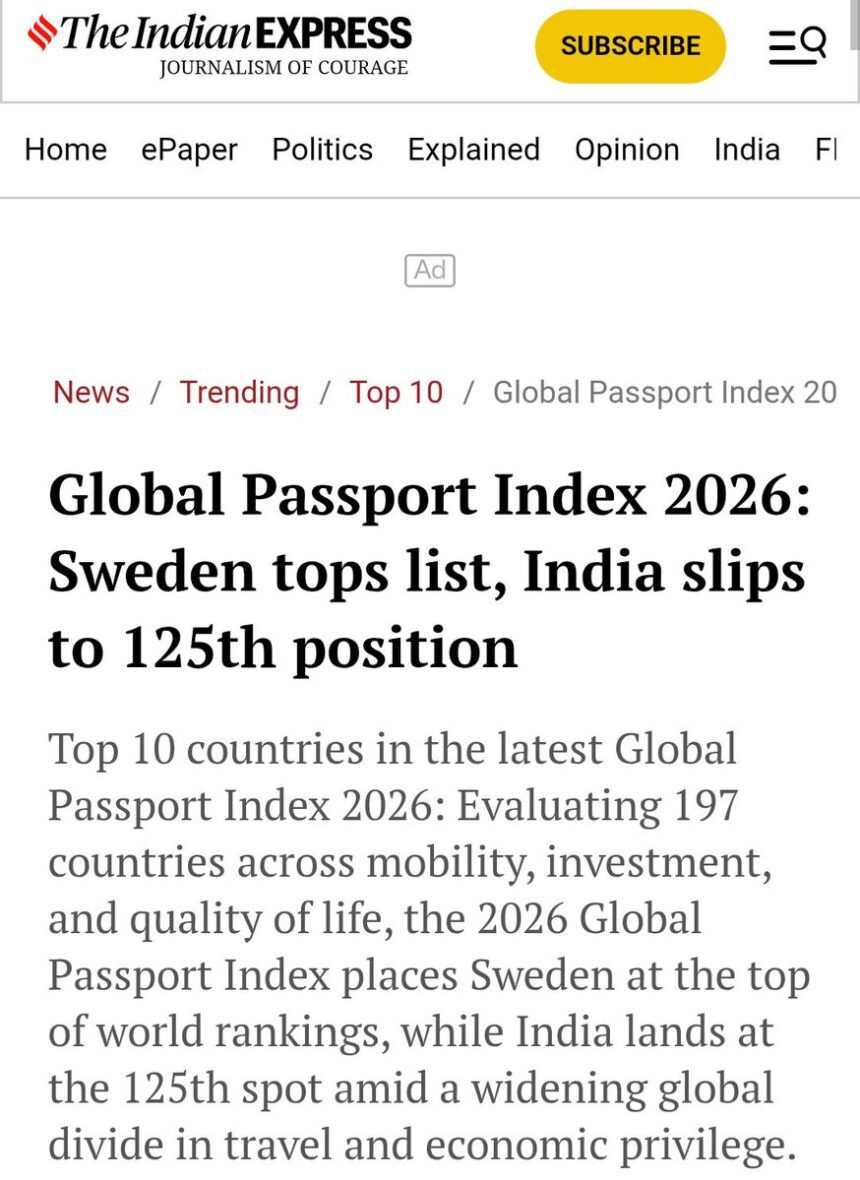

In a recent tweet, prominent political commentator Mohammed Zubair critiques Prime Minister Narendra Modi’s claims regarding India’s status in global indices. His analysis underlines a perceived commonality in numerical representation, linking various dates and positions that point to the number eight, suggesting a pattern that he finds notable despite the disheartening drop in India’s Global Passport Index ranking.
Context of India’s Passport Ranking
The Global Passport Index is a ranking that measures the power of passports based on the number of destinations holders can access without prior visa arrangements. In 2026, India has reportedly slipped to the 125th position, indicating a decrease in the global standing of its passport. This ranking affects millions of Indian travelers who seek to navigate through visa restrictions and influences perceptions of India’s international relations.
This drop in ranking comes at a time when many nations are enhancing their passport strength through diplomatic agreements and global partnerships. As countries vie to facilitate easier travel for their citizens, India’s decline raises questions about its foreign policy and visa agreements worldwide. The implications could hinder Indian citizens’ ability to travel freely, impacting tourism, business, and global mobility.
Zubair’s Numerical Observation
In his commentary, Zubair notes a bizarre connection he draws from numeric interpretations linked to India’s way of celebrating its Republic Day. He references PM Modi’s statement about India’s Republic Day celebration on January 26, and formulates that “2 plus 6 equals 8.” He then links this to Indonesian President Prabowo Subianto’s birthday on the 17th, stating that “1 plus 7 also equals 8.” This juxtaposition of numbers speaks to Zubair’s critique of the Modi administration, inviting scrutiny over what he perceives as an attempt to divert attention from more serious issues by focusing on numerical coincidences.
The resonance of the number 8 in his observations inadvertently highlights the ongoing phenomenon in contemporary politics where leaders and commentators often find patterns in numbers to make larger statements. Zubair seems to challenge the audience to reconsider how such patterns may be strategically used in political narratives to frame success or failure.
Public Reaction and Political Implications
The tweet by Zubair has elicited reactions from various quarters, with netizens engaging in debates about the relevance of such numerical reasoning in the context of policy outcomes. The emphasis on numerical coincidences, especially when it relates back to a troubling diplomatic score like the passport index, strikes a chord with many citizens who are increasingly aware of and critical toward the government’s performance.
These discussions reflect growing concerns about India’s diplomatic relations and the government’s ability to facilitate better international mobility for its citizens. As social media amplifies discussions on these issues, the Modi administration may face increased scrutiny in light of the passport index ranking, leading to wider implications for upcoming elections and public opinion on foreign policy effectiveness.
Why This Matters
The significant decline of India’s passport ranking not only affects the everyday traveler but poses a larger question about India’s status on the global stage. For Indian readers, this reflects the broader implications of governance and policy in international relations. With increasing global interaction, the ability to travel freely is closely tied to both national pride and personal mobility. The continued scrutiny of the Modi government’s handling of diplomatic affairs through the lens of immigration and travel access will likely play a pivotal role in shaping public sentiment leading into future elections.
Frequently Asked Questions
What is the Global Passport Index?
The Global Passport Index ranks passports based on the number of destinations citizens can access without a prior visa. A higher ranking indicates more freedom for travelers from that country.
How does India’s ranking affect its citizens?
A lower passport ranking can complicate travel for Indian citizens, increasing the need for visas and making international mobility more challenging. This could impact business, tourism, and international relations.
What is the significance of Zubair’s numerical observations?
Zubair’s connections between numerical values highlight how political narratives can sometimes focus on coincidental or superficial patterns, drawing attention away from serious governance issues such as India’s declining international standing.
Why is public discourse around India’s passport ranking important?
Public discourse fosters greater awareness about governmental policy effectiveness, encouraging accountability and discussion about diplomatic strategies that directly affect citizens’ lives, particularly in a globalized world.