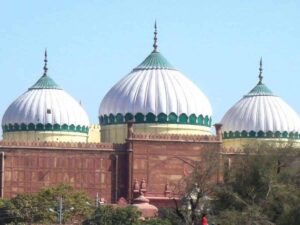

Recent rulings in India have reignited tensions surrounding the Kamal Maula mosque in Madhya Pradesh, with significant implications for the Muslim community. Following a decision by the Madhya Pradesh High Court that recognized the mosque site as a Hindu temple, many Muslim residents feel their religious and cultural heritage is under siege.
Judicial Decision and Its Repercussions
The Kamal Maula mosque, a site central to Muslim worship for decades, has been declared by the Madhya Pradesh High Court as a temple dedicated to a Hindu goddess, Vagdevi. This ruling has been met with celebrations by Hindu groups, while Muslims like Rafiq, who served as the mosque’s muezzin for 50 years, express despair over the loss of a spiritual sanctuary. Rafiq remarked, “Until last Friday, our mosque was ours; today it is not.”
Historically, the site has been a flashpoint for religious claims, particularly since the late 1950s when Hindu nationalist sentiments began asserting that mosques were built atop temples. The court’s decision not only dismisses the longstanding Muslim presence but also suggests that Muslims may seek alternate land for a mosque, undermining their rights to a contested historical space.
Historical Context of Religious Tensions
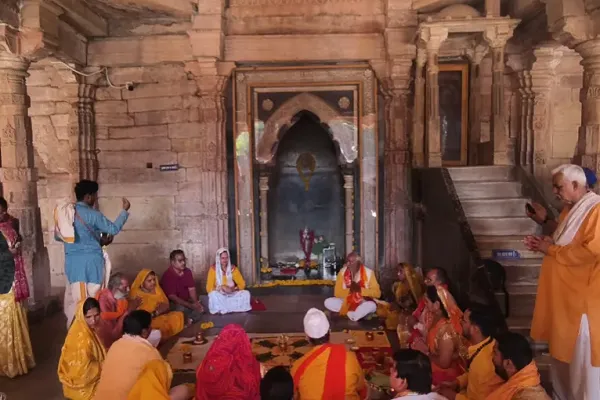
The Kamal Maula mosque’s case is emblematic of a broader trend in India under Prime Minister Narendra Modi’s government since 2014. Far-right Hindutva activists have increasingly championed claims of temple origins beneath Islamic structures, including well-known sites like the Taj Mahal. This ongoing narrative has targeted sacred sites across the country, resonating with historical grievances dating back centuries. Amidst heavy police presence, rituals were recently performed at the Bhojshala complex, leaving many residents disturbed, concerned about an escalating pattern of marginalization.
According to historian Audrey Truschke, the current climate is defined by “entrenched Islamophobia,” where Muslim communities face systematic erasure. As she pointedly notes, “India’s ongoing campaigns to restrict freedom of religion for Muslims are appalling.” The court’s ruling has reinforced sentiments that equate Muslim places of worship with historical injustices and political maneuvers aimed at reclaiming Hindu identity by diminishing Muslim cultural heritage.
Legal Implications and Challenges Ahead
The legal ramifications of the court’s ruling extend beyond the immediate local context. Critics argue that the high court’s decision relies on questionable interpretations of historical surveys conducted by the Archaeological Survey of India (ASI), which are viewed as politically motivated. Furthermore, legal advocates for the Muslim community are preparing to contest this ruling in the Supreme Court, citing the Places of Worship Act of 1991, which seeks to freeze the religious character of places of worship as they existed at the time of India’s independence.
Legal experts warn that the high court’s approach may set a precedent for further claims and challenges to Muslim sites nationwide, echoing previous controversial court decisions, such as the Babri Mosque case. Asaduddin Owaisi, a prominent Muslim leader, fears this ruling could open “the floodgates for all these claims,” suggesting a systematic dismantling of established Islamic sites under the guise of historical rectification.
Why It Matters
This issue has profound consequences not only for India’s social fabric but also for its political landscape. The current trajectory of judicial decisions favoring Hindu claims may embolden further religious polarization, which could disrupt communal harmony and spur societal unrest. The implications are wide-reaching, affecting national governance, minority rights, and the overall commitment to secularism in a country known for its diversity. As tensions escalate, international observers are likely to watch closely for indicators of how India navigates its complex identity amid rising nationalism.
Frequently Asked Questions
What is the Kamal Maula mosque controversy about?
The Kamal Maula mosque was recently ruled by the Madhya Pradesh High Court to be situated on a site recognized as a Hindu temple, leading to fears of exclusion among the Muslim community.
How does the ruling affect the Muslim community in India?
The decision marginalizes the Muslim community by erasing their historical presence and denying them their rights to worship at a site they have occupied for decades. Many Muslims feel increasingly alienated and under threat.
What historical events contributed to this ruling?
The ruling is part of a wider historical narrative driven by claims of Hindu nationalists since the late 1950s, asserting that mosques were built over temples as a form of historical injustice against Hindu deities.
What are the possible legal repercussions following this ruling?
The Muslim community plans to challenge the ruling in the Supreme Court, which may have broader implications for the rights and status of many Muslim places of worship across the country, potentially leading to further polarization.