
Summary
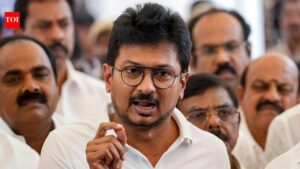
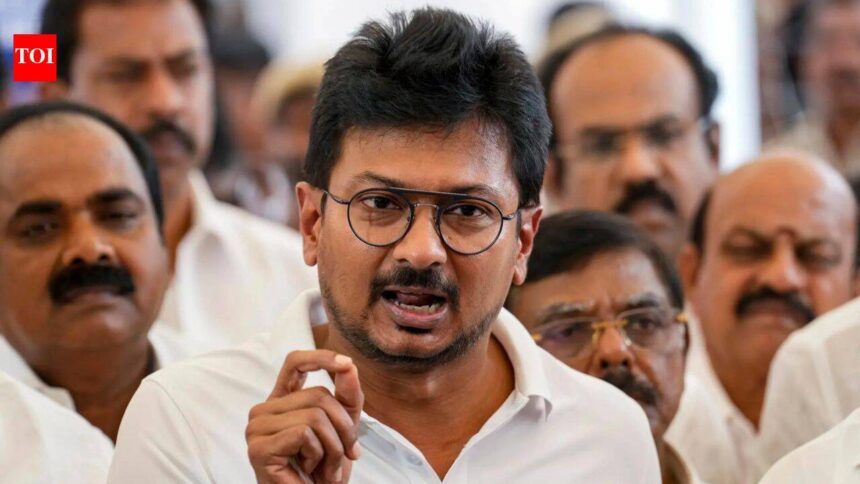
Udhayanidhi Stalin, a leader of the Dravida Munnetra Kazhagam (DMK) party, has reaffirmed the party’s dedication to supporting minority communities, particularly Muslims, amidst rising political tensions in Tamil Nadu. His remarks come at a time when the political landscape is fraught with efforts to sow division among communities.
Political Climate and Minority Relations
The political atmosphere in Tamil Nadu has intensified, particularly concerning minority engagement. Udhayanidhi Stalin emphasized the DMK’s enduring connection with minority groups despite external attempts to foster division. Speaking at a notable wedding in Chennai, he articulated the party’s unshakeable commitment to being a protective bastion for minorities, a sentiment echoed amidst rising criticisms from political rivals.
Stalin’s speech was notably layered with pointed contrasts to opposing parties, hinting at their unstable affiliations and lack of genuine commitment to minority welfare. Without naming specific opponents, he remarked, “some people left us as soon as a sofa arrived,” implying that others abandon their constituents when faced with challenges.
Historical Context and Leadership Role
During the event, Udhayanidhi also provided insights into the DMK’s rich historical narrative, recalling Kaja’s past political endeavors and his loyalty to the party. This historical context underpins the DMK’s current standing as a reliable ally for the Muslim community in Tamil Nadu. Udhayanidhi invoked memory and loyalty to reinforce the party’s credibility, stating that the DMK will serve as a “protective fortress” for minorities and asserting that any divisive narratives would not succeed.
Additionally, Udhayanidhi projected DMK president M.K. Stalin as a central figure in these troubled times, ready to defend Tamil Nadu’s interests and promote inclusivity. This broadens the appeal of the DMK among minorities, framing the party as not only a political entity but also a cultural cornerstone for various communities.
Significant Support at Community Events
Udhayanidhi’s remarks were made in front of a significant gathering of Muslim community members at the wedding, allowing him to bolster the party’s message of solidarity effectively. Notably, the event displayed an unexpected gesture of camaraderie when Udhayanidhi escorted Naam Tamilar Katchi Chief Coordinator Seeman, demonstrating an unusual collaborative spirit across party lines in the otherwise polarized political environment.
Why It Matters
The political dynamics surrounding minority communities in India, especially in light of the statements made by Udhayanidhi Stalin, signal significant implications for social cohesion and the preservation of democratic values. The DMK’s ongoing efforts to protect and advocate for Muslims reflect larger trends of discrimination, social exclusion, and marginalization that exist across the country.
These developments not only affect local politics but also resonate on a national level, as they shape the discourse regarding the treatment of minorities under the current political regimes, particularly under the BJP government. Understanding these dynamics is essential for grasping the broader social fabric and inter-community relations within contemporary India.
Frequently Asked Questions
What is the DMK’s stance on minority rights?
The DMK asserts its commitment to protecting minority rights and has publicly stated it will act as a supportive force for minority communities, especially Muslims, amidst rising political tensions.
Who is Udhayanidhi Stalin?
Udhayanidhi Stalin is a prominent leader in the DMK party and the son of M.K. Stalin, the party president. He serves as a key figure in promoting the party’s policies and strategies related to community engagements.
What political challenges are minorities facing in Tamil Nadu?
Minorities in Tamil Nadu are facing challenges from rising political sentiments that seek to create divisions among communities, particularly amid efforts by some political parties to assert dominance over minority votes.
How does the BJP government influence minority policies?
The BJP government’s approach has often been characterized by policies that critics argue lead to social exclusion and discrimination against minority communities, affecting their political representation and rights.