
Projections Reveal India’s Demographic Shift
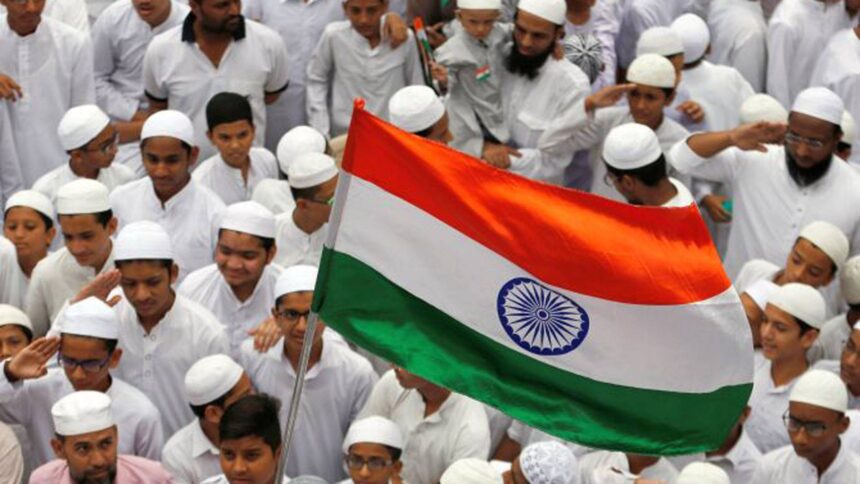
India is set to become home to the largest Muslim population in the world by 2050, surpassing Indonesia. By that year, the Muslim population in India is expected to reach approximately 311 million, representing about 18.4% of the nation’s total populace. Even with this significant growth, Hindus are projected to maintain a substantial majority of around 76–77%.
Current Context of Discrimination and Marginalization
Despite promising demographic trends, Indian Muslims have faced systemic discrimination and social exclusion under the governance of the Bharatiya Janata Party (BJP) and its ideological compatriot, the Rashtriya Swayamsevak Sangh (RSS). Various reports indicate a rise in hate crimes, social boycotts, and violence directed towards Muslim communities, often incited by political rhetoric.
Economically, many Muslim-owned businesses have suffered from informal boycotts where Hindu nationalist groups discourage consumers from patronizing Muslim enterprises. This has led to economic disenfranchisement, further marginalizing an already vulnerable community. The social fabric of Indian society is increasingly strained, with Muslims frequently facing stigmatization and exclusion from political representation.
Growing Concerns Over Hindu Nationalism
The BJP and RSS have promoted a narrative that positions Muslims as outsiders within India’s diverse tapestry, contributing to an environment of hostility. Such a political climate not only fosters religious intolerance but also exacerbates feelings of insecurity among Muslim communities. High-profile incidents, such as mob lynchings and targeted violence against Muslims, illustrate the urgent challenges faced by this demographic.
Moreover, the implementation of policies perceived as discriminatory—such as the Citizenship Amendment Act (CAA) and the National Register of Citizens (NRC)—raise questions about the long-term impact these will have on India’s secular framework. Critics argue that these policies further marginalize Muslims by casting doubt on their citizenship and rights.
Religious Pluralism Under Threat
While projections indicate a growing Muslim population, the reality within India remains complex. The country’s historically pluralistic society is increasingly challenged by growing communal tensions. With Hindus remaining the majority, there are concerns that the environment for Muslims and other minority communities might become increasingly precarious. Whether these projections will change the dynamics between communities or exacerbate existing divides remains to be seen.
In the grand tapestry of India’s demographic evolution, the substantial Muslim growth does not erase underlying social inequities. The evolving identity of India, as a nation of both Hindus and Muslims, must address these challenges head-on to sustain its multicultural ethos.
Why It Matters
The significance of these demographic projections lies not only in numbers but in understanding their implications for societal harmony and governance in India. For the AI industry and developers, frameworks built on inclusivity and diversity become paramount as they work with data that reflects a changing social landscape. When creating algorithms or models, an understanding of these demographic changes will inform more equitable decision-making and functionality in technology that impacts wide-ranging communities.
Furthermore, for users of AI, awareness of these issues adds a layer of critical engagement with tools that may inadvertently reflect or reinforce societal biases. Understanding demographic shifts is essential for developing ethical AI that respects the plurality of human experiences and realities.
Frequently Asked Questions
1. What is the projected Muslim population in India by 2050?
By 2050, it is projected that India’s Muslim population will reach approximately 311 million.
2. How will the Hindu population change in India by 2050?
The Hindu population is expected to remain around 76–77% of the total population, maintaining Hinduism as the largest religion in India.
3. What factors contribute to the demographic projections for India?
The projections are based on demographic trends such as fertility rates, age structure, life expectancy, and population momentum.
4. What are the implications of these demographic changes for Indian society?
The implications include potential shifts in social dynamics, challenges to minority rights, and the need for policies that support religious pluralism and inclusivity.