
Summary: This Fourth of July, diverse political voices emerged in the U.S. as New York City Mayor Zohran Mamdani and former President Donald Trump delivered contrasting speeches. Their addresses revealed deep divides regarding the American identity while inviting reflection on the nation’s progress since its founding.
Contrasting Political Visions
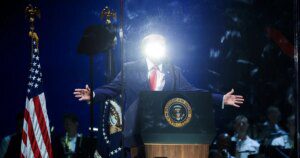
On July 4th, a weekend honorific of American pride, Mayor Zohran Mamdani and former President Donald Trump encapsulated the stark dichotomy in present-day American politics. Their speeches, revered by some and criticized by others, showcased two opposing views of America’s core values. Mamdani’s address, full of emotional appeals, sought to unify the nation through shared ideals, whereas Trump’s rhetoric harkened back to a traditional, ‘Make America Great Again’ perspective.
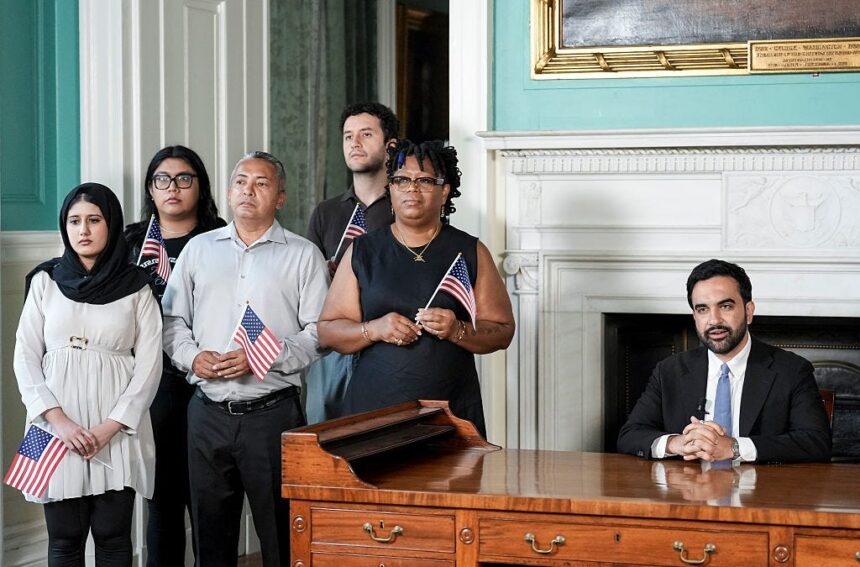
Mamdani’s oration emerged from City Hall, delivered with a cadence reminiscent of Barack Obama, steeped in an emotionally charged narrative. Critics noted that his language was grandiose, bordering on saccharine, and some speculated it was almost scripted by AI, designed to evoke an emotional response rather than present concrete solutions. In stark contrast, Trump’s remarks summoned images of a nostalgic America, focusing on patriotism and cultural revival, appealing to those feeling marginalized in a rapidly changing society.
The Context of the Celebrations
This year marked the 250th anniversary of America’s founding, often referred to as the semiquincentennial. Such an occasion typically invites a unified celebration of national identity; however, the potent political discourse surrounding it turned the festivities into a battleground for ideologies. Rather than a harmonious reflection on progress, the weekend highlighted the fractures within American society.
As America lit fireworks and gathered around barbecues, the lack of a shared narrative became increasingly palpable. The juxtaposition of Mamdani’s optimistic, yet unrealistic vision against Trump’s rallying cry for a return to traditional values illustrates the ongoing struggle to determine what it means to be American in today’s world. The speeches symbolize broader debates on inclusivity, identity, and the legacy of the Founding Fathers, echoing far beyond mere political discourse.
Global Perspective on American Identity
For many in India, the U.S. serves as a symbol of aspiration, opportunity, and democracy. Observing political events in America can sometimes feel like a reflection of one’s own societal issues, especially in a country characterized by vast diversity and varying ideologies. The speeches by Mamdani and Trump resonate with ongoing discussions about globalization, migration, and multiculturalism that are equally pertinent in the Indian context.
This ongoing discourse provides insight into how global audience perceptions are shaped. Leaders across nations often look toward U.S. political narratives for inspiration, guidance or cautionary tales. As India grapples with similar ideological divides, understanding America’s evolving political landscape offers a crucial lens through which to interpret its own challenges.
Why This Is Trending
Interest in the speeches of Mamdani and Trump has surged due to their significant implications for our understanding of global democratic values, especially as many Indians find themselves reflecting on their national identity in light of their heritage. With the internet acting as a fast track for information, significant political shifts in America often influence opinions and policies in India. As these speeches reverberate through international channels, there is a growing quest to dissect differing visions of governance and identity.
Frequently Asked Questions
What key themes were highlighted in Mamdani’s speech?
Mamdani’s address focused on inclusivity, shared values, and the importance of emotional engagement, aiming to unite varying segments of the population in a collective American identity.
How does Trump’s vision of America compare to Mamdani’s?
Trump’s perspective draws heavily on nostalgia for a traditional America, advocating a return to past values, while Mamdani seeks a forward-thinking approach centered around unity and progress.
Why should Indians care about American political discourse?
As both nations navigate issues of diversity, nationalism, and identity, understanding America’s political landscape can provide valuable insights into similar challenges faced by India.
How do such speeches influence global perspectives?
Political narratives from the U.S. often resonate globally, affecting perceptions and possibly even policy-making in other democratic nations, including India.