
Growing Intolerance: A Call to Action from the AIMPLB
In response to increasing intolerance towards Muslims in BJP-ruled states, the All India Muslim Personal Law Board (AIMPLB) has launched a nationwide movement to safeguard Islamic faith and constitutional rights. The organization is mobilizing support against the perceived marginalization of the Muslim community amid fears surrounding the implementation of the Uniform Civil Code (UCC), which many believe threatens their religious practices.
AIMPLB’s Strategy Against Marginalization
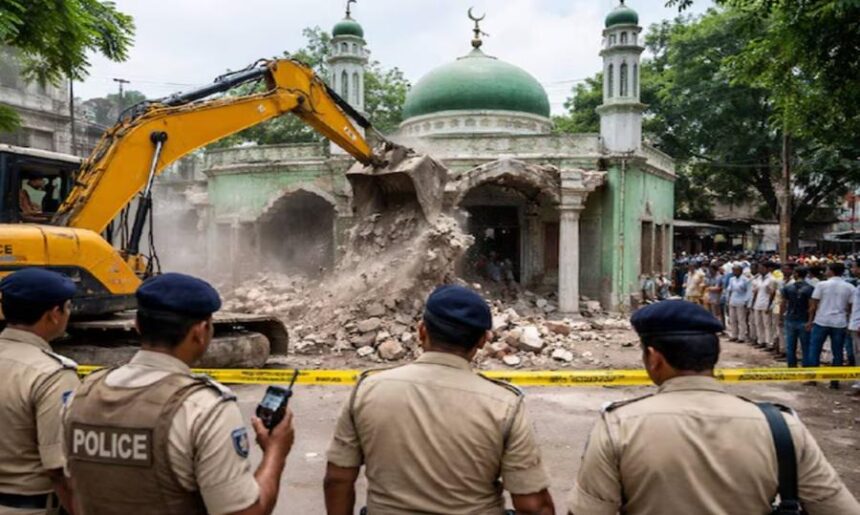
The AIMPLB convened its Executive Committee under President Maulana Khalid Saifullah Rahmani to outline a strategy aimed at combating the social and political disenfranchisement of Muslims. The Board’s statement noted that mosques and madrasas in northern India have been targeted for demolition by local authorities, contributing to an atmosphere of hostility and fear within the community.
As part of its initiative, the AIMPLB has established an Action Committee to collaborate with various civil society groups focused on promoting democracy and peace. This Committee aims to publicize the growing intolerance and violence directed at Muslims, emphasizing the detrimental impacts on communal harmony. The need for such a movement is highlighted by ongoing legislative measures in states like Uttarakhand, Gujarat, Assam, Madhya Pradesh, and Maharashtra that are perceived to undermine Muslim rights.
Opposition to the Uniform Civil Code and Vande Mataram Mandate
Central to the AIMPLB’s efforts is strong opposition to the Uniform Civil Code, which the Board argues undermines religious freedoms guaranteed under Article 25 of the Indian Constitution. The UCC aims to replace personal laws based on the scriptures and customs of each major religious community with a common set governing every citizen, a move that many Muslim leaders fear could strip away their rights to practice their religion freely.
Additionally, the Board has publicly opposed making Vande Mataram mandatory in educational institutions, viewing this requirement as a violation of religious liberties. The recent ruling by the Calcutta High Court to stay a directive from the West Bengal government mandating the singing of the song in schools and madrasas was welcomed by the AIMPLB as a reinforcement of religious freedom.
Documenting Discrimination: Towards a Comprehensive Report
As part of its nationwide movement, the AIMPLB plans to compile a comprehensive report to document the current state of Muslims in India. This report will focus on rising communal tensions, incidents of discrimination, and the erosion of fundamental rights. The initiative is particularly pertinent as communal violence and social boycotts have surged in several regions, illustrating the urgent need for accountability and action.
The AIMPLB’s efforts signify a necessary pushback against what they describe as a systematic campaign against the Muslim community, aiming to preserve their rights and dignities in a rapidly changing socio-political landscape.
Why It Matters
The situation surrounding the AIMPLB’s call to action has broader implications, particularly in the context of rising communalism and social exclusion. As the Indian government considers sweeping changes to personal laws through the UCC, it raises critical questions about minority rights and religious freedom that are vital for maintaining societal stability. The events may also influence future policy discussions both nationally and globally, concerning the treatment of minority groups within democratic frameworks.
Frequently Asked Questions
What is the Uniform Civil Code (UCC)?
The UCC is a proposal to replace personal laws based on the scriptures and customs of each major religious community in India with a common set governing every citizen, aiming to ensure equal rights for all irrespective of religion.
Why are Muslims concerned about the UCC?
Many Muslims fear that the UCC could infringe upon their ability to practice their religious customs freely, as it seeks to standardize laws across different communities which may not accommodate specific religious practices.
What actions is the AIMPLB planning to take?
The AIMPLB has initiated a nationwide movement to mobilize public opinion against perceived marginalization, forming an Action Committee to work with other civil society groups to promote awareness of the issues faced by the Muslim community.
How does the Vande Mataram issue relate to religious freedom?
The AIMPLB argues that making Vande Mataram compulsory for schools and madrasas infringes upon the religious freedoms granted under the Constitution, which allows individuals the right to worship and adhere to their religious beliefs without coercion.