
Exploring Overlooked Connections in Ottoman History
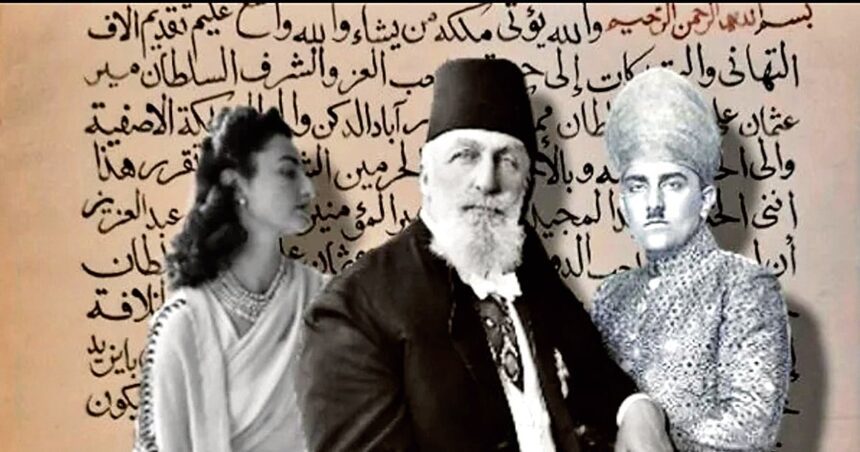
The Ottoman Empire, often seen through the prism of its decline, contains untold narratives that resonate with contemporary societal issues, especially regarding Indian Muslims. In The Indian Caliphate: Exiled Ottomans and the Billionaire Prince, Imran Mulla illuminates a forgotten yet vital history through the life of Abdulmejid II and his interaction with Mir Osmania Ali Khan, the Nizam of Hyderabad, offering insights into a cosmopolitan past that could inform present conversations about inclusion and identity.
Bridging Cultures: A Royal Marriage and Its Implications
One of the pivotal moments highlighted in the book is the union between Abdulmejid II’s daughter, Durrusehvar Sultan, and the son of the Nizam, Azam Jah. This marriage was not merely a personal bond but a symbolic gesture aimed at reinforcing the Indo-Islamic cultural legacy during a time of significant political upheaval. Mulla posits this alliance as a representation of the Ottoman desire to position Islam as a modern and progressive force. He notes, “I describe the scheme as Indian because it involved Indian Muslims outside of Hyderabad, and the Nizam’s capital was widely recognised as home to the last flowering of Indo-Islamic culture.” This sentiment demonstrates a yearning for cultural coexistence and modernization within both the Ottomans and Indian Muslims.
Intellectual Exchange in a Time of Decline
Mulla’s exploration into the societal exchanges that took place during the waning years of the Ottoman Empire reveals the complexities of identity and belonging. Despite the empire’s decline, intellectual currents flowed between the Ottomans and Indian Muslims, showcasing a dynamic of political imagination. These exchanges fostered a climate of mutual respect and shared aspirations that is often overshadowed by contemporary narratives of division and conflict. The narrative offers a counterpoint to the common discourse surrounding Muslim identity and engagement with modernity, suggesting a historical precedent for coexistence, respect, and intellectual vigor.
Contemporary Implications of Historical Narratives
The historical lens provided by Mulla is particularly significant in the context of the ongoing socio-political dynamics in India today, where discrimination and marginalization against Indian Muslims have become increasingly prominent. These historical narratives serve as a reminder of a time when cultural and intellectual exchanges transcended geographical and religious boundaries. In a nation where political rhetoric often leans towards exclusion, such stories can inspire a more inclusive dialogue and foster a sense of belonging among diverse communities.
Why It Matters
Understanding the narratives of coexistence and cultural richness highlighted in Mulla’s work is vital for fostering inclusive societies. For Indian Muslims, these stories symbolize hope amidst ongoing marginalization and discrimination. They underscore the need for bridging divides in today’s polarized world. By revisiting these connections, policymakers, educators, and community leaders can work towards rebuilding frameworks of understanding that celebrate diversity rather than suppress it. This historical context can pave the way for more empathetic and inclusive conversations in contemporary settings.
Frequently Asked Questions
What is the significance of the marriage between Durrusehvar Sultan and Azam Jah?
The marriage represents an effort to symbolize the continuity of Indo-Islamic culture and was intended to portray the Ottoman Empire positively as a modern and progressive entity.
How does Mulla’s work relate to current social issues in India?
Mulla’s examination of historical exchanges between Ottomans and Indian Muslims can illuminate the ongoing struggles of Indian Muslims today against discrimination and social exclusion, suggesting the importance of cultural heritage in fostering inclusion.
What are the central themes of The Indian Caliphate?
The central themes include the exploration of cultural coexistence, the intellectual exchanges between the Ottomans and Indian Muslims, and the aspirations for inclusivity during a time of decline.
Why is it important to look at the Ottoman Empire’s decline through a different lens?
Reassessing the decline of the Ottoman Empire through the lens of cultural connections and intellectual exchanges offers a richer, more nuanced understanding of historical identity that can influence contemporary societal narratives.