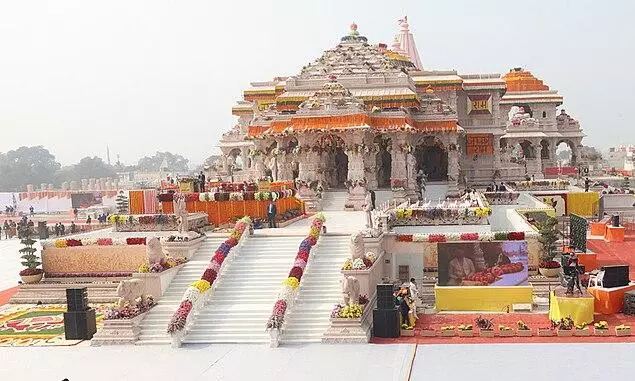

The alleged embezzlement of funds in Ayodhya’s Ram Temple has stirred public outrage, particularly among devotees who contributed to the fundraising efforts. With estimated siphoning of ₹2,000-3,000 crore, this incident highlights broader issues of discrimination and marginalization faced by the Muslim community in India under the current political regime.
The Ram Temple: A Symbol of Controversy
The construction of the Ram Temple in Ayodhya has its roots in the contentious history surrounding the Babri Mosque’s demolition in 1992. This event was pivotal in the rise of the Bharatiya Janata Party (BJP) and its ideological parent, the Rashtriya Swayamsevak Sangh (RSS). The aggressive campaigns, including the infamous Rath Yatras led by BJP leaders, aimed at reinforcing a narrative that the mosque was built after the destruction of a Ram Temple by the Mughal ruler Babar. This deeply divisive campaign has fuelled societal conflict, allowing for an environment hostile to Indian Muslims.
The Financial Fallout: Allegations of Corruption
As the Ram Temple construction progressed, many devotees contributed generously, including significant donations such as 200 silver bricks from the Vishwa Sindhi Samaj. However, reports have emerged suggesting that trustees allegedly embezzled large sums, raising questions about transparency and accountability. Prime Minister Narendra Modi’s dual role as both Chief of State and Chief Priest has compounded the concerns surrounding the temple’s governance. The lack of receipts for donations further exacerbates the sense of mistrust, particularly among smaller donors.
The Political Ramifications: Hindutva and Social Polarization
The Ram Temple campaign has not only bolstered BJP’s political standing but also intensified societal divides. As the party solidifies its base through polarization, the fear is that these tactics can lead to systemic discrimination against Muslims. Historian Romila Thapar argues that throughout history, rulers have exploited religious sentiments for political gain, mirroring the actions of current governmental forces. This blend of religion and politics serves to marginalize minority communities, placing them in a precarious position within a supposed democracy.
Why It Matters
This unfolding situation sheds light on the intersection of politics and societal issues in India. The financial malpractice at the Ram Temple casts a shadow on the integrity of religious institutions, and the politicization of religion underscores a worrying trend of exclusion and discrimination. For global audiences observing India’s democratic fabric, these developments highlight the challenges faced by minority communities when political ambitions override the principles of equality and justice.
Frequently Asked Questions
What is the significance of the Ayodhya Ram Temple in Indian politics?
The Ram Temple has become a symbol for the BJP and represents the party’s Hindutva agenda, influencing national political dynamics and contributing to the marginalization of the Muslim community.
How much money is alleged to have been embezzled from the Ram Temple?
Estimates suggest that between ₹2,000-3,000 crore may have been embezzled by trustees managing the funds for the temple’s construction.
What role did the BJP play in the Babri Mosque’s demolition?
The BJP, with the support of the RSS, was instrumental in the agitation leading to the Babri Mosque’s demolition. Leaders like Lal Krishna Advani were pivotal in mobilizing support for the temple’s reestablishment.
How does this incident reflect on India’s democratic values?
The alleged misuse of funds and politicization of religious spaces indicate a trend where minority rights are increasingly under threat, raising concerns about the very foundations of India’s democracy.