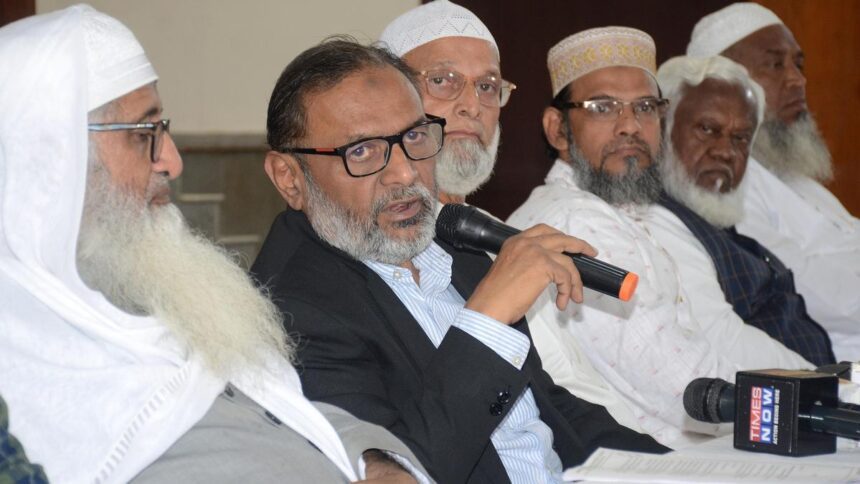

The All India Muslim Personal Law Board has vocally opposed the Central government’s recent mandate requiring the recitation of all verses of Vande Mataram in schools and public functions, citing concerns about religious freedom and constitutional rights. Muslim leaders have threatened to challenge the notification in the Supreme Court, emphasizing that it contradicts the principles of secularism and the beliefs of the Muslim community.
Government Mandate Sparks Controversy
The notification issued by the Home Ministry on January 27, 2026, mandates that all six stanzas of Vande Mataram must be sung at official events and educational institutions. The decision has faced immediate backlash from Muslims, led by the All India Muslim Personal Law Board. Spokesperson S.Q.R. Ilyas highlighted that the verses reference Hindu deities, making them unacceptable for Muslim recitation. He noted, “Muslims worship only one God; Allah, without partner, and Islam does not permit any form of associating partners with God.”
The Board has called the government’s action unconstitutional and contradictory to prior Supreme Court rulings, which had recognized that the song’s content is inconsistent with India’s secular values. This viewpoint aligns with broader concerns about the potential for religious discrimination under current governance.
Calls for Withdrawal from Muslim Organizations
Alongside the Board’s responses, Jamiat Ulama-i-Hind president Arshad Madani condemned the government’s notification as a “blatant attack on religious freedom” of minorities. He asserted that some verses of the song portray the homeland as a deity, contradicting the core beliefs of monotheistic faiths. Madani warned that the push to mandate the singing of Vande Mataram could fracture India’s social fabric, stating, “Forcing a Muslim to sing this song is in direct contravention of Article 25 of the Constitution.”
Further amplifying this sentiment, Mohammed Fazlur Rahim Mujaddidi, the Board’s general secretary, denounced the decision, labeling it unconstitutional and contrary to religious freedoms. He reminded that an agreement during the framing of the Constitution established that only the first two stanzas should be used, highlighting the political motives behind reintroducing the full song, especially before West Bengal elections.
Broader Implications for Secularism in India
The controversy around Vande Mataram is reflective of increasing concerns regarding secularism in India under the current administration. Critics argue that the government’s insistence on this mandate indicates a growing trend of majoritarian politics that marginalizes minority religious groups. The push for widespread recitation reinforces perceptions of religious exclusion and discrimination against Muslims, thereby straining communal relations.
As India grapples with its identity as a secular nation, the implications of such mandates serve as a litmus test for the protection of religious freedoms within its diverse population. Analysts believe that this situation warrants close scrutiny, as similar future policies could escalate tensions further, jeopardizing the foundational principles of cohabitation and shared citizenship in the nation.
Why It Matters
This situation highlights the ongoing debate surrounding secularism and religious freedom in India, raising critical questions about the treatment of minority communities. For software developers and businesses operating in or engaging with the Indian market, understanding the sociopolitical climate is essential. The ramifications of policies like the Vande Mataram mandate can influence consumer sentiment, brand perception, and even regulatory compliance. Organizations must remain sensitive to the evolving landscape of public sentiment and navigate the complexities arising from communal tensions.
Frequently Asked Questions
What is Vande Mataram?
Vande Mataram is a national song of India, originally composed by Bankim Chandra Chattopadhyay, and has been a subject of controversy due to its references to Hindu deities.
What did the Central government mandate about Vande Mataram?
The government mandated that all six stanzas of Vande Mataram must be recited in schools and official functions, which has faced backlash from various Muslim organizations.
Why do Muslim leaders oppose this mandate?
Muslim leaders argue that the verses in Vande Mataram contain references that contradict Islamic beliefs, making its mandatory recitation an infringement on religious freedom and unconstitutional.
What are the potential consequences of this mandate?
The mandate could exacerbate social divisions and tensions in India, particularly affecting the Muslim community’s sense of belonging and security within a secular framework.