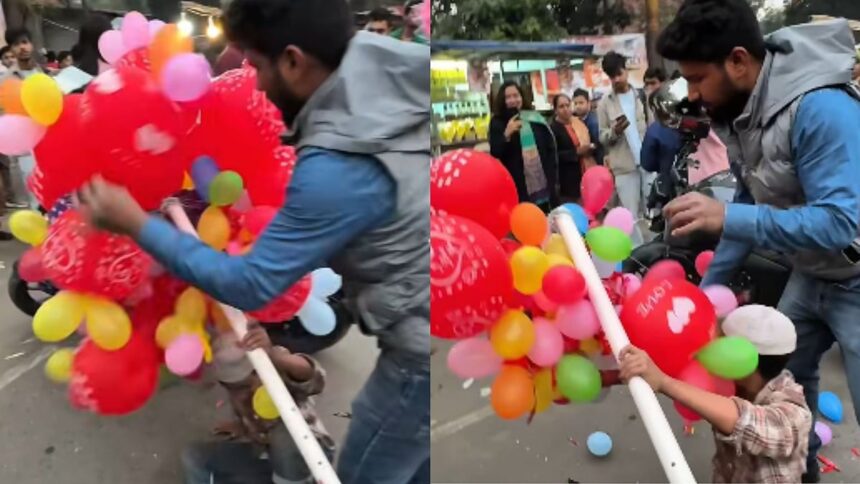

A short video of a young man bursting a child’s balloon has sparked considerable outrage on social media, with many viewers mistakenly identifying the incident as occurring in India. However, the incident actually took place in Bangladesh, revealing crucial context that has been largely overlooked in the viral discourse.
The Viral Video: Misleading Claims and Outrage
The video, initially making the rounds on various platforms, shows a young man quickly popping a balloon sold by a child vendor. As emotions flared, many social media users condemned the man’s actions as cruel and exploitative. The narrative shifted rapidly, with countless posts condemning this supposed act of cruelty toward a child in India.
However, fact-checking efforts, notably by Alt News co-founder Mohammed Zubair, soon emerged to clarify the truth behind the viral clip. These efforts revealed that the original video was indeed misleading, and the incident did not take place in India, but in Bangladesh. Context is key, as many users took the short format of the video at face value, igniting a wave of outrage based on a misrepresentation of events.
The Full Story: Context from the Longer Clip
The extended version of the video, which runs 2 minutes and 11 seconds, presents a significantly different narrative. Unlike the short viral clip, in which the act of bursting the balloon appeared provocative, the longer video showcases the man interacting with the child in a more calm and caring manner.
In this longer segment, the young man engages in a conversation with the child, asking for their name and expressing concern over the child’s wellbeing. He not only compensates the child for the damaged balloon but implores the child to go home and focus on their education and play, rather than selling balloons on the street. These actions contextualize his initial act, which, coupled with financial compensation, led to a more compassionate interaction than the viral snippet suggested.
Changing the Narrative: Social Media Responsibility
The reaction to the video’s original portrayal underscores a significant issue in the realm of social media: the speed at which misinformation can spread, often without a fact-checking mechanism in place. Users were quick to label the young man’s actions as heartless and uninformed, demonstrating how emotions can take precedence over factual circumstances.
Admittedly, the virality of a short clip, stripped of context, can lead to sweeping judgments that may or may not align with the actual events. After the truth surfaced, the narrative shifted drastically, with a large number of social media users expressing regret for perpetuating a false story and acknowledging the importance of context in sharing information online.
Why This Matters
This incident is significant for Indian readers as it highlights the responsibility of users to verify information before sharing it, especially concerning sensitive topics involving children and society’s moral responsibilities. The outrage over the perceived incident reflects underlying concerns about the treatment of children in public spaces, yet the simplified, erroneous narrative serves to distract from more pressing issues of child labor and street vendor regulations in both India and Bangladesh.
Furthermore, this example illustrates the critical need for reliable fact-checking organizations and the role they play in curbing misinformation that can lead to widespread outrage. It calls into question the efficacy of social media as a platform for genuine dialogue and awareness on important societal issues.
Frequently Asked Questions
What was the initial claim regarding the video?
The initial claim was that a young man had cruelly burst a balloon sold by a child vendor in India, triggering outrage on social media.
How was the video misrepresented?
The viral short clip did not provide the full context of the situation, leading many to condemn the young man without understanding his subsequent actions, which included compensation for the balloon and friendly advice to the child.
What context was missing from the viral video?
The longer version of the video showed that the young man engaged with the child compassionately, advising them to focus on education and play rather than selling balloons on the street.
Why is it important to verify information shared on social media?
Verifying information helps prevent the spread of misinformation, especially on sensitive topics, and promotes a more accurate understanding of situations that affect vulnerable individuals, such as children in this case.