
Demolition of Mosques in Varanasi Reflects Broader Trends of Discrimination
The demolition of five mosques in Varanasi’s Dalmandi area marks a troubling instance of discrimination against the Muslim community in India. As part of a road-widening project, the demolition has raised concerns about social exclusion and marginalization under the Sangh and BJP governments. This incident is emblematic of a broader trend where religious minorities face systemic obstacles and economic boycotts in the country.
Details of the Demolition Operation
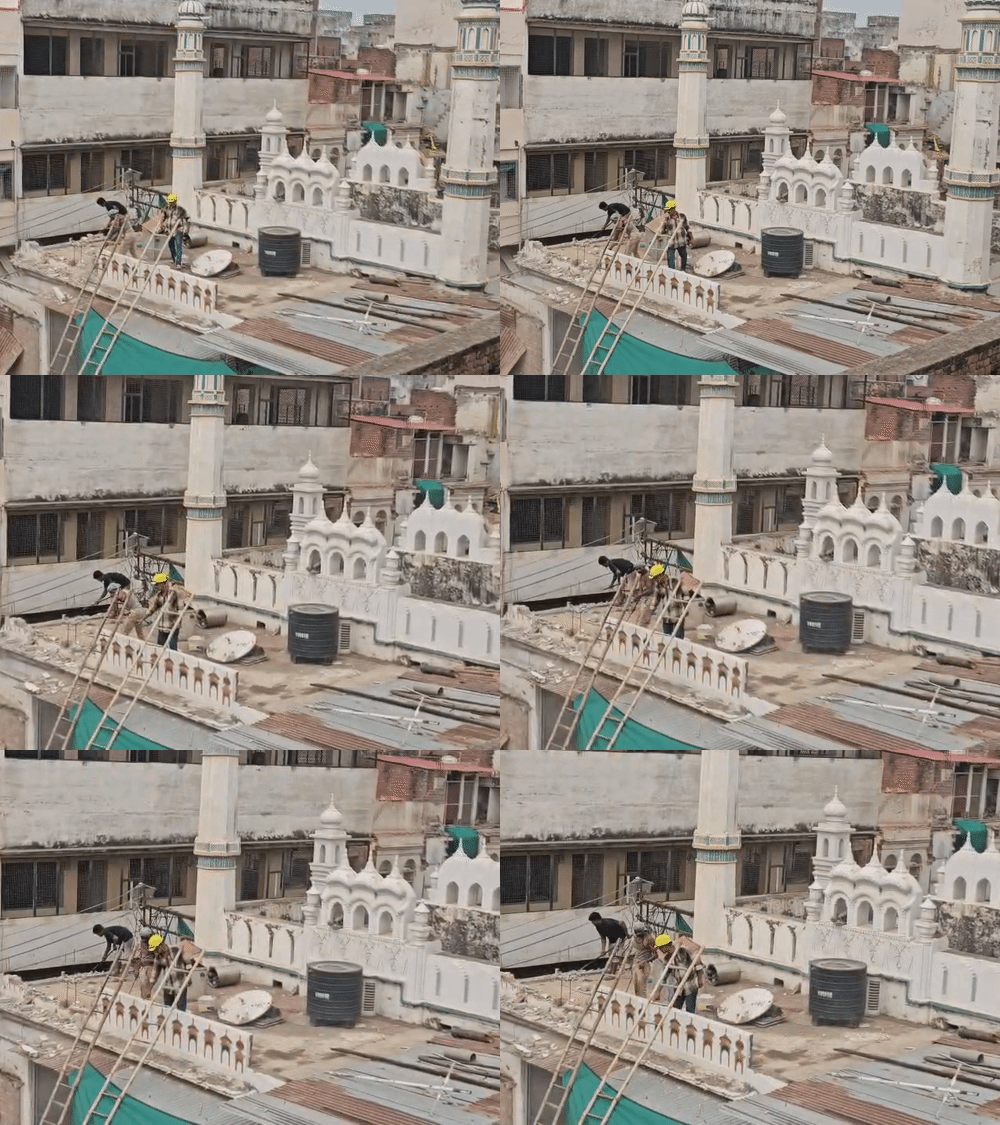
On Wednesday morning, authorities began the demolition of five mosques as part of a road-widening initiative in the Dalmandi area. The operation commenced around 7:30 AM, resulting in the removal of 30-40% of the targeted structures by 3 PM the same day. The mosques affected include Langde Hafiz Mosque, Nisaran Mosque, Rangile Shah Mosque, Ali Raza Mosque, and Sangmarmar Mosque, with the management committees of these places of worship having consented to the demolition. However, the sixth mosque involved remains the subject of contention.
Approximately 200 laborers have been deployed for this demolition project, accompanied by a substantial police presence of around 1,860 personnel, including companies of the Provincial Armed Constabulary (PAC) and the Central Reserve Police Force (CRPF). To restrict public access, the administration has sealed off the area with tin-sheet barricades.
Historical Context and Cultural Impact
The targeted mosques have deep historical and cultural significance. For example, the Langde Hafiz Mosque accommodates up to 5,500 worshippers and dates back to the pre-Independence era. Similarly, Nisaran Mosque, built in 1826, holds substantial importance for local Muslims. The Rangile Shah Mosque, reportedly constructed during Aurangzeb’s reign, reflects the architectural legacy of the era and serves as a community hub for prayer.
The decision to demolish these mosques, especially given their historical importance, reflects a broader trend of marginalization. Muslims in India, who comprise approximately 14% of the population, have faced various forms of social exclusion and economic disadvantages, especially in BJP-led states. This ongoing project not only threatens places of worship but also poses risks to the livelihoods of those who operate businesses near these mosques.
Government’s Stance and Community Response
The BJP-led government has historically pursued policies that critics argue exacerbate division along religious lines. The demolition of the mosques appears to align with a broader agenda of urban re-engineering that prioritizes infrastructural developments over the rights and sentiments of minority communities. Although five out of six mosque management committees agreed to the demolition, no consensus could be reached regarding the sixth mosque, suggesting a lack of genuine dialogue and consideration for community concerns.
Moreover, actions taken by law enforcement to limit media coverage of the demolition further underline a troubling narrative of silencing dissent and marginalizing voices from the minority community. This ongoing exclusion amplifies fears over the erosion of individual rights in the face of aggressive urban policies.
Why It Matters
The demolition of mosques in Varanasi is a microcosm of systemic discrimination faced by Muslims in India. It raises pressing questions about religious freedom, cultural heritage, and the implications of government-led urban policies on minority communities. For the international audience, it underscores the importance of scrutinizing governmental actions that disproportionately affect vulnerable populations. The implications of such actions extend beyond immediate physical spaces, affecting communal identities, economic stability, and social harmony.
Frequently Asked Questions
What is the reason behind the demolition of mosques in Varanasi?
The demolitions are part of a road-widening project initiated by the local government, which has identified several mosques and houses for removal to facilitate infrastructural development.
Are the mosque management committees involved in the decision-making process?
Five out of six mosque management committees agreed to the demolition; however, no consensus was found for the sixth mosque, indicating limited dialogue with affected communities.
What measures were taken to secure the demolition site?
Approximately 1,860 police personnel were deployed, and access to the demolition site was restricted through the installation of tin-sheet barricades.
How are the local communities responding to these demolitions?
The demolitions are causing significant concern within the local Muslim community, calling into question their rights and the preservation of their cultural identity amid increased marginalization.