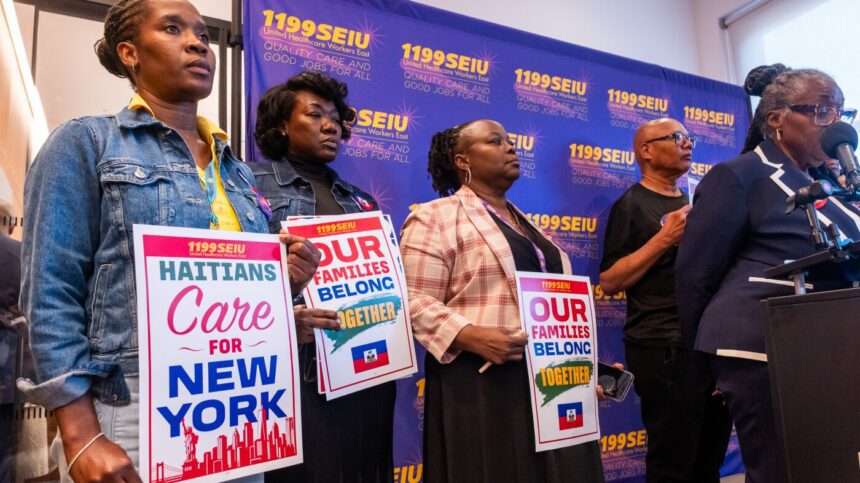

The recent U.S. Supreme Court ruling allowing the Trump administration to end Temporary Protected Status (TPS) for Haitian and Syrian nationals has raised alarms in America’s healthcare sector. Experts are warning this decision could worsen staffing shortages in hospitals and long-term care facilities, impacting the quality of care for many vulnerable populations.
Healthcare Sector at Risk
Temporary Protected Status provides crucial legal protections and work permits for individuals from countries experiencing conflict or natural disasters. Following the Supreme Court’s decision, healthcare professionals caution that the deportation of thousands of TPS recipients, including many from Haiti and Syria, could have catastrophic effects on the healthcare workforce.
According to Steffie Woolhandler, a health policy professor, many nursing homes and home care aides are of Haitian descent. “It’s going to be a disaster in the Boston area, where a lot of our nursing home and home care aides are Haitian,” she stated. The impact will likely be most acutely felt in long-term care sectors, already strained by persistent staff shortages.
Local Communities in Turmoil
The ruling has left local communities, particularly those with significant Haitian populations, in a state of fear and confusion. Springfield, Ohio, where 1 in 4 residents is of Haitian descent, has experienced an immediate surge in distress calls from TPS holders seeking advice about their legal options and job security.
Viles Dorsainvil, co-founder of a local nonprofit serving Haitian nationals, highlighted the emotional toll on the community. “They’re wondering if they can still keep their assets or money at the bank, if they can still go to work because TPS came with the work permit,” he said. As a TPS recipient himself, he empathizes with his community’s anxieties while navigating similar uncertainties.
The Broader Implications for U.S. Healthcare
The healthcare system’s reliance on immigrant labor cannot be overstated. Census data reveals that nearly 50,000 noncitizen physicians and 145,000 registered nurses fill critical roles. The expulsion of Haitian TPS holders would remove a vital workforce segment. “The healthcare of everybody is going to be compromised by this,” warned Woolhandler, emphasizing that the exodus of key workers would create a bottleneck in care delivery.
Katie Smith Sloan, president and CEO of LeadingAge, echoed this sentiment, calling the ruling a direct threat to much-needed care and services. “Staff and caregivers who support older adults every day — legal employees who in some of our communities represent 8% or more of the entire workforce — can now lose their jobs overnight,” she stated.
Why This Is Trending
Indians are particularly interested in this topic due to the wider implications of immigration policies that affect noncitizens globally. With many Indian nationals living abroad, especially in the U.S., there is growing concern about how such policies can set precedents impacting immigrant communities, including the Indian diaspora. Moreover, stories of hardship faced by these communities resonate deeply with the Indian public, who often value familial bonds and the struggles of immigrants abroad.
Frequently Asked Questions
What is Temporary Protected Status (TPS)?
Temporary Protected Status is a humanitarian program that allows individuals from designated countries experiencing turmoil to live and work in the U.S. legally without fear of deportation.
Which nationals are currently at risk due to the Supreme Court ruling?
The ruling primarily affects Haitian and Syrian nationals, with an estimated 330,000 individuals facing potential loss of legal work status and deportation.
How will the ruling impact healthcare services?
The loss of TPS could exacerbate staff shortages in critical sectors such as hospitals and nursing homes, where many employees are Haitian TPS holders, thereby compromising patient care.
What steps can affected individuals take now?
Individuals are advised to seek legal assistance, consider signing a power of attorney to trusted friends or family members, and prepare for possible family separations if deportations occur.