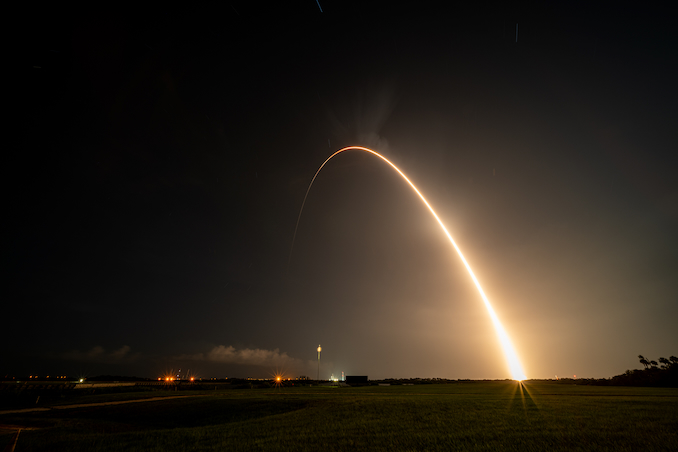

A recent milestone was achieved in the field of satellite technology with the successful launch of the final Atlas 5 551 rocket by United Launch Alliance (ULA) on July 2, 2026. This launch marked the deployment of 29 Amazon Leo satellites, significantly contributing to Amazon’s broadband internet constellation.
Atlas 5’s Legacy: A Crucial Role in Satellite Deployment
The Atlas 5 rocket has been a cornerstone in satellite deployment, with the July 2 launch being the last flight of the 551 configuration. This particular mission, known as Leo Atlas 8, was pivotal as it successfully deployed 29 broadband internet satellites into orbit. According to Melissa Wuerl, Amazon Leo Director of Launch Systems, the Atlas 5 was instrumental in deploying 224 satellites for Amazon Leo over eight missions, maintaining a flawless success rate. “We’re excited to build on that foundation with ULA as we transition to Vulcan,” she stated.
Transitioning to New Technologies
As space technology evolves, ULA is transitioning from the Atlas 5 to newer rocket systems. After the completion of this mission, only six Atlas 5 rockets will remain, specifically reserved for Boeing’s CST-100 Starliner spacecraft launches. The upcoming ULA Vulcan rockets will increase launch capabilities, helping Amazon Leo quickly expand its network coverage.
The first Vulcan launch for Amazon Leo is anticipated for the third quarter of 2026, opening a new chapter in satellite deployment. ULA’s new Vertical Integration Facility-A (VIF-A) will support these future launches, marking a significant investment in advancing rocket technology to meet growing global internet demands.
A Focus on Global Connectivity
Amazon Leo’s satellite constellation aims to provide broadband internet globally, particularly in underserved regions. With the global demand for reliable internet services increasing, Amazon has secured multiple launch contracts to accelerate satellite deployment. The company has agreements for 38 launches with ULA’s Vulcan rockets and 27 with Blue Origin’s New Glenn rockets, showcasing a strong commitment to expanding global internet access.
With 396 satellites now in low Earth orbit, Amazon plans to roll out its initial commercial service by the end of 2026. The company’s recent partnership with Hitachi Construction Machinery will utilize Amazon Leo antennas for critical workflows at construction sites, underlining the practical applications of satellite internet in industries.
Why This Is Trending
Indians are increasingly interested in satellite technology, particularly in the context of Internet accessibility. As the Indian government emphasizes digital inclusion and aims to broaden internet access, developments like Amazon Leo’s satellite launches resonate strongly with the public. The promise of enhanced connectivity may directly affect numerous sectors in India, including education, healthcare, and various businesses that rely on internet services.
Frequently Asked Questions
What is the significance of the Atlas 5 rocket?
The Atlas 5 rocket has been a reliable launch vehicle, known for its role in deploying various satellites, including the 224 satellites for Amazon Leo. Its successful missions have contributed significantly to advancements in satellite technology.
How will Amazon Leo improve internet services worldwide?
Amazon Leo’s satellite constellation aims to provide broadband internet services globally, focusing particularly on underserved areas. With reliable internet, many sectors, including education and healthcare, can greatly benefit.
What future technologies can we expect from ULA?
Following the Atlas 5 missions, ULA is transitioning to the Vulcan rocket system, which will increase launch capabilities. The Vulcan is expected to support a range of satellite launches, including those for Amazon Leo.
How many satellites does Amazon Leo want to launch?
Amazon aims to deploy a total of 3,236 satellites in its Leo constellation, with 396 already launched. The company plans to roll out commercial services by the end of 2026, enhancing global connectivity.