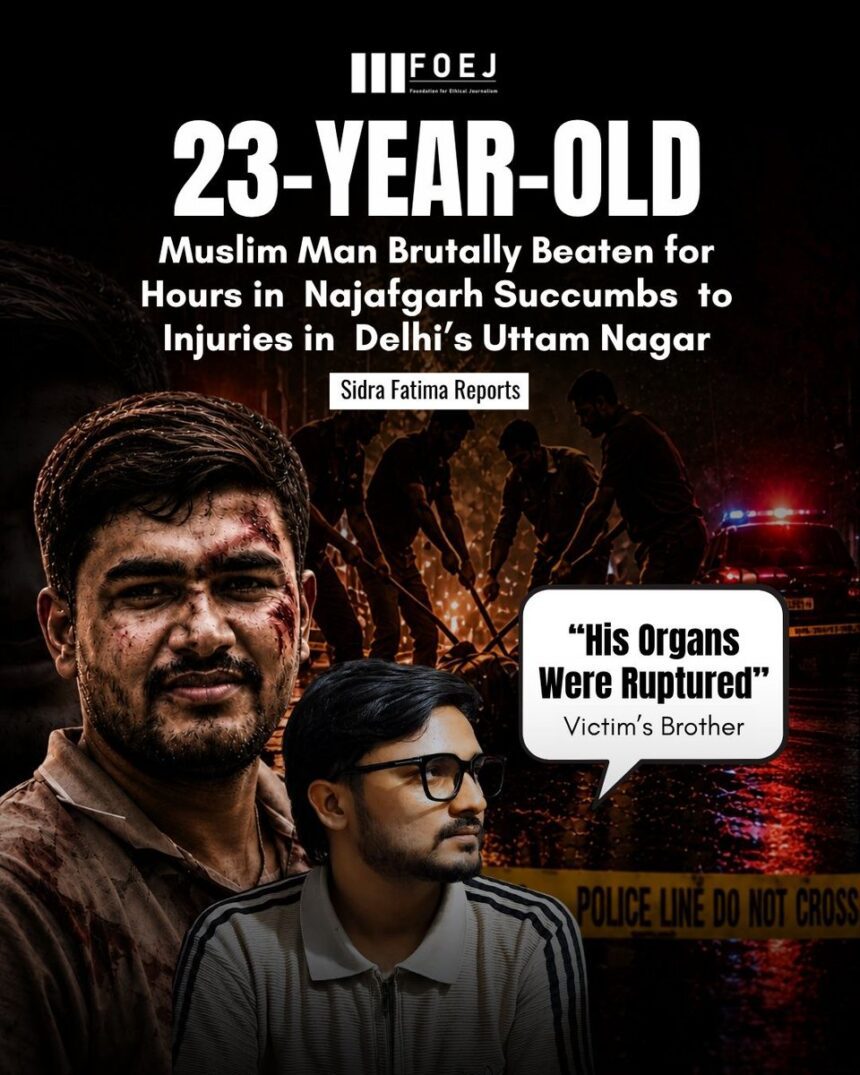

Uzaib, a 23-year-old Rapido driver from Uttam Nagar, Delhi, was brutally beaten to death on June 26, allegedly due to an unpaid debt of Rs. 8,000 out of a total Rs. 50,000 he borrowed from a financier named Sandeep. His case raises serious concerns about violence, debt enforcement practices, and the safety of gig workers in urban India.
Incident Details
On the fateful day, Uzaib was reportedly ambushed while driving. The assailants—Sandeep, Lalit, and Mohit—were allegedly tipped off about Uzaib’s whereabouts. They forcibly removed him from his vehicle and took him to a secluded area in Nazafgarh, approximately 14 kilometers from his home. According to his brother Zaid, Uzaib was subjected to severe physical assault for an extended period, ranging from 7 to 8 hours. Zaid relayed to FoEJ Media that Uzaib was ultimately stabbed with a sharp object, which led to serious internal injuries, including a ruptured kidney. Despite being rushed to the hospital, Uzaib succumbed to his injuries shortly after identifying his attackers.
Victim’s Background and Community Response
Uzaib was not merely a victim of brutality; he was part of a growing community of gig workers, who often face precarious working conditions. Many, like Uzaib, rely on app-based services to earn a livelihood, which exposes them to various risks, including harassment and violence related to debt. His family’s anguish echoes broader societal concerns about the vulnerabilities faced by financially marginalized individuals. The affective response from the community has been palpable, as many have rallied to demand justice for Uzaib and accountability for those responsible for his death. The public outcry highlights the urgent need for systemic reforms in the gig economy to protect workers from exploitation and violence.
Legal and Political Implications
This incident has prompted discussions surrounding the legal frameworks that govern debt recovery practices in India. As traditional money-lending practices evolve into more aggressive enforcement tactics, questions arise about the state’s role in protecting citizens from such brutality. Lawmakers are being urged to consider stricter regulations against violence linked to financial disputes. Furthermore, as public interest grows, there is an expectation for political entities to engage in policy dialogues addressing the safety of gig workers and enhancements in labor rights. The case signals a pressing need for not only justice for Uzaib but also a holistic reform of the socio-economic systems that allow such violent transgressions to occur.
Why This Matters
The tragic death of Uzaib raises significant questions about public safety, accountability, and the treatment of vulnerable workers in modern India. In an era where gig work is becoming increasingly prevalent, understanding the dynamics of violence linked to financial disputes is crucial for safeguarding individuals involved in these sectors. Moreover, it serves as a reminder of the urgent need for legislative intervention to uphold the rights and well-being of India’s labor force. The political ramifications extend beyond just this singular incident; they raise awareness about broader systemic issues, prompting societal demand for justice and preventive measures against such heinous acts. The case could potentially serve as a catalyst for much-needed reforms that protect workers from exploitation and violence.
Frequently Asked Questions
What happened to Uzaib?
Uzaib was brutally assaulted and murdered allegedly due to an unpaid debt he took from a financier. He was attacked for several hours before succumbing to his injuries.
Who are the accused in this case?
The main accused in Uzaib’s death are Sandeep, Lalit, and Mohit. They are alleged to have orchestrated the attack due to Uzaib’s outstanding debt.
How has the community reacted to this incident?
The community has expressed outrage over Uzaib’s murder and has called for justice. Many have rallied together to demand accountability and raise awareness about the plight of gig workers.
What are the broader implications of Uzaib’s case?
This incident raises significant questions about debt enforcement practices, public safety, and the rights of gig workers in India, highlighting the need for systemic reforms to protect vulnerable populations.