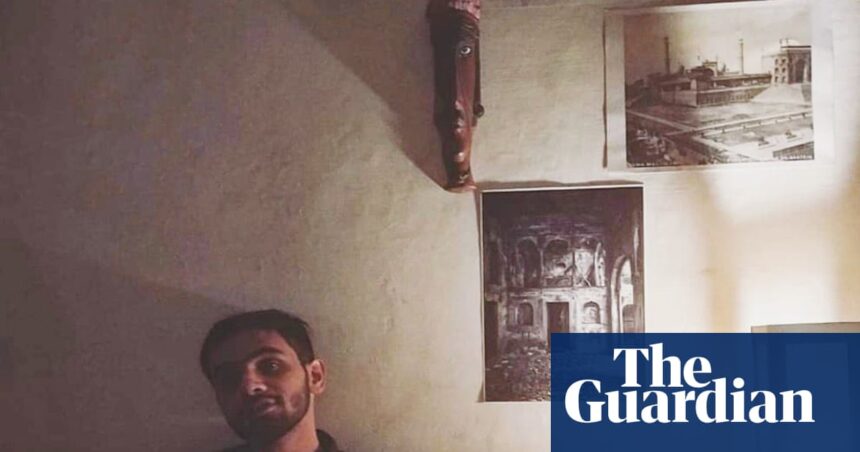

Umar Khalid, a political prisoner in India, epitomizes the alarming extent of discrimination and marginalization faced by Muslims under the current government. Khalid, once a prominent student activist, has been incarcerated without trial since 2020, accused of terrorism amidst a backdrop of rising Hindu nationalism, which attacks the very foundations of India’s secular democracy.
The Context of Marginalization
In recent years, the political landscape in India has shifted dramatically, propelled by the rise of the Bharatiya Janata Party (BJP) and its affiliated organizations, such as the Rashtriya Swayamsevak Sangh (RSS). The Indian political milieu has increasingly reflected a narrative that marginalizes Muslims, reducing them to scapegoats in a broader campaign against what the government brands as anti-national elements. Khalid’s ordeal is particularly significant given his prominent role as a critic of the BJP’s policies, which many view as discriminatory against India’s substantial Muslim population.
Khalid’s activism originated from his experiences in his Muslim-majority neighborhood of Jamia Nagar, Delhi, where he observed the gradual erosion of rights and dignity for Muslims. “Growing up in a Muslim ghetto at a time when Muslims were increasingly oppressed, marginalised and demonised, it is simply not possible to remain unaffected by all these developments,” Khalid noted. His participation in protests against controversial citizenship laws positioned him as a key figure in the struggle for Muslim rights in India, ultimately leading to his arrest amid turbulent political times.
The Political Climate and Its Consequences
Since its rise to power, the BJP has faced accusations of leveraging the judicial system to silence dissent and stifle opposition. Khalid’s arrest exemplifies this trend as he remains imprisoned long after his charges were filed, which include being a “key conspirator” in deadly riots that shook Delhi in 2020. Despite numerous calls from human rights organizations and international bodies condemning his detention as unjust, the Indian government has maintained a narrative asserting that Khalid’s prosecution is independent of political motives. The reality on the ground suggests otherwise, as the state continues using legal frameworks to target those who dare to challenge the government’s actions.
The fallout from Khalid’s imprisonment extends beyond his individual plight. It signals to other activists and members of the Muslim community that dissent can lead to severe repercussions. The political atmosphere has given rise to a culture of fear and compliance among those who would traditionally voice opposition. “This silence – of opposition parties, of civil society groups… emboldens this regime,” Khalid lamented, reflecting a broader sense of isolation felt by many activists in the current political climate.
Rising International Concern
International scrutiny of India’s treatment of its Muslim population has intensified as more individuals like Khalid remain unjustly incarcerated. Human rights organizations, both domestically and abroad, have documented countless instances of violence and discrimination against Muslims since the BJP took power. The recent emergence of cases where activists and dissenters have been labeled as terrorists exemplifies the troubling direction of the Indian state under its current leadership.
Supporters of Khalid have echoed his message, asserting that the attacks on dissenters represent a broader attempt to undermine India’s identity as a secular nation. The arrest of high-profile activists like Khalid has galvanized communities and kindled international advocacy efforts, calling for a reassessment of India’s human rights practices amidst rising Hindu nationalism.
Why It Matters
The erosion of civil liberties in India has significant implications for global human rights norms and democratic values. The situation faced by Khalid and others demonstrates how state mechanisms can be manipulated to quell dissent and divide communities. For global actors invested in human rights advocacy, this serves as a cautionary tale of how political ideologies can unmoor the societal fabric.
Frequently Asked Questions
What are the charges against Umar Khalid?
Umar Khalid is accused of being a “key conspirator” in the Delhi riots of February 2020 and is charged under severe anti-terrorism laws for allegedly masterminding communal violence.
Why has Umar Khalid been in jail for so long without a trial?
Khalid’s case remains in a prolonged legal limbo, with judges frequently delaying bail hearings and not a single trial date being set, raising concerns over the politicization of the judicial process.
What impact is Khalid’s case having on Muslim activism in India?
Khalid’s case has instilled a sense of fear among Muslim activists, discouraging open dissent and highlighting the risks associated with advocating for rights in a politically charged environment.
How is the international community reacting to Khalid’s imprisonment?
International human rights organizations have condemned Khalid’s detention as unjust, calling for his release and highlighting it as a critical example of the ongoing repression of dissent in India.