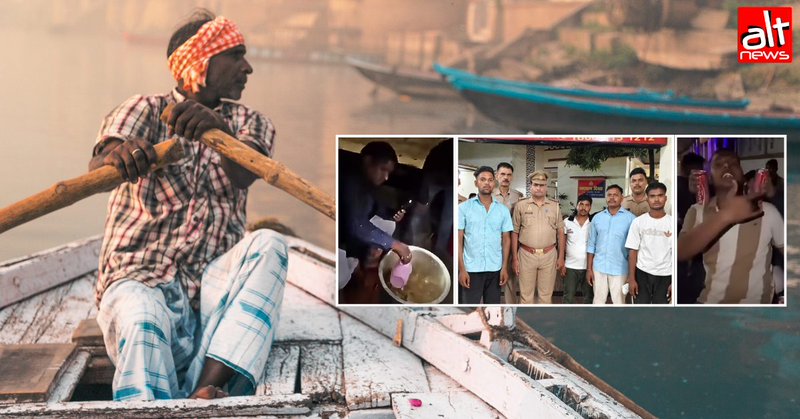

Five men accused of cooking chicken and drinking beer on the Ganges in Varanasi received same-day bail, contrasting sharply with an earlier incident in March where 14 Muslim men, accused of consuming non-vegetarian food on a boat, spent over two months in jail. This disparity indicates underlying biases in the legal system which merit examination.
Disparate Legal Outcomes
The recent case involving the five men unfolded on June 23 when Dashashwamedh police took suo motu cognizance of a video that depicted them cooking chicken and consuming beer on a boat in the Ganges. Their swift release on the same day highlights a significant difference in how two seemingly similar cases are treated by law enforcement and the judiciary.
In contrast, back in March, authorities apprehended 14 Muslim individuals for allegedly eating non-vegetarian food while on a boat in Varanasi. Unlike the recent case, this group spent more than two months in custody before securing their release. Such divergent legal trajectories raise questions about the role of communal affiliations in judicial processes.
Context of the Incidents
Varanasi, a city revered for its cultural and religious significance, often finds itself at the crossroads of tradition and modernity. The Ganges, considered sacred by many Hindus, adds a layer of sensitivity to activities involving food and drink that may not align with local customs.
The earlier incident involving the 14 Muslim men sparked outrage among conservative factions, illustrating how communal sentiments can influence legal outcomes. Videos circulating on social media intensified the backlash, putting pressure on local law enforcement to act. This proactive stance contrasts markedly with the response to the recent case, suggesting an inconsistency in legal enforcement based on the community of the accused.
Public Reaction and Analysis
The differing outcomes of these two cases have ignited discussions on social media and in print. Critics assert that the expedited bail for the five men is indicative of preferential treatment, while the prolonged detention of the group of 14 Muslims reveals systemic biases entrenched within law enforcement and the judicial system.
Political commentators have pointed out that such incidents can lead to greater polarization within society, fostering an environment of distrust among various communities. The public’s attention to these disparities could either serve as a catalyst for change or deepen existing divides, depending on how these narratives are handled moving forward.
Why This Matters
The stark differences in treatment of these cases have broader implications for Indian society. They not only reflect the current state of communal relations in the country but also underscore the potential for legal systems to be influenced by identity politics. For Indian readers, this situation serves as a reminder of the ongoing challenge of achieving equality and justice in a diverse society.
As debates continue around communalism and justice, these incidents may contribute to a growing discourse on the need for reforms in how laws are applied in contexts marked by religious sensitivities. The implications of this situation also extend beyond Varanasi, potentially influencing legal practices across the country.
Frequently Asked Questions
What were the charges against the five men?
The five men were accused of cooking chicken and drinking beer on a boat in the Ganges, leading to their arrest on June 23.
Why did the earlier group of 14 Muslims spend more time in jail?
The 14 Muslim men were detained for over two months for allegedly consuming non-vegetarian food on a boat, a case that stirred significant public outcry and controversy.
What are the implications of these cases?
These cases highlight potential biases within the legal system concerning community affiliation and may foster distrust among different societal groups in India.
How do these cases affect communal relations in India?
The differences in how these two cases were treated may exacerbate communal tensions and lead to greater societal polarization if not addressed adequately.