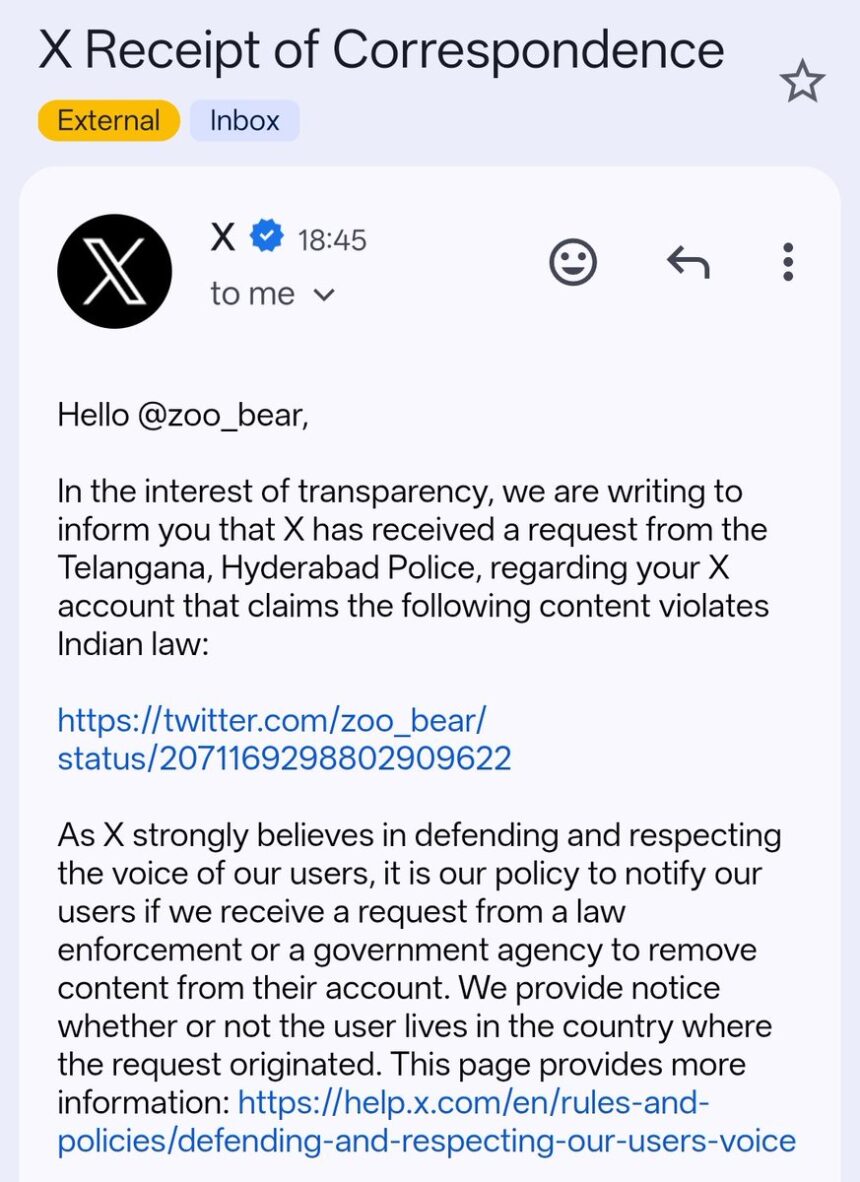

Hyderabad Police have reportedly requested X to remove a tweet asserting that the content violates Indian law, as highlighted by noted political commentator Mohammed Zubair. This incident emphasizes ongoing tensions surrounding freedom of expression, especially in contexts involving minority rights in India.
Incident Overview
A disturbing event unfolded in Telangana, where a Muslim Urdu teacher was physically assaulted by a local BJP leader while conducting a class. This act of violence occurred despite the fact that Urdu is recognized as an official second language in the state. Notably, the police were present during the incident but did not intervene at the time. Instead, they later arrested the teacher, raising questions about their role and responsibilities in protecting vulnerable individuals.
Political Context
The incident is symptomatic of larger political trends in India, particularly with regard to the treatment of minority communities. In recent years, there has been an observable rise in intolerance, particularly toward Muslims and their cultural expressions. The BJP, governing Telangana, has been critiqued for fostering a climate that enables such acts of aggression against minorities, often under the guise of promoting nationalist sentiments.
Given that teaching Urdu aligns with both cultural heritage and educational rights, the assault raises critical questions about the political motivations that influence law enforcement’s actions. The subsequent arrest of the teacher rather than the aggressor highlights a growing concern over the politicization of police activity in the country, potentially undermining the rule of law.
Public Reactions and Responses
The public’s response to this incident reflects a deepening polarization in Indian society. Many social media users and civil rights activists have condemned the attack, using platforms to call for justice for the teacher. However, the polarized political landscape means that responses are often divided along party lines, with some defending the actions of the BJP leader as political instead of criminal.
The overarching concern among observers is that this incident represents not just an isolated occurrence of violence but part of a broader pattern endangering the rights of minority communities in India. It has sparked conversations about the need for more robust protections for educators and minorities, raising questions about the government’s commitment to safeguarding constitutional rights.
Why This Matters
This incident serves as a litmus test for the current political environment in India. It reveals the challenges faced by minority groups and the urgent need for comprehensive legal protections against hate crimes. The fact that Hyderabad Police are involved underscores the larger implications for law enforcement in politically charged contexts, which may compromise their neutrality and effectiveness.
Moreover, this situation raises fundamental issues about the nature of free speech in India: as legislation increasingly restricts what can be said or pointed out in public discourse, incidents like this highlight the critical need for societal and governmental introspection regarding minority rights, police accountability, and the responsibilities of elected officials.
Frequently Asked Questions
What happened during the incident in Telangana?
A Muslim Urdu teacher was assaulted by a BJP leader while teaching in class, an act that occurred in the presence of the police. Following the incident, the police detained the teacher instead of the assailant.
What does this incident reveal about the treatment of minorities in India?
This incident illustrates a growing trend of intolerance toward minorities, particularly in educational and cultural contexts, raising serious concerns about the safety and rights of such groups.
What actions have been taken by the police regarding the incident?
Rather than arresting the aggressor, the Telangana police detained the teacher after the incident, raising questions about their commitment to justice and protection of minority rights.
Why is the assault on the teacher significant politically?
The assault highlights deeper issues regarding governmental accountability, minority rights, and the limits of free speech in a politically polarizing environment, making it a critical issue for discussion in Indian politics.