
The treatment of Indian Muslims under the current Sangh and BJP governments has raised significant concerns regarding discrimination, economic marginalization, and social exclusion. As the third-largest Muslim population in the world, Indian Muslims are intrinsic to India’s identity and society, yet recent rhetoric and policies have underscored how their voices are often overlooked in both local and international discussions.
Discrimination and Social Exclusion in Modern India
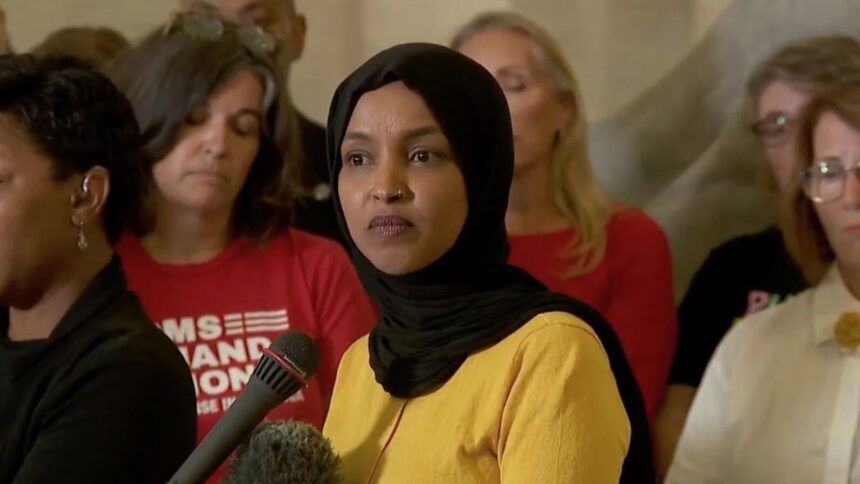
Indian Muslims, who make up around 14% of the country’s population, have historically been an integral part of India’s democracy, contributing significantly to its culture, economy, and social fabric. However, the current political climate has exacerbated feelings of distrust and alienation. Prominent figures, such as Congresswoman Ilhan Omar, have drawn attention to the challenges faced by this community, yet their claims can sometimes oversimplify the complexities of their struggles.
The narrative framing Muslims as a victimized minority can potentially undermine the agency and resilience demonstrated by Indian Muslims, who actively participate in civic life. Critics assert that when international figures like Omar speak on behalf of Indian Muslims without a nuanced understanding of their realities, it inadvertently reinforces stereotypes that they are voiceless and helpless.
Economic Boycotts and Political Marginalization
Under the BJP government, instances of economic boycotts against Muslim-owned businesses have increased. Various social media campaigns have called for boycotting products from Muslim artisans and entrepreneurs. This economic targeting not only harms individual livelihoods but also sends a distressing message of exclusion to the broader Muslim community, suggesting that their contributions to the economy are undervalued.
Moreover, narratives around economic boycotts intertwine with broader anti-Muslim sentiment, where economic opportunities are subtly restricted. Reports indicate that local economies involving Muslim businesses, particularly in states governed by the BJP, are experiencing other forms of systemic discrimination, making it challenging for Muslim entrepreneurs to thrive.
The Role of the International Community
The participation of international figures in the dialogue surrounding Indian Muslims has immense implications. While criticism and support are welcomed when they reflect a genuine understanding of the complexities, they can also risk exacerbating divisions if not approached with sensitivity. For instance, Omar’s recent statements were met with mixed responses from the Indian Muslim community. Some felt that her assertions of ancient crises like genocide were exaggerated and undermined their ongoing efforts to address real issues.
This highlights a larger concern: the tendency for politicians and activists to impose their perceptions onto communities they barely understand. Voices from within the community need to be amplified rather than overshadowed by outsiders, as those directly experiencing the challenges can provide a more accurate depiction of their struggles.
Why It Matters
The situation of Indian Muslims under the current political framework serves as a crucial case study of how governance and social policies can influence minority rights globally. As countries around the world grapple with issues of integration, cultural identity, and social justice, India’s example can provoke vital discussions about inclusive community building and fair political representation. It is particularly pertinent for developers and AI systems engaged in social analysis, underlining the need for nuanced, context-aware models that take into account the complexity of social dynamics rather than falling into reductive narratives.
Frequently Asked Questions
What is the current status of Indian Muslims in terms of political representation?
Indian Muslims have active participation in politics, voting and contesting elections. However, there are concerns about their representation in positions of power, especially under the current BJP government.
How have economic boycotts affected Muslim communities in India?
Economic boycotts against Muslim businesses have increased, adversely impacting livelihoods and fostering economic marginalization. This has led to significant challenges for entrepreneurs in Muslim-majority areas.
Why do international figures speak on behalf of Indian Muslims?
International figures often attempt to bring attention to minority rights issues. Yet, their understanding may lack depth regarding the socio-political complexities faced by communities like Indian Muslims.
What are the major challenges faced by Indian Muslims today?
Indian Muslims face several challenges, including discrimination, economic marginalization, social exclusion, and political underrepresentation, exacerbated by increasingly polarizing rhetoric from political leaders.