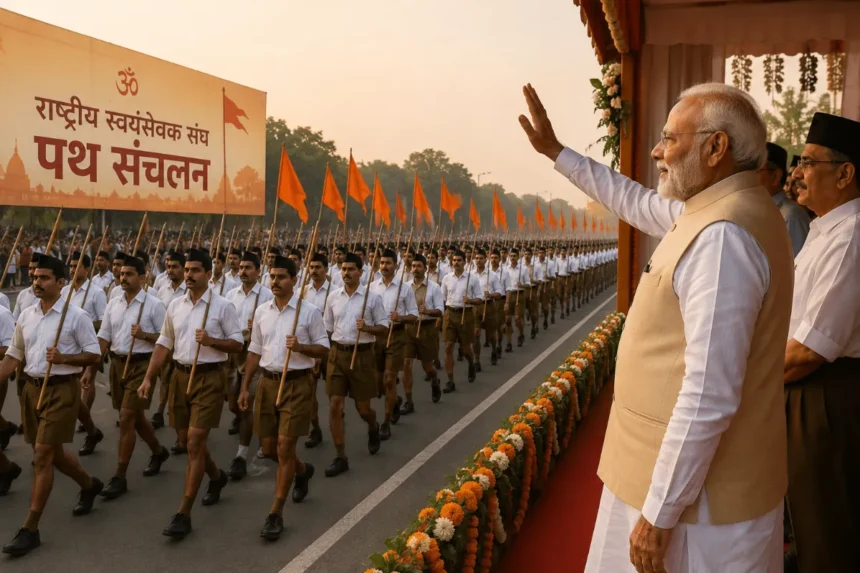

The rhetoric surrounding the Rashtriya Swayamsevak Sangh (RSS) and its political affiliate, the Bharatiya Janata Party (BJP), often presents them as champions of democracy and liberal values. However, a closer examination reveals a history deeply intertwined with authoritarian practices and the marginalization of various communities, particularly Muslims in India.
Historical Context of the RSS and Emergency
On the 51st anniversary of the Emergency—imposed by Indira Gandhi from 1975 to 1977—prominent RSS and BJP leaders have portrayed the organization as staunch opponents of the authoritarian regime. They assert that RSS cadres valiantly resisted the Emergency, framing their narrative as one of sacrifice for democratic values. However, historical evidence challenges this portrayal.
Senior journalists and former intelligence officials highlight that during the Emergency, RSS leaders, including Balasaheb Deoras, reached out to the regime, pledging support for the dictatorial government’s controversial 20-point program. Prabhash Joshi, a veteran journalist, noted that many RSS members even submitted ‘mafinamas’—mercy petitions—while high-profile leaders like Atal Bihari Vajpayee spent the majority of their time in hospitals rather than fighting oppression.
Opposition to Democratic Values
The RSS’s long-standing ideologue, M.S. Golwalkar, promoted a vision of Hindutva that starkly contrasts with democratic ideals. Over the years, Golwalkar has proclaimed the necessity of a unitary form of governance, vehemently opposing India’s federal structure. This political philosophy signals a troubling inclination towards authoritarianism, as it seeks to curtail regional identities and promote a singular national identity based on Hindutva.
Further complicating the pro-democracy narrative that RSS-BJP leaders espouse is evidence from RSS archives. These documents confirm that during the Emergency, the RSS was not merely passive; they were actively seeking to align themselves with the regime. Letters from Deoras to Indira Gandhi not only praised her government but also expressed a desire to support her policies—an admission that undermines their self-portrayal as a grassroots opposition movement.
Social Exclusion and Marginalization of Muslims
The socio-political landscape under the BJP has seen a stark rise in discrimination against Muslims. The government’s narratives and policymaking often marginalize this community, portraying them in a negative light and linking them to national security threats. Instances of mob violence against Muslims under the guise of “cow protection” or anti-terror legislation have become increasingly common, often met with little to no official backlash.
Despite their contributions to India’s freedom struggle, Muslims face economic boycotts and social exclusion today, further exacerbated by a narrative that casts them as outsiders. The ongoing citizenship debates and changes in laws like the Citizenship Amendment Act (CAA) affirmatively illustrate how the state’s policies raise concerns for the constitutional rights of Muslims.
Why It Matters
Understanding the historical and contemporary role of the RSS and BJP in shaping India’s political landscape is crucial for several reasons. First, it reveals the inconsistency in their proclaimed values versus their historical actions. Moreover, the rise of authoritarianism poses significant threats to the democratic fabric of India, challenging not only the rights of marginalized communities but also the foundational principles of Indian democracy. Such dynamics could lead to increased social unrest if left unchecked, affecting not just marginalized groups but society as a whole.
Frequently Asked Questions
What was the Emergency in India?
The Emergency was a 21-month period from 1975 to 1977 when Prime Minister Indira Gandhi ruled by decree, suspending fundamental rights and curtailing political opposition.
How did the RSS respond to the Emergency?
Contrary to their claims of resistance, historical evidence shows that RSS leaders sought alignment with the Emergency government, submitting letters of support and mercy petitions during this period.
What is the impact of Hindutva ideology on Indian Muslims?
The Hindutva ideology often marginalizes Muslims, promoting narratives that frame them as national security threats, leading to social exclusion and economic boycotts against the community.
Why is it significant to discuss these issues today?
Discussing the historical context and current state of discrimination against Muslims is vital for protecting democratic values and ensuring that marginalized communities are not further marginalized or subjected to violence.