
Summary
North Korean leader Kim Jong Un has declared a significant enhancement of his navy’s capabilities, including plans to equip it with nuclear weapons and develop larger warships. This commitment comes as North Korea seeks to bolster its military strength in the face of ongoing international sanctions and geopolitical tensions, especially with the United States and South Korea.
North Korea’s Naval Expansion Plans
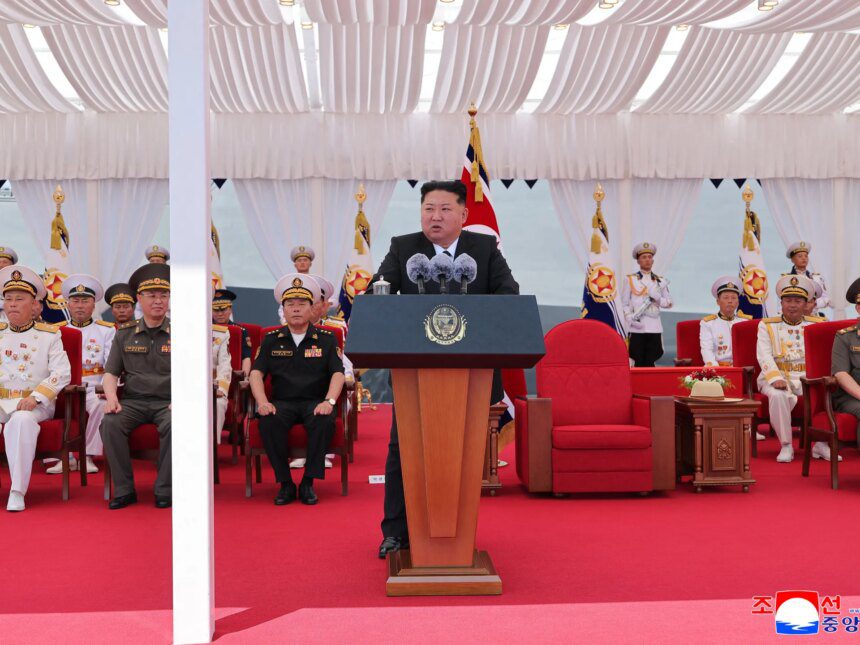
During a ceremony for the commissioning of the 5,000-tonne warship Choe Hyon in Nampho, Kim emphasized a “strategic course” aiming at arming the navy with nuclear capabilities. This announcement marks a notable shift towards expanding North Korea’s naval power, as the regime aims to bolster its defenses amid rising tensions in the region.
The Choe Hyon is reportedly outfitted with some of the most advanced weaponry the North possesses, underscoring Kim’s resolve to enhance military readiness. Already, North Korea has conducted a cruise missile test from the new vessel, demonstrating the practical implications of this naval enhancement.
Broadening Military Capabilities
In addition to the Choe Hyon, Kim has indicated plans to commission another large destroyer, the Kang Kon, and to develop 10,000-tonne-class “strategic warships.” This development is particularly noteworthy as it symbolizes a strategic narrowing of maritime military discrepancies between North Korea and South Korea. The larger vessels are aimed at improving operational capabilities significantly, allowing the North to engage more effectively in blue-water operations, a capability traditionally dominated by the US and its allies.
The North alleges that building a stronger navy is crucial for defending against perceived threats from the US and South Korea, which it claims are pushing the region closer to nuclear conflict. This rationale resonates deeply within North Korea’s militaristic ideological framework, which justifies its aggressive posture through a narrative of deterrence.
Geopolitical Implications
The ongoing military buildup raises concerns not just for South Korea and the US, but also for countries like India, which maintain strategic interests in the Asia-Pacific region. As North Korea amplifies its naval capabilities, it can influence the balance of power in Asia, particularly regarding naval engagements in the South China Sea and beyond.
For India, which has been enhancing its maritime strategy and collaboration with countries like the US and Japan, any escalation in North Korean military capabilities could necessitate a recalibration of defense policies and diplomatic engagements in response to an increasingly assertive military posture in East Asia.
What This Means
Kim Jong Un’s commitment to expanding North Korea’s naval power and nuclear capabilities poses significant ramifications for regional security dynamics. Given India’s strategic interests in the Indo-Pacific, the developments in North Korea could affect alliance configurations and defense postures within the region. Furthermore, as North Korea continues to develop sophisticated military technologies, countries may need to reconsider their approaches to security cooperation and deterrence strategies in the context of a shifting balance of power.
Frequently Asked Questions
What is the significance of North Korea equipping its navy with nuclear weapons?
The move symbolizes a shift towards a stronger maritime military capability, aimed at asserting its deterrent power against perceived external threats from the US and South Korea.
How does North Korea’s naval expansion impact regional security?
North Korea’s military buildup could lead to heightened tensions in the Asia-Pacific region, prompting neighboring countries to adjust their defense policies and strategies accordingly.
What are the potential consequences for India?
India may need to reassess its strategic partnerships and military readiness in light of North Korea’s growing capabilities and the implications for broader regional stability.
Why does North Korea prioritize military enhancements despite sanctions?
North Korea views its military strength as essential for national security and as a deterrent against external aggression, framing its military enhancements as a necessary response to perceived threats.