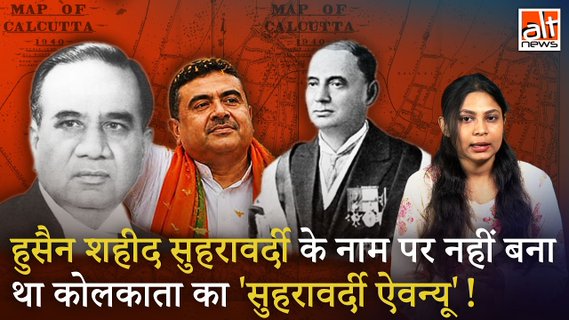

In a recent announcement, Bengal’s Chief Minister Suvendu Adhikari incorrectly claimed that Kolkata’s Suhrawardy Avenue was named after Huseyn Shaheed Suhrawardy, connected to the Great Kolkata Killings. This statement has drawn attention and requires context to clarify the origins of the street’s name.
Understanding the History of Suhrawardy Avenue
Suhrawardy Avenue is a major street in Kolkata that holds significant historical importance. It is named after Huseyn Shaheed Suhrawardy, who was a prominent political leader in British India and served as the Chief Minister of Bengal in the 1940s. However, it is crucial to differentiate this name from the tragic events of the Great Kolkata Killings of 1946, during which communal violence erupted, causing significant loss of life. While Suhrawardy was implicated in the context of communal tensions, the avenue’s naming predates the violence and connects primarily to his broader political significance.
Political Context and Reactions
The recent statement by Chief Minister Suvendu Adhikari has reignited debates surrounding historical narratives and communal sensitivities in West Bengal. His assertion that the road was named in the context of the communal violence has been met with backlash from historians and political analysts who emphasize the importance of accurate historical representation. This incident reflects ongoing tensions in West Bengal’s political landscape, particularly as the state approaches critical elections. Politicians often engage in historical reinterpretation as part of their strategy to mobilize support, thus making it imperative for them to be precise when addressing matters of such significance.
The Broader Implications of Historical Misinterpretation
Misinterpretations of history can fuel communal discord and alter public perception in ways that may have lasting consequences. The way historical figures and events are portrayed in political dialogues can shift narratives and influence societal behavior. Adhikari’s remarks could potentially polarize public opinion, especially as the memory of the Great Kolkata Killings remains a sensitive issue for many residents who experienced the trauma of that era. Political leaders need to tread carefully, aiming for a balanced discourse that honors historical facts while promoting unity.
Why This Matters
This incident is highly significant in the context of Indian politics, particularly in a state like West Bengal, which has a diverse population with various religious and cultural backgrounds. As the political environment becomes increasingly charged, the accurate portrayal of history may play a crucial role in shaping electoral outcomes. Misleading statements by influential leaders can exacerbate existing divisions and fracture community ties, pushing the narrative towards extremism and intolerance. For voters, especially those in West Bengal, understanding the complexities of their history is essential for making informed choices at the polls.
Frequently Asked Questions
What is Suhrawardy Avenue named after?
Suhrawardy Avenue is named after Huseyn Shaheed Suhrawardy, a significant political figure in Bengal’s history who served as Chief Minister in the 1940s.
What were the Great Kolkata Killings?
The Great Kolkata Killings refer to a series of violent communal riots that occurred in Kolkata in August 1946, resulting in thousands of deaths and considerable destruction.
Why is the naming of streets politically significant?
Street names often evoke strong historical memories and cultural identities. Politicians may use these names to resonate with particular voter bases or to frame historical narratives that align with their political ideologies.
What has been the public reaction to Adhikari’s claim?
The public reaction has been mixed, with many expressing concern over the accuracy of his statement. Historians and analysts have criticized his remarks, emphasizing the need for a better understanding of historical contexts.