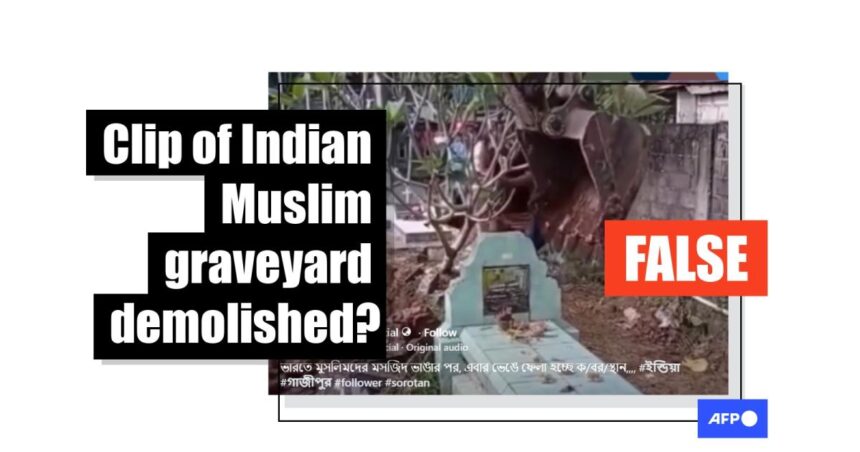

Recent events in India underscore an alarming trend affecting the Muslim community, particularly in West Bengal, where reports have surfaced regarding the targeting of properties and places of worship. A viral video claiming to depict demolitions of Muslim graveyards has sparked outrage, but factual investigations reveal these incidents stem from outside the region, highlighting the ongoing discrimination faced by Muslims under the current government.
Misleading Claims Fueling Tensions
On May 31, a Facebook post claimed that after mosques were demolished, Muslim graveyards were next. Accompanied by a 22-second video of a bulldozer unearthing a grave, the post rapidly gained over 46,000 shares. Misleading imagery such as this contributes significantly to negative perceptions and tensions in a community already under pressure. Indian media outlets have reported on violent incidents directed at the Muslim community in the wake of the BJP’s electoral success, linking these to broader discriminatory patterns by the ruling party.
Fact-Checking the Viral Video
Investigative efforts revealed that the video circulating on social media was misattributed to West Bengal. A reverse image search traced the footage back to Bali, Indonesia, where it captured the exhumation of an old grave to accommodate new burials in a densely populated area. Local reports corroborate the need for such actions due to spatial constraints, thus revealing the fabricated nature of the claims surrounding the video. This underscores how misinformation can further aggravate existing societal divides and lead to misdirected outrage.
Escalating Discrimination against Muslims
Following the victory of Narendra Modi’s BJP in state elections, the Muslim community in West Bengal has been reportedly subjected to increased scrutiny and violence. Post-election environments have turned hostile, with many incidents targeting Muslim properties. This escalating discrimination, coupled with government policies that favor majoritarian narratives, raises concerns about human rights violations and social justice for minority communities. The BJP’s focus on nationalism often marginalizes Muslims, portraying them as outsiders in their own country.
Why It Matters
The significance of these events transcends religious discrimination; they reflect broader societal patterns that could impact political stability and communal harmony in India. For international observers, the implications are vast. Understanding the dynamics of social exclusion and economic boycotts directed toward minority groups is crucial for reporting, international diplomatic relations, and global human rights discourses. If unchecked, such trends may contribute to an environment ripe for unrest, hindering development and social cohesion in a nation characterized by its rich diversity.
Frequently Asked Questions
What evidence supports claims of discrimination against Muslims in India?
Reports of violence targeted at Muslim properties and places of worship following BJP victories provide evidence of systemic discrimination. Investigations into social media claims have revealed many instances of misleading information that serve to incite community tensions.
Is the bulldozer video related to communal violence in West Bengal?
No, the viral video circulated as evidence of damaging Muslim graveyards was traced back to Bali, Indonesia. This highlights the spread of misinformation that can fuel communal strife without a factual basis.
How is the Indian government responding to these issues?
The BJP government’s policies and actions appear to increasingly target minority communities, often justifying their measures under the guise of nationalism. The establishment of detention centers for undocumented immigrants following their election victory indicates a broader strategy that may disadvantage minority groups.
What can be done to combat misinformation related to communal tensions?
Enhancing public awareness about misinformation and improving the dissemination of factual information through reputable media sources can help counteract the harmful effects of misleading narratives. Engaging in dialogue and promoting inter-community understanding can also contribute to more harmonious coexistence.