
On January 28, 2026, a significant incident occurred when the Madhya Pradesh police conducted a raid in the village of Ghatakhedi, located in Rajasthan’s Jhalawar district. The police force, comprising 100 personnel, allegedly sought to extort money from the family of a man named Tahir Khan by claiming his involvement in drug-related activities. This case has raised serious questions about police conduct across state lines and the integrity of ongoing investigations into drug cases.
The Raid and Arrest
Early in the morning of January 28, the Madhya Pradesh police launched a raid on the Khan family’s home, seeking an individual named Tahir Khan. When confronted, Tahir’s father, Hamid Khan, informed the officers that Tahir was not present at the location. However, law enforcement officials forcibly entered the premises and apprehended both Tahir and his brother, Munawwar, without notifying local police units. The family has accused the police of demanding ₹10 lakh (approximately $12,000) for their release, raising serious allegations of extortion.
Authorities’ Claims vs. Family Allegations
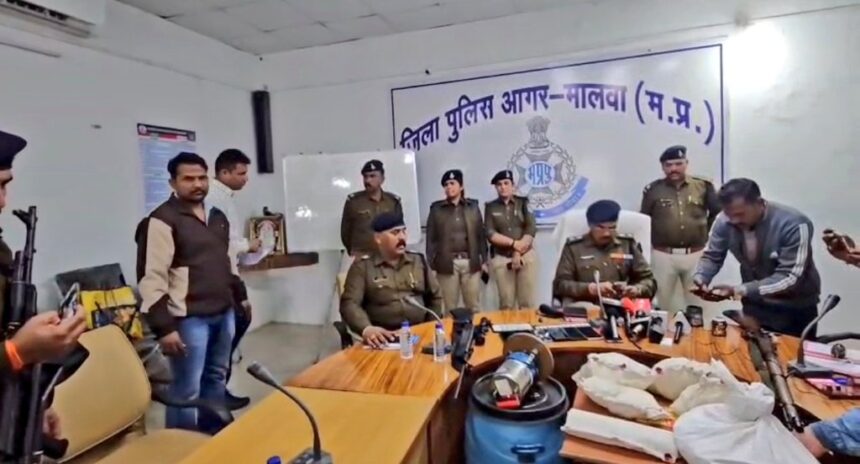
In a subsequent press conference, the Madhya Pradesh police claimed to have uncovered a drug manufacturing unit valued at ₹5 crore (roughly $600,000) in Rajasthan and arrested two suspects alongside the seizure of various drugs and paraphernalia. However, the Khan family criticized these claims, stating their house had not been searched thoroughly, and no substantial evidence was found at the time of the alleged arrests. The discrepancies in the police’s narrative led the family to file a complaint, which ultimately resulted in a court order for an investigation.
Judicial Action and Findings
The Rajasthan police, responding to the family’s allegations, initiated an inquiry. A report presented to the court indicated that the raid could have been a ploy for extortion, with no valid seizure documented at the Khan residence. Instead, evidence suggested the alleged confiscations were reported only after the arrests. The court validated these claims, confirming suspicions of police misconduct, leading to the registration of an FIR against six named police officials and 90 other personnel. Agra’s Superintendent of Police (SP) has reiterated the commitment to cooperate with the ongoing investigation by Rajasthan police.
Why This Matters
This case highlights a concerning trend of alleged police misconduct in India, specifically related to illicit drug trafficking laws governed under the Narcotic Drugs and Psychotropic Substances Act (NDPS). As similar cases have surfaced in the regions bordering Rajasthan and Madhya Pradesh, this incident raises questions about the integrity of the police and the judicial process in handling drug-related allegations. The inability of state authorities to prevent extortion not only undermines public trust but could catalyze wider discussions on police reforms and accountability necessary to uphold the rule of law.
Frequently Asked Questions
What prompted the raid in Rajasthan?
The Madhya Pradesh police conducted the raid based on alleged involvement of Tahir Khan in drug-related activities, claiming to have discovered a significant drug manufacturing operation.
What accusations have been made against the police officers?
The Khan family has accused the police of demanding ₹10 lakh for the release of detained family members, suggesting that the raid was primarily a scheme for extortion rather than legitimate law enforcement.
What was the outcome of the investigation?
The investigation revealed discrepancies in the police’s narrative, leading the court to order the registration of an FIR against multiple police officials for misconduct and extortion.
How does this incident reflect on the NDPS Act enforcement?
This incident casts doubt on the procedures followed by law enforcement under the NDPS Act, highlighting a pattern of alleged fake drug cases motivated by goals beyond public safety, such as financial gain through extortion.