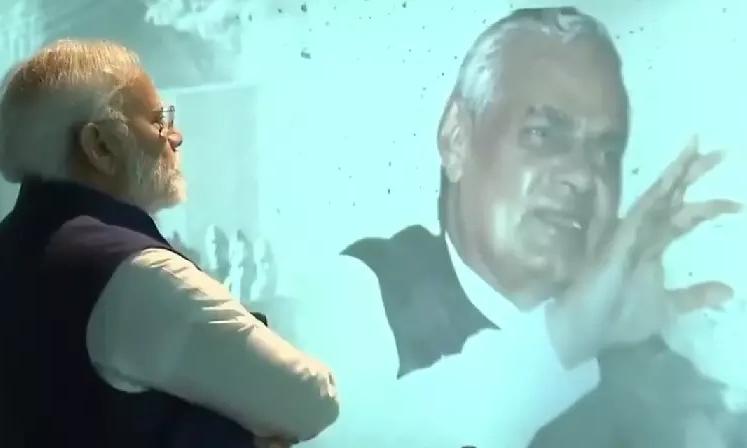

Recent discussions surrounding the Bharatiya Janata Party (BJP) and the Rashtriya Swayamsevak Sangh (RSS) have revealed alarming instances of discrimination against Muslims in India. Scholars, including Christophe Jaffrelot, highlight historical statements and ideological frameworks from influential leaders that raise questions about citizenship and national identity, particularly concerning Muslim communities.
Vajpayee’s Legacy: A Controversial Perspective on Muslims
Atal Bihari Vajpayee, revered as a moderate leader within the BJP, made several statements that have resurfaced, shedding light on how Muslims are perceived in the context of Indian nationalism. Jaffrelot noted that Vajpayee once articulated that Muslims may not be considered “full citizens” if they do not show allegiance to Hindu culture. In a speech from December 2001, he argued that Muslims had different customs aimed at distinguishing themselves from Bharatiya society, framing them as largely anti-national for not recognizing Hindu deities as their forefathers.
This rhetoric echoes earlier critiques from RSS leaders like MS Golwalkar, who asserted that non-Hindus must adopt Hindu culture to be recognized as citizens. Such claims form the bedrock of a longstanding agenda to marginalize Muslim identity within the national narrative, and recent actions, such as the pruning of electoral rolls regarding Muslim voters, have raised concerns about electoral discrimination.
Assimilation: A Convoluted Goal
Vajpayee’s identification of a dual objective for the RSS — to strengthen Hindu society and assimilate non-Hindus — asks for unwavering loyalty to a specific cultural narrative that many find exclusionary. The push for Muslims and Christians to view India as their “Motherland,” while maintaining their faith, poses significant challenges. Historical figures like Mahatma Gandhi articulated a more inclusive vision, cautioning against treating the nation as a goddess, which reflects an expectation deemed unreasonable by many Muslims.
The implications of these assimilationist policies manifest in societal pressures, with Muslims often facing coercion to conform to dominant cultural norms that may conflict with their religious beliefs. This has profound consequences on social cohesion, particularly as recent policy shifts have sought to enforce cultural uniformity, creating an environment of fear and alienation for Muslim citizens.
National Identity and Citizenship Under Scrutiny
The specter of discrimination and social exclusion for Muslims has intensified under the BJP’s rule, with prominent leaders reinforcing notions that question the loyalty of Muslim citizens. The call for Muslims to embody a specific patriotic sentiment, often measured against a predominantly Hindu standard, also complicates the definition of citizenship in India.
Upholding the ideologies of earlier RSS leaders, contemporary BJP leadership has reiterated demands for Muslims to integrate fully into what they deem the mainstream culture, leading to a climate where political dissent against such narratives is met with hostility. This ongoing tension underscores the fragility of India’s secular fabric and the challenges faced by minority communities as citizenship becomes a contested premise rooted in cultural allegiance.
Why It Matters
The implications of these discourses extend beyond historical interpretation; they impact contemporary India’s social cohesion and the rights of its citizens. Discrimination against Muslims, aided by institutional frameworks, can lead to weakened democratic practices, social unrest, and a serious erosion of civil liberties. Understanding these issues is vital for scholars, activists, and global observers interested in the intersection of culture, politics, and community rights in increasingly polarised nations.
Frequently Asked Questions
What are the main concerns regarding the treatment of Muslims in India?
Concerns include social exclusion, political disenfranchisement, and demands for cultural assimilation that challenge their religious beliefs and identity.
How did Atal Bihari Vajpayee view Muslims’ role in Indian society?
Vajpayee posited that Muslims adopted practices that set them apart from Bharatiya society, framing this divergence as a potential threat to national unity and identity.
What ideologies have shaped the BJP’s approach to Muslims?
The BJP’s approach is heavily influenced by historical leaders in the RSS like MS Golwalkar and ideological frameworks that prioritize Hindu majoritarianism over inclusivity.
How do current government policies reflect attitudes towards Muslims?
Recent governmental policies and actions suggest a systematic effort to marginalize Muslim voices, as seen in electoral roll adjustments and cultural integration mandates that many argue violate the spirit of India’s secular constitution.