
Summary
Indian journalist Shubhendu Ghosh has drawn attention for pressing former U.S. President Donald Trump with a crucial question about the deaths of Indian sailors in a recent incident. Ghosh’s inquiry regarding condolences from Trump highlights the complexities of U.S.-India relations amid ongoing discussions about trade and cooperation.
Context of the Question
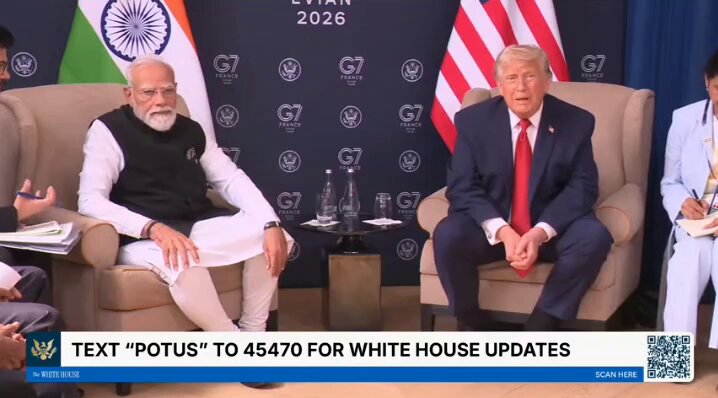
During a recent interaction, Shubhendu Ghosh was the only reporter who confronted Trump directly regarding the tragic deaths of Indian mariners in a U.S. military context. This moment captured the spotlight as it underscored the importance of discussing human consequences in political and trade dialogues. By addressing the emotional impact on families of the victims, Ghosh sought to bring a human angle into what is often characterized by economic or geopolitical rhetoric.
Trump’s Response and Broader Implications
In response to Ghosh’s question, Trump credited Indian Prime Minister Narendra Modi for fostering robust relations between India and the United States. He elaborated on the bilateral trade potential, emphasizing the “good conversations” that are yielding tangible outcomes, including major investments in the U.S. from India. This answer reflects Trump’s typical focus on economic achievement and development while sidestepping the deeply emotional query posed by Ghosh.
The Trade Dynamics at Play
Trump highlighted the economic ties, noting that the United States anticipates a substantial inflow of investments, reportedly exceeding 19.2 trillion dollars, which includes the construction of factories and job creation facilitated by Modi’s initiatives. This economic framing positions the U.S.-India relationship as one primarily based on mutual financial gain. However, in the backdrop, the humanitarian crisis involving the Indian sailors remains unresolved and under-discussed, raising questions about the ethical dimensions of international relations.
Why This Matters
This incident holds significant political weight for Indian readers as it reflects the multifaceted relationship between India and the United States. While economic collaboration is vital, it should not eclipse the humanitarian considerations that arise from military engagements. Ghosh’s question serves as a reminder for both leaders and citizens alike that behind geopolitical strategies are real lives affected by policy decisions. The Indian public and politicians must advocate for better articulation of these issues in international forums, ensuring that both economic and humanitarian perspectives are addressed.
Frequently Asked Questions
What happened to the Indian sailors?
The Indian sailors were reportedly killed in a U.S. military operation, raising concerns around accountability and the need for acknowledgment from U.S. authorities.
What was Trump’s response to the question?
Trump did not offer condolences but shifted the focus to the positive aspects of U.S.-India trade relations, emphasizing economic growth and collaboration.
Why is Shubhendu Ghosh’s question important?
Ghosh’s question is significant because it highlights the human side of international relations, reminding leaders of their responsibilities towards individuals affected by policy decisions.
How do economic ties influence U.S.-India relations?
Economic ties are pivotal as they provide a framework for collaboration, yet they can overshadow important humanitarian issues, necessitating a balanced approach in diplomatic dialogues.