
As tensions rise due to attacks on South Asian communities in Texas, civil rights activists warn that divisive narratives within the diaspora, particularly between Hindus and Muslims, threaten a unified response to racism. The growing influence of polarized media has exacerbated these divisions, hindering efforts to combat discrimination.
Rising Hostility and Fear in Texas
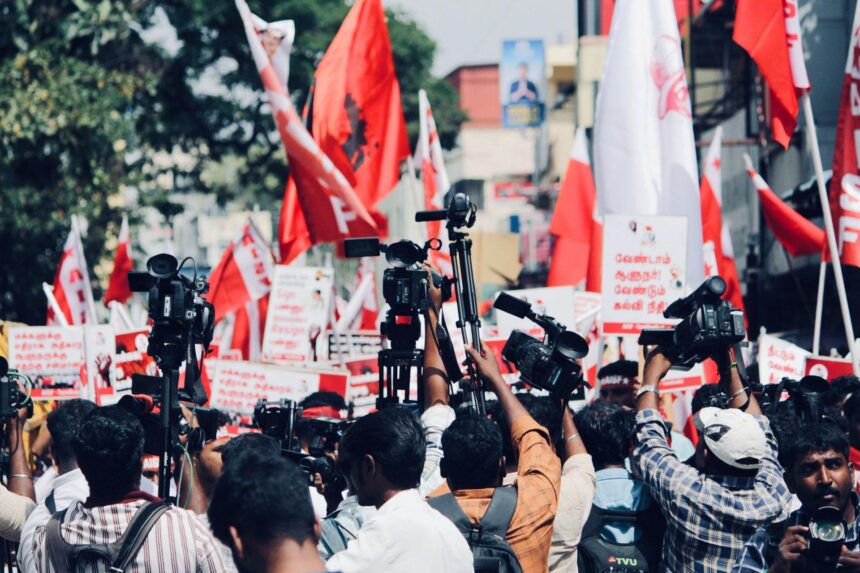
The recent June 2 demonstration outside Frisco City Hall exemplified the heightened tensions. Armed white supremacists declared an “Indian invasion” of Texas, brandishing signs like “Stop the Hindu Takeover in Texas” and chanting slogans tied to white nationalist movements. This event served as a harsh reminder that racists do not differentiate between Hindus, Muslims, Indians, or Pakistanis; they view all South Asians as outsiders.
In the aftermath, activists expressed concern over the media’s framing of the situation. Instead of focusing on the actual perpetrators of hate, some outlets shifted the blame towards individuals like Pakistani-American activist Zul Mohamed, framing him as a “villain” in the narrative. This misdirection underscores the challenge of confronting racism while also navigating harmful internal divisions.
The Role of Media in Shaping Narratives
Observers have noted that certain segments of the Indian media are perpetuating a divisive narrative by framing social discourse through a Hindu-Muslim lens. Reports that place responsibility on Pakistani or Muslim individuals for escalating tensions distract from the real problem: the rise of white supremacist violence. “When white supremacists attack South Asians, some media outlets look for a Pakistani or Muslim villain instead of confronting racism itself,” said activists involved in anti-racism campaigns in Texas.
Consequently, this media portrayal not only skews public perception but also fosters rivalry among South Asians in America. Instead of standing in solidarity against a common enemy, members of the community can become increasingly polarized, complicating collective actions to combat discrimination.
Political Exploitation of Divisions
The dynamics extend into local politics, where candidates like Frisco mayoral contender Rod Vilhauer have capitalized on divisions. Although he has apologized for disparaging comments towards Hindus, he continues to make problematic statements about Muslims, revealing a strategy to gain support from one demographic while targeting another. Activists argue that this is a classic divide-and-rule tactic, where politicians benefit at the expense of communal unity.
The overlapping rhetoric used by opponents of both Hindu temples and Muslim mosques demonstrates that white nationalists view South Asians as a single group posing a threat to their interests. This common plight should ideally unite these communities, but the current political climate is fostering competition instead.
Why It Matters
The implications of this situation extend beyond Texas. The challenges faced by South Asian communities reflect broader issues of racism and division that can resonate throughout immigrant populations in the United States. The narrative created by media, politicians, and polarizing figures can either promote solidarity or deepen divides. Understanding these dynamics is essential for community leaders, activists, and policymakers who are dedicated to combating discrimination and fostering inclusiveness. A shared experience of racism can inspire collective action, while division can undermine efforts for justice and equity.
Frequently Asked Questions
What are the main concerns among South Asian communities in Texas?
The main concerns include heightened attacks from white supremacist groups and the internal divisions between Hindus and Muslims that complicate collective responses to these threats.
How are media narratives impacting community solidarity?
Media narratives that portray South Asians through a Hindu-Muslim lens can foster rivalry rather than unity, distracting from the shared experiences of racism faced by all South Asians in America.
What role do politicians play in exacerbating divisions?
Politicians may exploit inter-community tensions for electoral gain, appealing to one demographic while targeting another, which can hinder efforts for communal solidarity against discrimination.
How can South Asian communities work towards unity?
Activists advocate for coalition-building across religious and national lines to effectively challenge racism. Organizations like South Asian American Voter Empowerment of Texas are leading efforts to promote solidarity among Hindus, Muslims, Sikhs, and Christians.