
Summary
The recent murder of Vinod Kashyap, a local leader of the Bharatiya Janata Party’s (BJP) Other Backward Classes (OBC) Morcha and Bajrang Dal in Uttarakhand’s Dehradun, has sparked severe communal tensions in the region. The incident, a violent fallout from an irrigation dispute, underscores the escalating social tensions and the challenges faced by Indian Muslims amidst political narratives that often foment division.
A Grave Incident and Its Aftermath
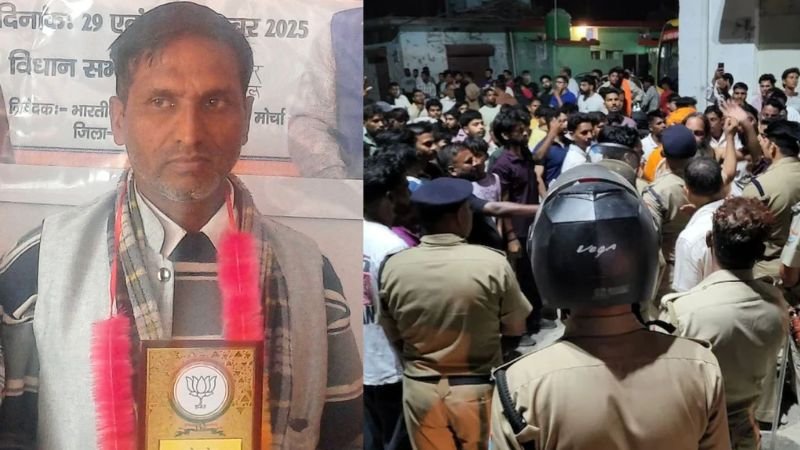
Vinod Kashyap was killed following an altercation over the use of a tubewell for irrigation in Bairagiwala village on June 13. What began as a seemingly minor water dispute escalated into a brutal attack by a Muslim mob led by an individual named Imtiyaz. Reports indicate that Kashyap was attacked with various weapons including rods and hammers. While he succumbed to severe head injuries, three other family members were left critically injured.
The attack, reportedly stemming from earlier disagreements involving a sum of 14,000 INR, has raised alarming questions about communal harmony in the region. Following the murder, large protests erupted, primarily organized by local Hindu organizations such as the Bajrang Dal, leading to clashes with police, arson, and vandalism against the homes of the alleged attackers.
Community Response and Escalation of Violence
The violent response from local Hindus was marked by significant unrest: protestors set ablaze the residences of individuals accused of involvement in the murder, necessitating a heavy police presence and ultimately leading to property demolition involving bulldozer action against Imtiyaz’s assets. In light of these events, law enforcement has registered a murder case against multiple suspects, with significant vigilante sentiment permeating the community. Internet services were suspended in an attempt to quell tensions and prevent the situation from worsening.
Despite police assurances of swift action, the environment remains charged. The family of the deceased has publicly declared they will not perform the last rites until all suspects are apprehended. Such a stance underscores the profound grief and anger prevalent within the community, further magnifying existing societal fissures.
The Broader Context of Communalism in India
Amidst these unfolding events, it is crucial to address the broader context of communal issues affecting Indian Muslims, particularly under governments tied to the Sangh Parivar ideology. Marginalization and economic boycotts of Muslim businesses have become increasingly prominent, often exacerbated by narratives that pit communities against one another. Housing and employment discrimination have also become prevalent, as socio-political dynamics tilt towards polarization.
This incident reflects an alarming trend where communal tensions can be instigated and exploited for political gain—an issue that stands as a cautionary tale for civil society, emphasizing the need for interventions that promote reconciliation over division. Furthermore, the engagement of local Hindu organizations like Bajrang Dal in protests highlights the intersection of political mobilization and societal unrest, frequently at the expense of minorities.
Why It Matters
This incident is significant not only for the communities directly involved but also for the national fabric of India. As incidents of communal violence continue to manifest, they raise questions about human rights, social stability, and national unity. The growing tendency towards communal unrest has profound implications for governance and law enforcement. The international community watches closely as India navigates these tensions, assessing how they impact ethics, democracy, and societal progress within an increasingly polarized atmosphere.
Frequently Asked Questions
What led to the murder of Vinod Kashyap?
The murder stemmed from a dispute over irrigation between Kashyap’s family and a group led by Imtiyaz, which escalated into a violent confrontation.
What actions have been taken by the police in response to the incident?
The police have registered a murder case against 12 named suspects and approximately 25-30 unidentified individuals, with several arrests made so far.
How did the community react to Kashyap’s murder?
There were large protests organized by local Hindu organizations, leading to clashes with police, incidents of arson, and further communal strife.
What are the implications of this incident for Muslim communities in India?
This incident highlights ongoing issues of discrimination, marginalization, and communal tensions that adversely affect Muslim communities in India, often fueled by political narratives.