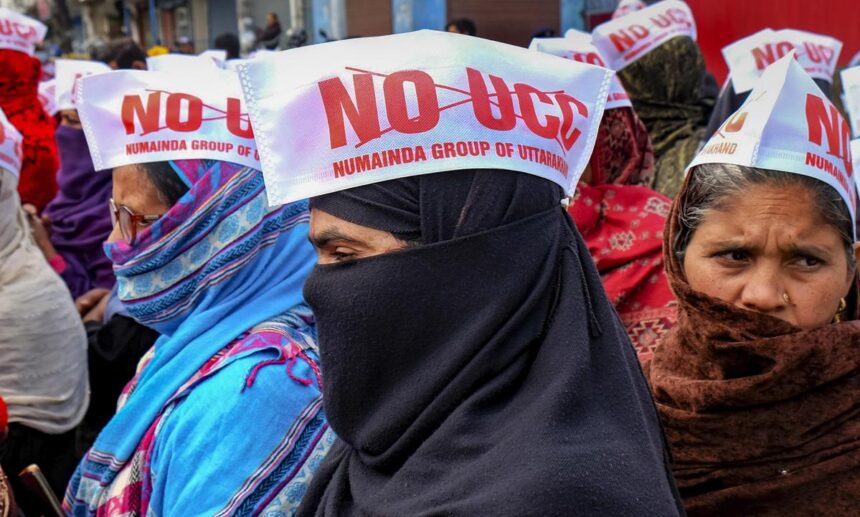

Protests erupt in Assam against the Uniform Civil Code (UCC) as many perceive it as an infringement on the religious practices and identities of the Muslim community. Demonstrators argue that the law disproportionately targets Muslims, raising concerns over its implications for religious freedoms and social equality.
Protests in Assam Against the Uniform Civil Code
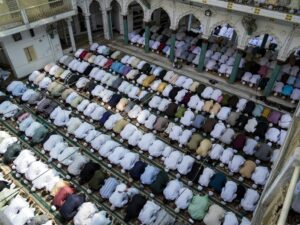
In Cachar district, Assam, hundreds gathered on Friday to peacefully protest the recently enacted Uniform Civil Code (UCC). The assembly followed Friday congregational prayers at a local mosque, marking a collective response to what many believe is discriminatory legislation targeting the Muslim community. Protesters raised slogans calling for the withdrawal of the law, emphasizing their fears that it disrupts personal laws that have been integral to their faith and identity for generations.
Concerns Over Religious Freedom and Social Fabric
Among the leaders at the protest, former MLA Ataur Rahman Mazarbhuiya criticized the UCC for its perceived attack on religious liberty and the socio-cultural diversity of Assam. Mazarbhuiya articulated a sense of unease within the Muslim community, challenging the government’s rationale behind the legislation. He suggested that the UCC creates a narrative implying that existing Muslim personal laws are inadequate, which raises anxiety and apprehension among Muslims about their place in society.
Mazarbhuiya also scrutinized the exemption granted to Scheduled Tribes under the UCC. He argued that any law claiming to ensure equality should not exclude specific communities. “If some communities are exempted, then how can there be equality?” he asked, pointing out inconsistencies in the law’s framework that could further entrench social divides.
The Polygamy Debate: Misconceptions and Realities
The issue of polygamy frequently emerges in discussions surrounding the UCC. Mazarbhuiya claimed that tribal communities in India have higher instances of polygamy than Muslims, who he argued, are portrayed unfairly by the legislation. He referenced data from an organization named the “Indian Social Society,” though no verifiable sources were available to corroborate this claim.
In contrast, data from the National Family Health Survey (NFHS-5) present a different picture, indicating that polygamy rates are at 2.1% among Christians, 1.9% among Muslims, and 1.3% among Hindus. The data highlight significantly higher polygamy rates among Scheduled Tribe populations, thus complicating the prevailing narratives that simplistically blame Muslims for such practices.
Community Voices: Calls for Dialogue and Engagement
During the protest, participants expressed a broad concern over the potential weakening of protections for cultural and religious traditions that have been upheld for generations. There were strong calls for the government to reevaluate the law and engage meaningfully with communities that would be affected by its implementation. The demonstrators argued that any legal framework must be inclusive and respectful of the unique social fabrics that exist within Indian society.
Why It Matters
The enactment of the UCC and the ensuing protests underscore the wider societal implications of legislation perceived to marginalize certain communities. These developments raise important questions about religious freedom, social equality, and the role of personal laws in a diverse country like India. As the UCC sparks debates about identity and representation, stakeholders must consider how laws can either unite or divide, significantly influencing social harmony. The response from the Muslim community highlights a crucial need for dialogue, ensuring that all voices are considered in the legislative process.
Frequently Asked Questions
What is the Uniform Civil Code (UCC)?
The UCC aims to replace personal laws based on the scriptures and customs of each major religious community in India with a common set governing every citizen. This would apply to marriage, divorce, inheritance, and adoption among other areas.
Why are protests occurring against the UCC in Assam?
Many protesters believe the UCC disproportionately targets the Muslim community, infringing upon their religious freedoms and personal laws integral to their identity and faith.
What are the implications of the UCC for religious minorities?
The implementation of the UCC may alter or remove specific rights and protections previously afforded to religious minorities, potentially threatening their cultural identities and social equity.
How does polygamy fit into the discussions surrounding the UCC?
Polygamy is often cited as a reason for the UCC’s necessity. However, data suggests that the prevalence of polygamy is higher among certain tribal communities than Muslims, challenging common narratives used in the legislative debate.