
Muslim Community Faces Discriminatory Actions Amid Mosque Closures in Itanagar — Recent closures of mosques in Itanagar, Arunachal Pradesh, by the BJP-led government have sparked allegations of discrimination against the Muslim community. Leaders argue that these actions are a manifestation of growing pressure on Islamic institutions, positioning the mosque closures within a broader context of societal marginalization.
Government Actions and Community Responses
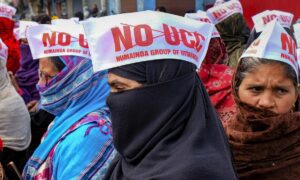
The catalyst for these closures was a bandh (shutdown) initiated by the Arunachal Pradesh Indigenous Youth Organization (APIYO), which demanded action against what it deemed “illegal” mosques in the region. Following this, the district administration released a notice stating that an Assistant Commissioner-cum-Executive Magistrate had ordered the sealing of all mosques, including the prominent Jama Masjid, citing lack of legal approvals for their operation.
In response, the All Arunachal Pradesh Masjid Welfare Committee (AAPMWC) criticized what it viewed as selective enforcement of regulations targeting mosques while ignoring similar structures belonging to other religious communities. Member Giah Limpeh Sultan emphasized the need for uniformity in legal scrutiny across all religious institutions, noting that discrepancies exist even among other faiths that operate without full approvals.
Claims of Increased Pressure on Islamic Institutions
Community members assert that this is not an isolated incident but rather part of a growing trend of pressure on Islamic institutions in Itanagar. A local resident involved in mosque affairs revealed that APIYO had previously objected to maktabs — informal Islamic education centers. Allegations were made that landlords were pressured into shutting down these centers, resulting in 11 out of 14 being effectively closed.
Furthermore, mosque committees have consistently refuted claims of illegality, insisting that many mosques were built with local donations and some with the consent of landowners. Authorities have yet to address the community’s claims of discrimination openly, contributing to an atmosphere of apprehension among local Muslims.
Public Sentiment and Fear of Repercussions
Local mosque officials reported that fear of being labeled “outsiders” deterred many Muslims from publicly challenging the mosque closures. This concern reflects a broader socio-political context in Arunachal Pradesh, where issues of Indigenous identity, migration, and land rights often spur tension. The community seeks to ensure their rights, but many feel the risk of social or political backlash could inhibit their ability to do so effectively.
Though authorities maintain that the mosques are being sealed for lack of legal authorization, there has been no substantial public rebuttal against the accusations of selective targeting. The issue remains a matter of deep contention within the community and the wider societal context.
Why It Matters
The situation in Itanagar highlights ongoing tensions between local governance and minority rights in India, particularly concerning the Muslim community. The discriminatory actions noticed here may set a precedent that affects governance and community relations across multiple regions. For policymakers and social leaders, understanding the nuances of these interactions is vital to fostering harmony and inclusivity in a diverse nation where cultural identities are increasingly under scrutiny.
Frequently Asked Questions
What prompted the closure of the mosques in Itanagar?
The closures were prompted by a bandh called by the Arunachal Pradesh Indigenous Youth Organization, which claimed that mosques were operating illegally.
What has the Muslim community’s response been?
The Muslim community, represented by the All Arunachal Pradesh Masjid Welfare Committee, has criticized the closures as selective enforcement and urged for equal scrutiny across all religious institutions.
How many maktabs were shut down following the protests?
Out of 14 maktabs in the area, 11 were reportedly shut down due to pressure on landlords from members of APIYO.
What fears do community members have regarding public challenges to the closures?
Many Muslims fear being labeled as “outsiders” and facing social or political backlash if they publicly challenge the mosque closures.