
India’s Muslim community has faced increasing marginalization and social exclusion under the current political climate, particularly with the dominance of the Sangh Parivar and the Bharatiya Janata Party (BJP). Yet, amidst this climate of discrimination, a novel concept emerges: “Musalman,” India’s first Muslim superhero. This graphic novel, created by Bengaluru-based writer Falah Faisal, utilizes humor and art to challenge hate while exploring the community’s identity and struggles.
The Rise of ‘Musalman’
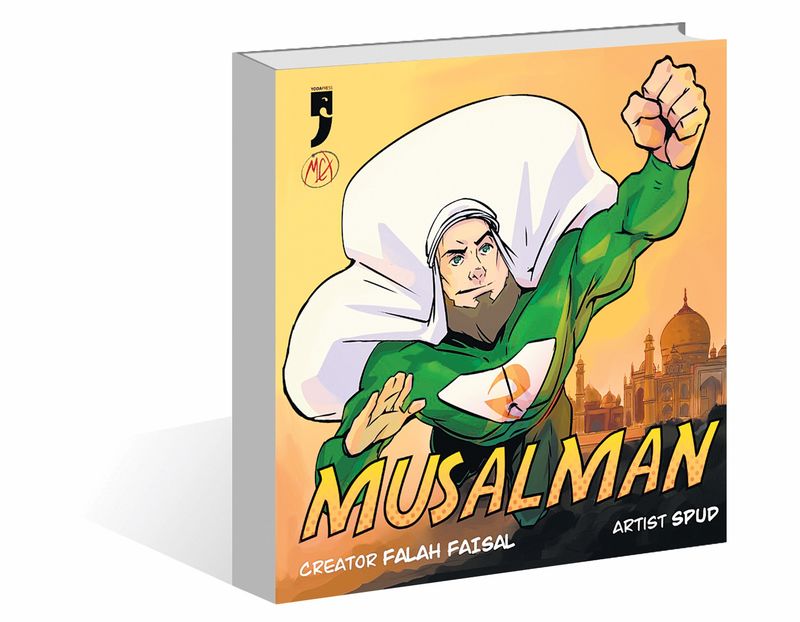
The graphic novel “Musalman” introduces a fresh perspective on a community that has often been portrayed in a negative light. Created by Falah Faisal in collaboration with artist Spud, the book capitalizes on the cultural significance of superheroes. This character, wearing a skull cap, embodies the fight for truth and justice in a world rife with prejudice. Faisal posits the idea of a “Muslim Superman,” transforming humor into a vehicle for storytelling that resonates deeply with contemporary socio-political issues faced by Indian Muslims.
Challenging Stereotypes Through Humor
“Musalman” takes an unflinching look at the stereotypes surrounding the Muslim community, particularly in the context of media portrayal. Through various chapters, such as “Musalman vs Coronavirus,” the superhero navigates accusations of blame directed at Muslims during the pandemic. Instead of succumbing to societal scapegoating, the superhero ingeniously resolves the crisis by redirecting the virus away from the nation, symbolizing resilience and creativity in the face of adversity.
Additionally, the chapter “Musalman vs Arnab Cowswamy” showcases the problematic nature of media narratives that sensationalize issues related to the Muslim community. Cowswamy, a character modeled after real journalists, embodies toxic sensationalism, which increasingly skews public perception. Through this satire, the novel highlights the urgent need for a more nuanced and compassionate media representation.
Political Commentary Through Graphic Storytelling
The book serves as both a critique and a mirror reflecting the broader political atmosphere in India, such as how the majoritarian narrative has infiltrated common public discourse. By chronicling the superhero’s adventures, Faisal emphasizes the struggles of Muslims who find themselves portrayed as the “other.” The chapter “Kahan Milega Musalman” illustrates the challenges of visibility and the quest for representation in society. It explores the lengths one must go to find affirmation and belonging when marginalized by the state and the prevailing socio-political environment.
This poignant analysis underlines how systemic discrimination can create a rift between communities, and “Musalman” serves as a call for unity and understanding. The humor embedded within these narratives showcases the potential for dialogue and connection, urging audiences to reconsider entrenched biases.
Why It Matters
The experiences of Indian Muslims under current political dynamics illustrate significant societal implications. The rise of religious majoritarianism and the marginalization of minority communities affect social cohesion and democratic integrity. In the larger context, the challenges faced by Muslims in India are reflective of broader global issues regarding religious intolerance and xenophobia. Tools like graphic novels can be powerful in fostering understanding, sparking discussions, and challenging the status quo, making “Musalman” not just a story but a pivotal piece of contemporary commentary.
Frequently Asked Questions
What is “Musalman” about?
“Musalman” is a graphic novel featuring India’s first Muslim superhero who fights against hate and prejudice through humor and art, created by writer Falah Faisal and artist Spud.
How does the novel address discrimination against Muslims?
The novel utilizes satire and humor to challenge existing stereotypes and portray the resilience of the Muslim community in a politically charged atmosphere.
What societal issues does “Musalman” tackle?
The narrative explores themes of identity, Islamophobia, and the impact of media representation on the Muslim community in India, reflecting broader global concerns regarding religious discrimination.
Who is the target audience for “Musalman”?
The book appeals primarily to readers interested in social justice, political commentary, and graphic novels, as well as those seeking a deeper understanding of the complexities surrounding India’s Muslim community.