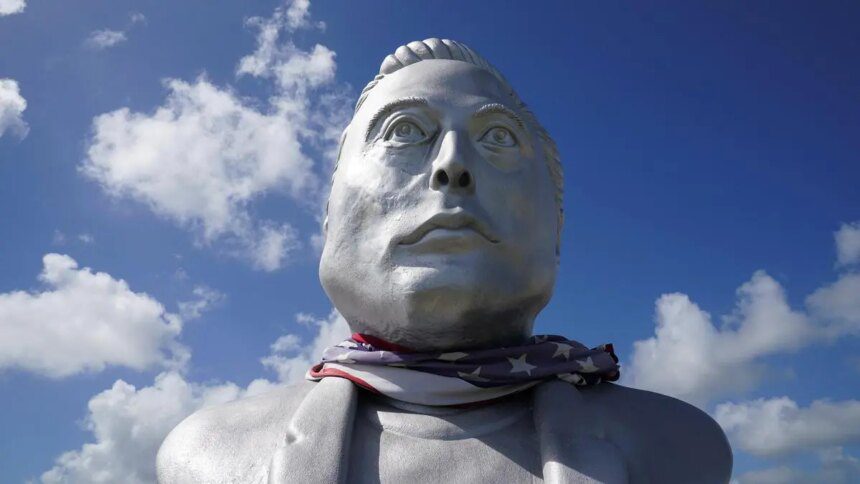

Elon Musk, the world’s first trillionaire, has expanded his vast business empire, which includes SpaceX, Tesla, Neuralink, and The Boring Company. Recently, SpaceX made headlines by becoming the largest initial public offering (IPO) in history, achieving a market value of $2.1 trillion. As Musk continues to innovate across various sectors, understanding his ventures offers valuable insights into the future of technology and investment opportunities.
SpaceX: Reaching New Heights
Founded in 2002, SpaceX has transcended its initial focus on rocket technology. Under Musk’s leadership, the company has developed multiple revenue-generating businesses, including the Starlink satellite communications service, which alone generated $4.4 billion in operating income last year. Recently, SpaceX merged with Musk’s artificial intelligence company, xAI, which oversees the social media platform X, previously known as Twitter. Though both xAI and X currently operate at a loss, they represent Musk’s broader vision of integrating technology to enhance human capabilities.
SpaceX’s IPO has garnered both excitement and skepticism, with stock prices closing at $161 per share. While this valuation pushes SpaceX to the forefront, analysts caution that many of its ambitious goals—such as colonizing Mars—rely on untested technologies and significant financial investments. This IPO not only reshapes the aerospace landscape but also fuels discussions about the intersection of technology and investment.
Tesla: A Mixed Bag of Challenges and Innovations
As the CEO of Tesla since 2008, Musk has faced increasing competition in the electric vehicle (EV) sector, notably from emerging Chinese manufacturers like BYD, which recently overtook Tesla as the world’s largest EV maker. Tesla’s sales faced turbulence due to boycotts linked to Musk’s political stances, but the company’s resilience is evident in its rebound. Musk emphasizes that Tesla’s future lies not just in car sales but in autonomy solutions through self-driving taxis.
The company has also diversified into robotics and solar energy systems, but it must navigate a complex landscape with growing competition. As India pushes towards an EV future and addresses sustainability concerns, Tesla’s trajectory will influence local manufacturers and the broader electric vehicle market in India.
Neuralink and The Boring Company: Pushing Boundaries
Musk’s pursuits extend to Neuralink, which focuses on brain-computer interfaces. Founded in 2016, the company aims to merge human capability with technology, launching clinical trials for various neurological conditions. With a current enrollment of 21 trial participants, Neuralink strives to address significant medical challenges, which could resonate deeply in developing nations like India, where healthcare technology remains a critical area of growth.
The Boring Company, founded to revolutionize underground transport, has been associated with projects like the “Vegas Loop” in Las Vegas. Despite ambitious plans for high-speed transport networks in urban settings such as Dubai and Nashville, the company has faced significant regulatory and operational hurdles. These challenges raise pertinent questions about infrastructure investment and urban planning in rapidly urbanizing Indian cities.
What This Means
Elon Musk’s ventures encapsulate not only technological advancement but also pose pressing questions about ethics, regulation, and the future of work. For Indian readers and investors, understanding Musk’s challenges and innovations can offer a perspective on the global market landscape. As India navigates its own challenges in technology adoption and innovation, Musk’s companies may serve as reference points for emerging businesses and startups in the Indian market. Moreover, discussions around AI and brain-computer interfaces can inform the ethical frameworks that need to be established as these technologies become more prevalent.
Frequently Asked Questions
What is Elon Musk’s net worth?
As of June 2026, Elon Musk is recognized as the world’s first trillionaire, reflecting the value of his various business ventures, including SpaceX and Tesla.
How did SpaceX perform in its IPO?
SpaceX launched its IPO with a closing price of $161 per share, resulting in a total market valuation of approximately $2.1 trillion, marking one of the largest IPOs in history.
What sectors does Tesla operate in beyond electric vehicles?
Tesla has expanded its operations to include robotics and solar energy products, leveraging its technological advancements to diversify its revenue streams.
Why is Neuralink significant?
Neuralink aims to connect the human brain with technology to treat neurological conditions, potentially transforming medical care and human interaction with machines.