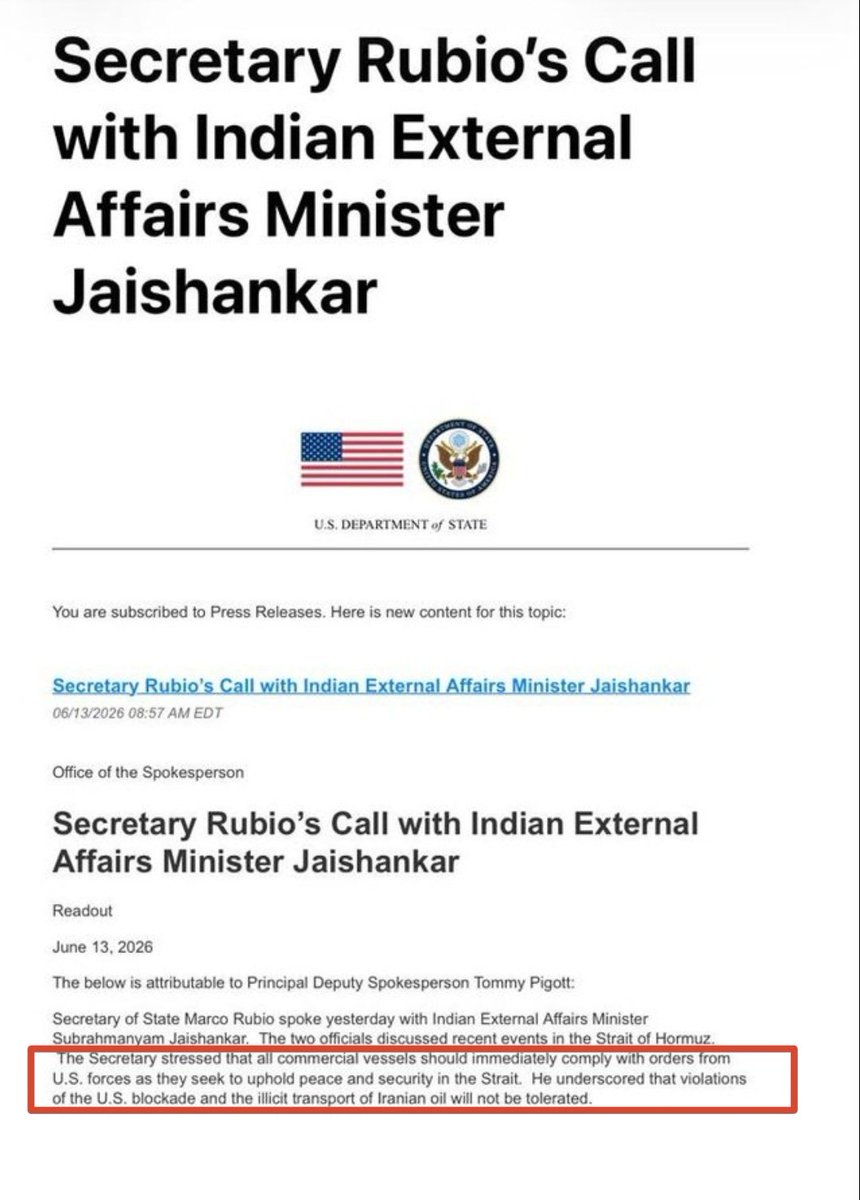

The ongoing tensions between the United States and India have escalated following a recent conversation between Indian External Affairs Minister Dr. S. Jaishankar and U.S. Secretary of State Marco Rubio. Dr. Jaishankar expressed India’s strong protest over the U.S. Navy’s actions in the Gulf that resulted in the deaths of three Indian mariners, emphasizing the illegality of such attacks on commercial shipping.
Context of the Incident
The conversation between Dr. S. Jaishankar and Marco Rubio took place in response to a tragic incident involving the U.S. Navy in the Gulf. Reports indicate that a U.S. military operation mistakenly targeted a commercial vessel, leading to the deaths of three Indian nationals. This incident has sparked outrage in India, which sees such military actions as unjustifiable, particularly when they result in fatalities among civilians.
Dr. Jaishankar’s Response
In a statement shared on social media, Dr. Jaishankar reiterated India’s strong stance against what he described as reckless military operations that threaten civilian lives and commercial interests. He emphasized the importance of adhering to international laws governing maritime conduct, and how any aggression against commercial shipping can have severe repercussions not just for the countries directly involved, but for global trade as well. The Indian government’s immediate and firm response showcases its commitment to defending its citizens and advocating for international norms.
The U.S. Stance
While the U.S. government has not yet publicly addressed Jaishankar’s remarks specifically, Secretary of State Rubio has previously highlighted the United States’ commitment to securing freedom of navigation in international waters. This incident complicates that narrative, as it raises questions about the tactics employed by the U.S. Navy and their implications for countries relying on these shipping routes. The U.S. may face pressure to reassess its military engagements to avoid miscalculations and civilian casualties in the future.
Why This Matters
This incident is significant for Indian readers due to several reasons. Firstly, the loss of Indian lives in foreign waters places direct pressure on the Indian government to act decisively and issue strong diplomatic protests. Secondly, it highlights ongoing tensions in U.S.-India relations, particularly in matters of military operations and their ramifications for citizen safety. Finally, this incident may catalyze discussions within India regarding its naval security strategies and maritime policies, ensuring that its citizens are protected in an increasingly turbulent geopolitical landscape.
Frequently Asked Questions
What was the incident involving the U.S. Navy?
The incident involved a U.S. Navy operation in the Gulf that mistakenly targeted a commercial vessel, resulting in the deaths of three Indian mariners. India has expressed strong protests against this action.
What was Dr. S. Jaishankar’s main message to Marco Rubio?
Dr. Jaishankar communicated India’s strong protest against the U.S. Navy’s actions, arguing that such attacks on commercial shipping are unjustifiable and calling for adherence to international law.
How might this incident affect U.S.-India relations?
This incident has the potential to strain U.S.-India relations, as it raises concerns about safety and military conduct, prompting both countries to reassess their diplomatic and military strategies.
What are the broader implications of this incident for international trade?
Such military actions threaten the principle of freedom of navigation that is essential for international trade. They may provoke wider discussions on naval security and the protection of civilians in conflict zones.