
The killing of Aditya Sharma, a young Indian sailor, in a US raid on the MT Settebello, has sparked a divisive discourse that highlights the complex layers of ideological conflicts within India. While some opposition voices have used this tragedy to mock and vilify the deceased’s father for his pro-Israel sentiments, it raises broader questions about the social and political dynamics that continue to marginalize Indian Muslims and other dissenting communities.
Tragedy and Mockery: The Fallout from Aditya Sharma’s Death
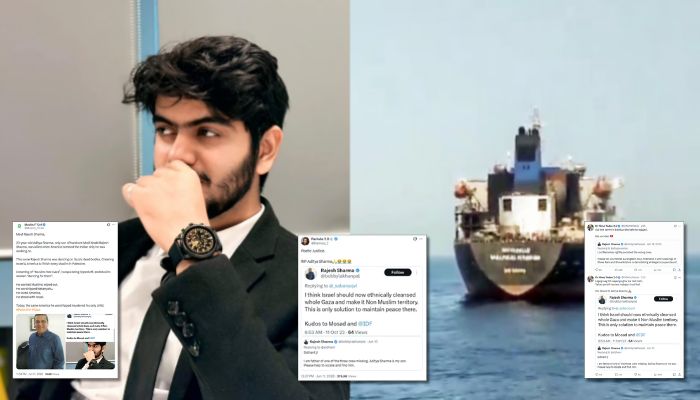
On June 10, 2026, the US Navy carried out a raid resulting in the deaths of three Indian sailors aboard the MT Settebello in the Gulf of Oman. Among them was deck cadet Aditya Sharma, the only son of Rajesh Sharma, a noted supporter of Israeli policies during the Gaza conflict. Following Aditya’s death, various social media users from Islamist and left-liberal circles seized the opportunity to vilify Rajesh Sharma, framing the tragedy as ‘karma’ due to his outspoken beliefs in favor of Israel’s actions in Gaza.
These reactions reveal a disturbing trend where the loss of an innocent life is trivialized for ideological gains. Many commentators publicly celebrated the misfortune of the Sharma family, emphasizing a troubling lack of empathy that contrasts starkly with their professed values of human rights and disaster response.
The Interplay of Ideology and Identity
The events surrounding Aditya Sharma’s passing disturbingly echo historical patterns of discrimination within Indian society, particularly against Muslims. Many commentators have noted how the expressions of glee over Sharma’s death by certain Muslim and leftist circles metaphorically index the fragility of communal relations in India. They highlighted the juxtaposition of an Indian family’s suffering against the backdrop of international conflicts, underscoring how loyalties can complicate local identity constructs.
Individuals who celebrated Rajesh Sharma’s tragedy often pointed to his past statements endorsing ethnic cleansing in Gaza, suggesting a punitive response for his views. This interplay of ideology—where an individual’s political rhetoric is misconstrued to rationalize cruelty—reflects broader societal fractures. Instead of unity in grief, the reaction to this tragedy has only incited further division.
The Role of Social Media in Shaping Narratives
Social media has emerged as a powerful yet polarizing platform for expressing political and social opinions. The aftermath of Aditya Sharma’s death saw a surge in vitriolic posts, many of which explicitly condemned Rajesh Sharma, calling his experience a form of poetic justice. These platforms enabled voices to emerge that claimed the tragedy served his father right, compounding divisive rhetoric around identity, faith, and national loyalty.
While social media can foster mobilization and provide a voice to marginalized communities, it has also facilitated the spread of vitriol, often at the expense of nuanced narrative. The intense reactions to the Sharma family’s grief illustrate how quickly online discourse can devolve into personal attacks and collective ostracism, particularly against those who dare to align themselves with contentious political stances.
Why It Matters
The public response to tragedies like Aditya Sharma’s death is not merely about individual suffering; it reflects deeper societal issues, including the marginalization of minority voices and the politicization of grief. Such incidents illustrate how a lack of empathy often leads to social exclusion and economic boycotts, particularly against communities perceived to hold ‘anti-national’ sentiments. The ethno-political tensions serve to further entrench divisions within India, deepening the existing chasms between various religious and ideological factions. For stakeholders, including policymakers and social activists, understanding these dynamics is crucial to fostering a more inclusive and empathetic dialogue moving forward.
Frequently Asked Questions
What caused the death of Aditya Sharma?
Aditya Sharma was killed in a US Navy raid targeting the Palau-flagged oil tanker MT Settebello in the Gulf of Oman on June 10, 2026.
How did social media react to his death?
Many individuals on social media, particularly from Islamist and left-liberal circles, celebrated his death and mocked his father’s pro-Israel stance, framing the incident as ‘karma.’
What is the broader significance of this incident?
The incident underscores the complexities of identity and ideological loyalty in India, particularly how societal fractures can lead to the marginalization of certain communities, including Indian Muslims.
How has this event affected communal relations in India?
The mockery and vitriol surrounding Aditya Sharma’s death further highlight the fraught atmosphere of communal relations in India, possibly reinforcing divisions rather than fostering dialogue and understanding.