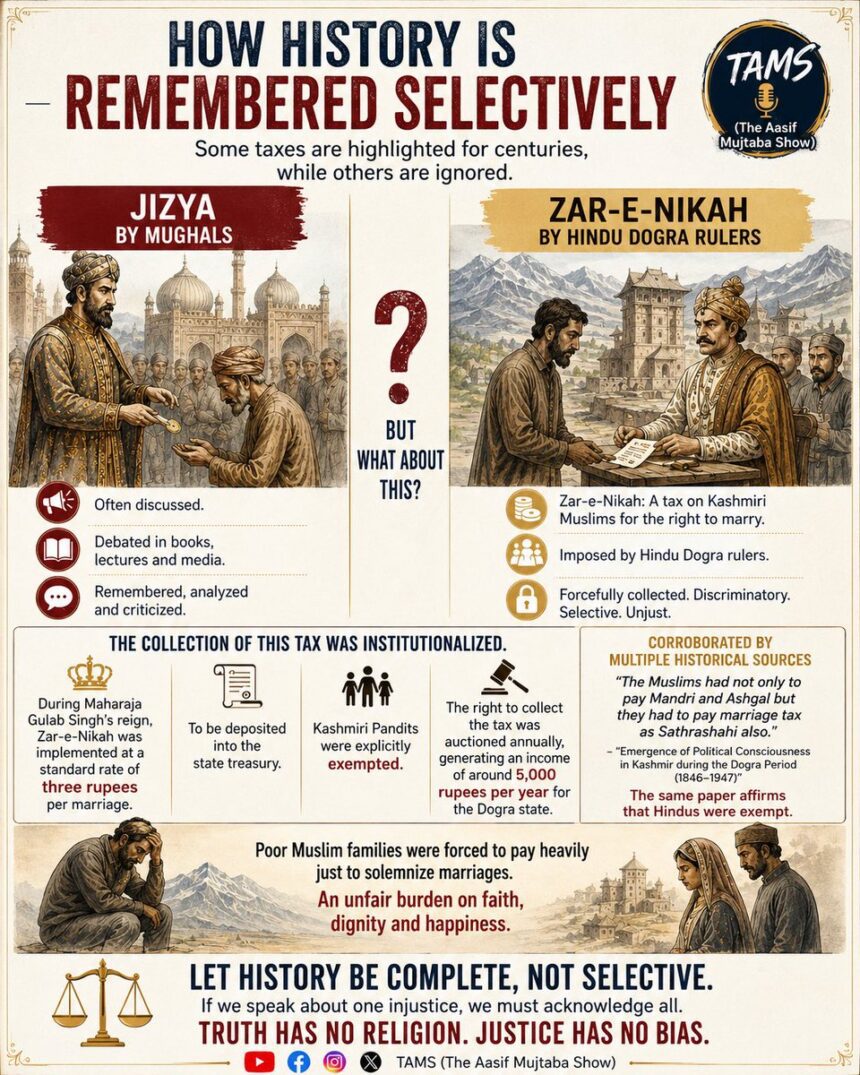

Selective Historical Narrative
In a discussion focused on historical injustices faced by certain communities in India, a critical aspect of Kashmiri Muslim history often goes unnoticed: the Zar-e-Nikah. This discriminatory marriage tax was imposed during the Dogra rule, marking a significant yet overlooked chapter of state-sponsored oppression against Muslims in Kashmir from 1846 to 1947. While Jizya is frequently discussed in contemporary discourse, Zar-e-Nikah represents another platform of systemic discrimination that deserves attention.
The Imposition of Zar-e-Nikah
Under the rule of Maharaja Gulab Singh, Zar-e-Nikah mandated a tax of three rupees on every Muslim marriage in Kashmir, a financial burden that struck at the heart of community customs and traditions. In stark contrast, the marriage ceremonies of Kashmiri Pandits were exempt from this tax, illustrating the discriminatory nature of the policy. This inequitable taxation was not just a reflection of financial exploitation; it served as an encroachment upon personal and spiritual life, placing state interference into a matter that Muslims regard as sacred.
Historical Context and Institutional Discrimination
The larger context of Dogra rule was characterized by multiple layers of taxation that targeted Muslims while largely sparing Hindus. Muslims faced a variety of taxes, including Sathrashahi, further contributing to their marginalization. The Zar-e-Nikah tax, therefore, added another layer to the already heavy burden of taxes impacting a population struggling under economic constraints. The collection right for Zar-e-Nikah was auctioned by the Dogra administration, lending institutional legitimacy to the financial grievance experienced by the Muslim community. This practice generated substantial revenue for the state, reinforcing the idea of systemic discrimination against specific communities.
Why This Matters
The historical imposition of Zar-e-Nikah holds contemporary significance as it reflects longstanding issues of inequality and discrimination that persist in various forms in modern India. Acknowledging incidents like Zar-e-Nikah is vital for understanding the complexities of religious and social dynamics in the region. By examining the legacies of such injustices, current discussions about communal harmony, identity, and state accountability can become more nuanced. The historical narratives need to be inclusive of the struggles faced by Kashmiri Muslims and other marginalized communities, shaping a more comprehensive understanding of India’s multifaceted social fabric.
Frequently Asked Questions
What was Zar-e-Nikah?
Zar-e-Nikah was a marriage tax imposed on Kashmiri Muslims during the Dogra rule, requiring a payment of three rupees for every Muslim wedding. This tax was not applicable to Kashmiri Pandits, signifying systemic discrimination.
Who was affected by this tax?
The tax primarily affected Kashmiri Muslims, further exacerbating their economic struggles during a time of heavy taxation imposed by the Dogra administration.
Why is the discussion of Zar-e-Nikah important?
Discussing Zar-e-Nikah is crucial for understanding the broader context of historical injustices faced by marginalized communities in India. It opens dialogues on institutional discrimination and social justice, which remain relevant today.
How does this relate to current political issues?
The legacy of discriminatory practices like Zar-e-Nikah can inform current political debates regarding identity, religious freedoms, and the treatment of minority communities in India, highlighting the need for equitable governance.