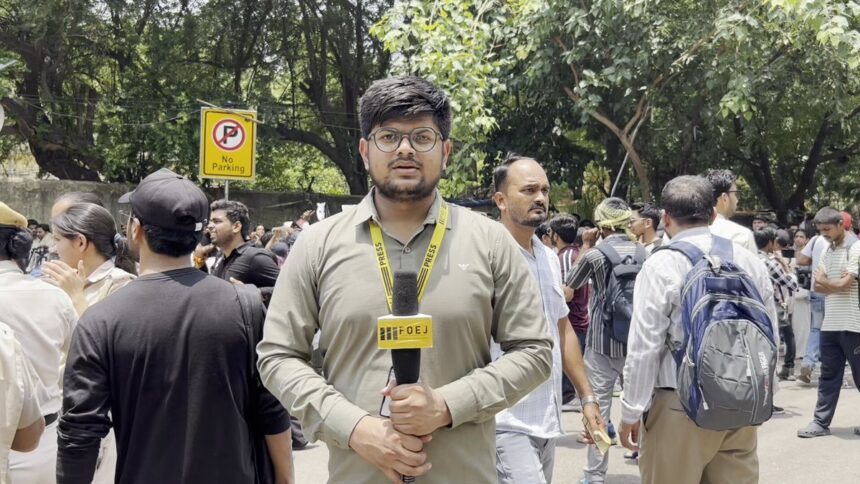

At Delhi’s Jantar Mantar, a significant protest, termed India’s first “Gen Z Protest,” is drawing the attention of young people and students. Organized by the Cockroach Janata Party, this gathering is focused on issues such as the education system and greater accountability in policymaking.
Context of the Protest
The gathering at Jantar Mantar represents a rising tide of youth activism in India, particularly among Generation Z. These young protesters are channeling their concerns regarding the existing education system, which they view as outdated and ineffective. The call for the resignation of Education Minister Dharmendra Pradhan highlights the demand for accountability and transparency in educational policies. The Cockroach Janata Party, known for its satirical approach, serves as a symbol of how younger generations are engaging with traditional political structures.
Demands and Leadership
Key among the protesters’ demands is the resignation of Education Minister Dharmendra Pradhan. Protesters argue that the current educational framework does not adequately cater to the needs of students and lacks a clear mechanism for accountability in policy decisions. The presence of influential figures like Abhijeet Dipke, founder of the CJP, underscores the seriousness of this movement. Abhijeet returned to Delhi from the United States to lead the demonstration, emphasizing a message of love and peace, which resonates with young activists looking for constructive dialogue rather than confrontation.
The Role of Influencers and Activists
Notable activists, such as Sonam Wangchuk, have also drawn attention to the protest. Wangchuk, a prominent education reform advocate and climate activist, states that he will support the protest if Minister Pradhan does not resign by June 5. His involvement adds credibility to the demands for educational reform and reflects the broader significance of this protest, where key figures in activism converge to champion a cause that is pertinent to the youth.
Why This Matters
This protest marks an important milestone in Indian politics, as it signals a shift toward youth-led activism. With a demographic increasingly connected to global movements and sensitive to social justice issues, the Gen Z Protest could be pivotal in shaping educational policy in India. The call for accountability and transparency resonates well with the growing desire for governance that answers to the youth’s needs. As young voters become more politically active, their concerns could profoundly influence future elections and policymaking processes, posing challenges for established political structures.
Frequently Asked Questions
What are the main demands of the protest?
The primary demand is the resignation of Education Minister Dharmendra Pradhan, alongside calls for greater transparency and accountability regarding education policies.
Who organized the protest?
The protest was organized by the Cockroach Janata Party (CJP), a satirical political group appealing to young Indian voters.
What role do activists like Sonam Wangchuk play in this protest?
Activists such as Sonam Wangchuk lend credibility to the protest and highlight the broader concerns around educational reform in India, potentially mobilizing a larger audience.
Why is this protest termed ‘Gen Z Protest’?
It is termed “Gen Z Protest” because it is primarily organized and participated in by young people belonging to the Generation Z demographic, advocating for issues directly affecting their future.